American Football
Brazil's Road To Flag Football At The LA 2028 Olympics
Brazil's flag football teams face a two-stage qualification to reach the LA 2028 Olympics, where the sport debuts, after securing berths in the 2026 World.
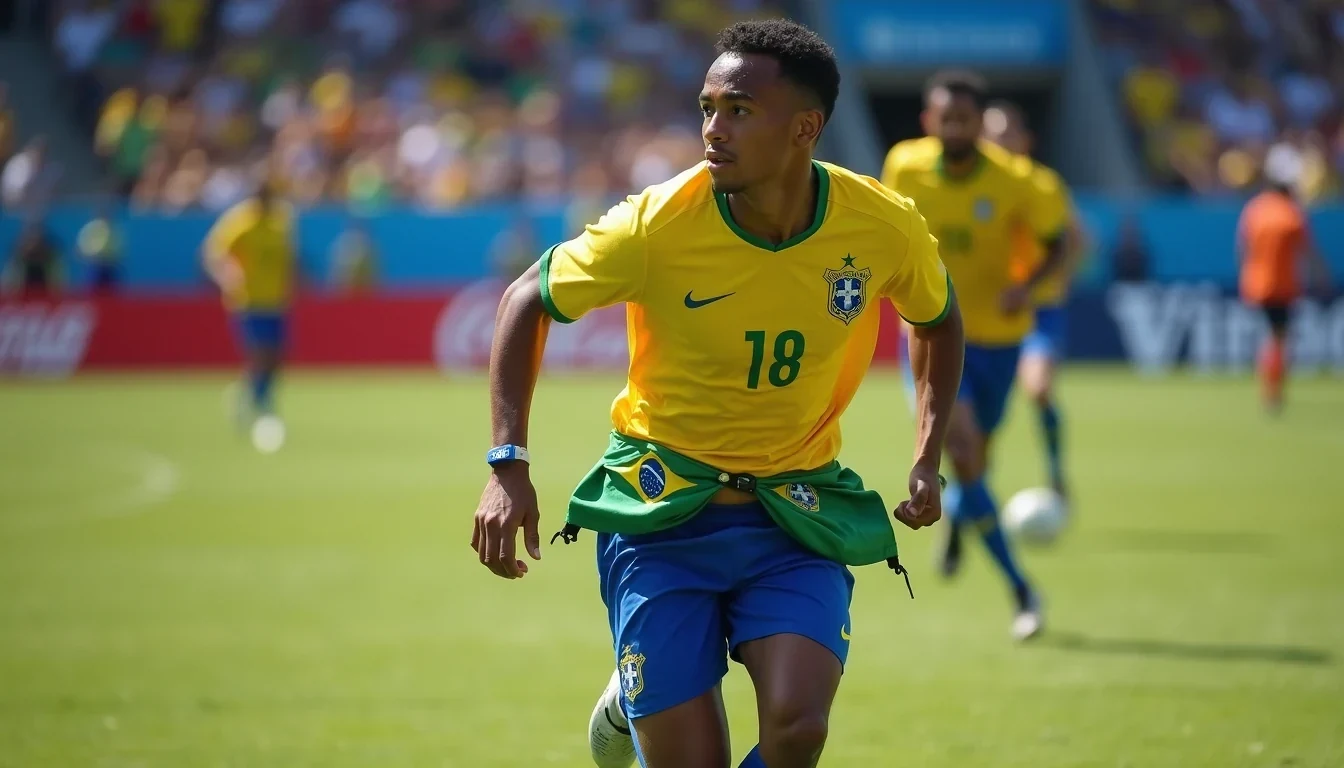
On 15 July 2028, BMO Stadium at Exposition Park in Los Angeles will stage the first Olympic flag football match in history. Twelve national teams, six men’s and six women’s, will compete in a compressed eight-day window that ends on the 22nd. Each roster holds exactly ten athletes, and every snap will be five-on-five.
Brazil’s national squads have already cleared the first obstacle. Both the men and the women punched tickets to the 2026 IFAF World Championships after a September 2025 campaign in Panama. A two-stage qualification gantlet now stands between them and Los Angeles. It runs through Düsseldorf in August 2026 and continental championships in 2027.
How the Game Works
The Olympic discipline strips American football to speed and passing geometry. Five offensive players line up against five defenders on a compressed field. A defender stops the play by pulling one of two fabric flags from a belt worn around the waist. Tackling and blocking are forbidden. The offense has four downs to advance past midfield for a fresh set, or to reach the end zone for six points. The five-on-five version is already the most common format in Brazilian clubs, from Recife to Brasília.
The absence of tackling and blocking removes the need for heavy protective gear, which keeps costs down and opens the field to players who might avoid traditional American football. A game lasts roughly an hour. The reduced roster size means every athlete touches the ball. The International Olympic Committee added the sport for Los Angeles because of its accessibility.
The Tournament in Los Angeles
From 15 to 22 July 2028, BMO Stadium inside Exposition Park will host every pool match, quarter-final, semi-final and medal game. The venue normally houses LAFC home games and sits near downtown Los Angeles. With only six teams per gender, there is no room for a slow start. A single upset in the opening round could redraw the bracket and end a medal run before the final weekend.
With ten players per roster and only six nations per gender, selection will be brutal. National coaches must balance speed, defensive coverage, and special teams within a tiny travelling party. The format rewards squads with deep benches and versatile athletes who can switch from receiver to defensive back between possessions.
Brazil’s Path Through Panama and Düsseldorf
Brazil earned its place at the 2026 IFAF World Championships during the Copa América tournament in Penonomé, Panama, staged from 12 to 14 September 2025. The women’s national team opened with a 46-4 rout of Guatemala and eventually took fifth place. The men’s side also finished fifth, posting a 42-16 win over Chile and a 7-0 shutout against Argentina. Those results advanced both squads to Düsseldorf, Germany, in August 2026, where the top eligible finishers will claim the first Olympic berths.
The remaining tickets to Los Angeles will be distributed at the 2027 IFAF continental championships. As of November 2026, Brazil has not yet played its final hand. Neither squad has locked in a spot for LA 2028, but both remain alive in the qualification chain that started in Central America and now runs through Europe.
The victories over Chile and Argentina signaled Brazil is not merely making up numbers in South America. The 7-0 blanking of Argentina in particular showed a defensive unit capable of controlling pace against traditional football rivals. Coaches will need that discipline again in Düsseldorf, where the competition steps up to a global field.
The 2027 continental championship route favors regions with depth. South America will likely send its top finisher or finishers to Los Angeles, meaning Brazil must navigate rivals like Argentina and Chile again, this time with higher stakes. The 2025 Copa América results grant Brazil a favorable seeding position, but seeding only helps if the team converts it into wins on the field.
The Sport’s Brazilian Home
The Confederação Brasileira de Futebol Americano, the CBFA, governs flag football nationwide. The five-on-five format dominates practices and tournaments within its system. Clubs operate in every major region. The national flag championship offers a competitive ladder with divisions for adult, under-20, under-17, and under-15 athletes.
In 2026, that championship entered the federal Bolsa Atleta programme, making monthly grants available to registered flag athletes across all four age brackets. CBFA president Cris Kajiwara secured the inclusion through federal sports channels, a bureaucratic win that places flag football on the same funding level as longer-established Olympic disciplines in Brazil.
The Bolsa Atleta inclusion means registered flag athletes can now claim monthly federal support previously reserved for more traditional Olympic sports. For a teenager in Salvador or Manaus, that funding can cover transport and tournament fees. Cris Kajiwara, the CBFA president, championed the application that made flag football eligible starting in 2026.
Youth development received a parallel boost in October 2023, when the NFL and CBFA jointly launched NFL Flag Brazil. The programme’s inaugural national championship for under-12 teams took place in São Bernardo do Campo, São Paulo. The pipeline has since expanded toward teenage divisions, creating a direct route from schoolyards to the junior national teams that feed the senior squads.
How to Start Playing
Finding a local club is the first step. The CBFA website lists affiliated teams by city and state, covering everything from Belo Horizonte to Curitiba to Salvador. Most clubs run open training sessions for newcomers, and the equipment list is short. Players need athletic clothing, football or soccer cleats if the budget allows, and a flag belt. Most coaches lend belts to beginners for the first month.
Teenagers enter through NFL Flag programmes starting at under-12, then progress to under-15 and under-17 divisions in CBFA state championships. Women’s teams train at the same affiliated clubs and compete in the same national championship brackets as the men’s sides. The non-contact rules mean size is less of a barrier than in traditional American football, so teenagers and adult beginners can contribute immediately after learning basic routes and flag-pulling technique.
Adult beginners can join social leagues that meet on weekends, while competitive players chase state qualifiers that feed the national championship. The structure is tiered, so a team from Fortaleza or Porto Alegre can climb from local pickup games to a Bolsa Atleta grant and, eventually, to a national team tryout ahead of the 2027 continental qualifiers. The sport is non-contact, so the injury risk is lower than in traditional American football, but the conditioning demand is real. Expect to run.