Basketball
Brazil's Two World Basketball Titles Most Fans Forgot
Brazil claimed two men's FIBA Basketball World Cup titles in 1959 and 1963, a forgotten era of international dominance that began with an Olympic medal in 1948.
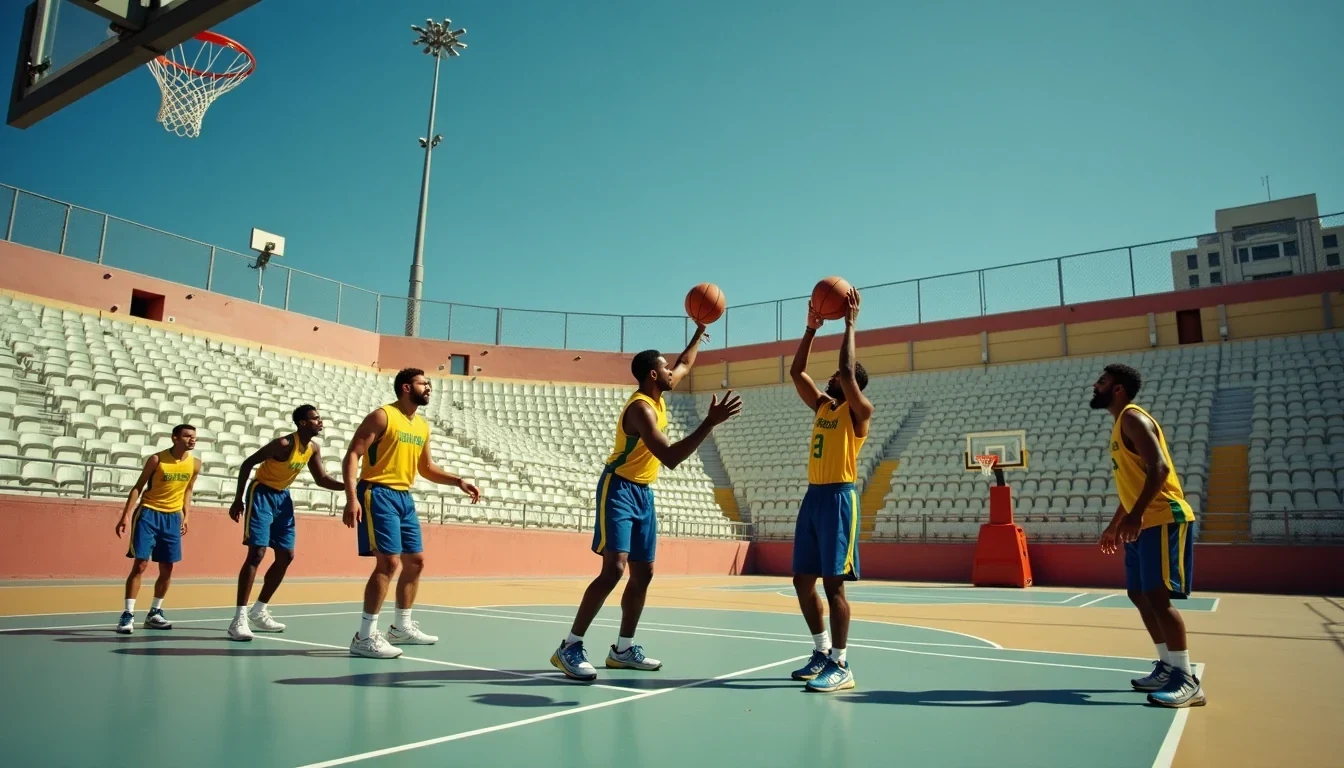
Brazil is the only country outside Europe and North America to win the men’s FIBA Basketball World Cup twice, doing so in consecutive tournaments most living fans never saw. The 1959 and 1963 titles belong to a generation that played without the three-point line, without sponsorship patches, and in one case without a roof. Their stars, Amaury Pasos and Wlamir Marques, died within months of each other in 2025, closing the era when Brazil stood atop international basketball.
The bronze that started everything
The 1948 London Olympics gave Brazilian basketball its first proof of life on the world stage. The men’s team beat Mexico 52-47 for the bronze medal on August 13, 1948, at Harringay Arena. This marked Brazil’s first Olympic medal of any color since the country’s debut at Antwerp in 1920. Two teenagers, Amaury Antônio Pasos and Wlamir Marques, were already in the development pipeline that would carry them to the top of the sport within eleven years.
Basketball had arrived in Brazil through YMCA channels in the 1890s, but it remained a minor sport behind football and rowing. The 1948 bronze changed the calculation. Suddenly a country without indoor arenas of international standard had a team that could compete with the Americans and Europeans who had built the game.
Chile 1959, played under open sky
The second FIBA World Championship for men convened in Chile from January 16 to 31, 1959. The tournament plan collapsed before the final round. The indoor arena in Santiago remained unfinished, so FIBA moved the decisive games outdoors to the Estadio Nacional. Crowds of roughly 16,000 watched teams shoot on asphalt under summer sun and occasional rain, with wind altering trajectories players had calibrated for gymnasium conditions.
Coach Togo Renan Soares, known universally as Kanela, adapted his Brazilian squad to circumstances that favored no one. The United States arrived with a military team, not the NBA players who stayed home, but still represented the sport’s dominant nation. Brazil beat them 81-67 on January 30, securing the championship. The Soviet Union complicated the standings by refusing to play Formosa, as Taiwan was then known at FIBA, for political reasons. FIBA demoted the Soviet team, settling the table in Brazil’s favor.
Amaury Pasos, then 23, won tournament MVP honors while averaging 13.1 points per game. At 1.91 meters, he played forward with a shooting touch and footwork that translated across the outdoor variables. The 7-2 overall record gave Brazil its first world title in any team sport.
Rio 1963, defending at home
Brazil hosted the 1963 championship from May 12 to 25, spreading preliminary games across five cities before concentrating the final round at the Ginásio do Maracanãzinho in Rio de Janeiro. The smaller sibling of the football cathedral next door held basketball’s decisive moments that spring.
The home team went 6-0 in the final round, clinching the title with an 85-81 victory over the United States on May 25. Wlamir Marques, the “Diabo Loiro” or Blonde Devil, took tournament MVP honors. Amaury Pasos elevated his scoring to 17.7 points per game, forming with Wlamir a two-man axis no opponent solved.
The 1963 victory confirmed what 1959 had suggested. Brazil was not a fluke beneficiary of outdoor chaos or political forfeits. It had constructed a program that could beat the United States head-to-head, on home court or away, with the title on the line.
The two who defined the era
Amaury Pasos was born in São Paulo in 1935. He stood 1.91 meters, short for a modern power forward but exceptional in his mobility and shooting range for the era. He played three Olympic tournaments, beginning with Melbourne 1956 and continuing through Rome 1960 and Tokyo 1964. FIBA inducted him into its Hall of Fame in 2007, a formal recognition of a career that had already entered Brazilian sports mythology. He died in 2025 at age 89.
Wlamir Marques carried the more theatrical nickname and the more explosive scoring style. He joined Sport Club Corinthians Paulista in 1962 and won 18 titles with the São Paulo club, translating international success into domestic dominance at a football institution that had opened its doors to basketball. His death came on March 18, 2025, at age 87, two months before Amaury’s.
Neither man played professionally in the American sense. They held jobs, represented clubs that paid modestly if at all, and built their reputations through national team service across fourteen years of major tournaments.
Olympic consistency, world supremacy
The golden generation bracketed its two world titles with Olympic bronze medals at Rome 1960 and Tokyo 1964. The 1960 medal came between the two championships, the 1964 medal after the defense of the title. Four major tournaments, four bronze or better finishes, across three continents.
This sustained excellence established basketball as Brazil’s second team sport in participation and audience, behind only football. The claim rests on concrete achievement rather than cultural assertion. No other Brazilian team sport has won two world titles. Volleyball would arrive later, with men’s Olympic gold in 1992 and multiple world championships beginning in 2002. Basketball’s primacy in the second tier was settled in the Pasos-Wlamir years and has not been seriously challenged since.
What remains
The Maracanãzinho still stands in Rio de Janeiro’s Maracanã complex, hosting concerts and occasional basketball when the national team plays qualification games. The Estadio Nacional in Santiago was renovated for the 1962 FIFA World Cup and again for the 2015 Copa América, its basketball history unmarked by plaque or monument.
FIBA records the 1959 and 1963 titles in its official register without asterisk for the outdoor final round or the Soviet demotion. The 1959 tournament remains the only men’s world championship final stage played in open air, a detail that separates it from every subsequent edition.
Brazilian basketball has not returned to a world final since 1963. The national team won the 1987 Pan American Games behind Oscar Schmidt, a separate story with its own stars and context. The Schmidt generation reached Olympic finals but never the world championship match. The Pasos-Wlamir back-to-back titles remain unmatched in Brazilian basketball history and rare in global basketball history, shared only by the Soviet Union, Yugoslavia, and the United States among multiple world champions.
The deaths of Amaury Pasos and Wlamir Marques in 2025 removed the last living links to that achievement. For fans under 50, the 1959 and 1963 titles exist in black-and-white photographs and statistical tables. The players who won them are names without faces, champions without highlight reels. The record books say Brazil was twice the best. The country has largely forgotten what that looked like.