Combat Sports
How to Attend UFC Rio and Brazil's Fight Night History
Brazil stands as the UFC's second-biggest host country, with Rio de Janeiro leading its 37 events.
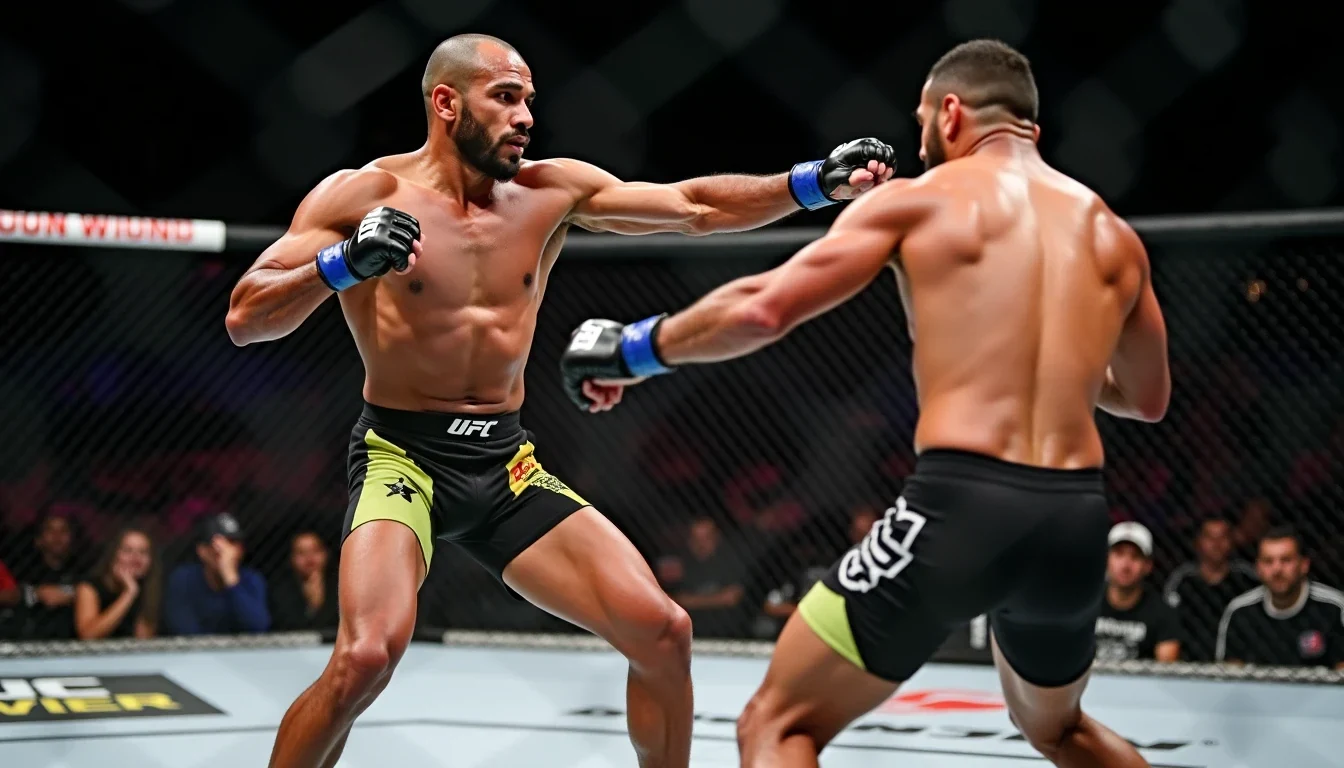
Brazil has hosted more UFC events than any country outside the United States, and the gap is wide. As of January 2023, UFC.com counted 37 cards spread across 13 Brazilian cities, with Rio de Janeiro leading every other municipality. For a sport invented in California and headquartered in Las Vegas, this southward pull is remarkable. Brazil invented vale tudo, exported Brazilian jiu-jitsu to the world, and produces champions at a rate that makes matchmakers treat São Paulo and Rio as second and third homes.
The story begins inauspiciously. On 16 October 1998, the UFC landed at Ginásio da Portuguesa in São Paulo for an event officially numbered UFC 17.5, better known as UFC Brazil. The card lasted four hours. The moment everyone remembers lasted 44 seconds. Vitor Belfort, then 21 years old and already nicknamed “The Phenom,” charged across the cage and stopped Wanderlei Silva before either man had time to establish range. It was violent, definitive, and brief. Then the UFC left. For thirteen years, there were no cards, no announced plans, and no explanation offered to a country that had just produced one of the most memorable knockouts in the promotion’s young history.
The Return and the Sell-Out
UFC 134 on 27 August 2011 ended the drought. The venue was HSBC Arena in Rio’s Barra da Tijuca, a 14,000-seat building erected for the 2007 Pan American Games. The UFC stacked the card with Brazilian fighters: Anderson Silva defended his middleweight title against Yushin Okami, Maurício Rua won a decision over Forrest Griffin, and Antônio Rodrigo Nogueira submitted Brendan Schaub. According to Sherdog, tickets vanished in 74 minutes. Las Vegas received the message: Brazil was a primary market, not a curiosity.
That night established a template the UFC has followed since: announce a Brazil card, load it with Brazilian fighters, price tiers broadly enough to fill the building, and watch the inventory disappear. The 2011 return also fixed Rio as the country’s UFC capital, though the promotion would later experiment with other cities.
Five Nights That Shaped UFC Brazil
UFC 142, 14 January 2012, Rio de Janeiro. José Aldo defended his featherweight title against Chad Mendes at the same HSBC Arena. The fight reached its decisive moment in the final second of the first round. Mendes pressed Aldo against the fence, working for a takedown. Aldo broke free, sprinted backward, and met Mendes with a flying knee as the horn sounded. Mendes fell. The crowd detonated. Aldo left the cage and ran into the stands. The image of a champion vanishing into his own supporters, surrounded by security trying to keep pace, remains one of the most chaotic celebrations in UFC title history.
UFC 179, 25 October 2014, Maracanãzinho, Rio de Janeiro. The smaller indoor arena beside the famous Maracanã stadium hosted a rematch between Aldo and Mendes, this time a five-round war rather than a single explosive frame. Aldo won a unanimous decision after absorbing and delivering punishment at a pace that left both men bloodied. The fight is remembered for its cumulative brutality, and for proving that Brazilian crowds would sell out a venue even for a rematch without the novelty of a first meeting.
UFC 198, 14 May 2016, Arena da Baixada, Curitiba. The UFC left Rio for the first time in the modern era and filled a football stadium. Curitiba’s home to Athletico Paranaense became the stage for a heavyweight title fight, and the result was an upset. Stipe Miocic knocked out Fabricio Werdum in the first round to claim the championship. The card drew over 45,000 spectators, demonstrating that Brazil could support stadium shows and giving Curitiba a permanent place in UFC lore. The event also proved that the promotion’s Brazilian strategy did not require Rio or São Paulo to function.
UFC 237, 11 May 2019, Jeunesse Arena, Rio de Janeiro. Jessica Andrade fought Rose Namajunas for the strawweight title in a bout that seemed to be slipping away from her. Namajunas was faster, landing at range, building a lead on the scorecards. In the second round, Andrade closed distance, lifted Namajunas, and slammed her to the mat. The champion did not rise. Andrade became the first Brazilian woman to win a UFC title on home soil, and the knockout remains a staple of promotional highlight reels.
October 2025, Farmasi Arena, Barra da Tijuca. Charles Oliveira faced Mateusz Gamrot in a lightweight bout that sold out within hours of tickets releasing through Ticketmaster. The venue had changed names again, from HSBC to Jeunesse to Farmasi, but the location remained the same: the Olympic Park complex in western Rio, reachable by BRT from Jardim Oceânico station or by ride-share through traffic that thickens predictably on fight nights.
Getting to the Farmasi Arena
The arena sits in Barra da Tijuca, a neighborhood developed during the 1970s and 1980s on reclaimed lagoon and oceanfront land. It is now dense with residential towers, shopping centers, and the concrete bones of the 2016 Olympic Park. For UFC events, the BRT is the most reliable public option. The Rio Centro station connects to the Jardim Oceânico subway terminus on Line 4, which runs through Ipanema and connects to the broader metro network. The ride from central Rio to Barra can exceed an hour depending on connections, so planning backward from the first preliminary fight is essential.
Driving or using ride-share apps like Uber and 99 works for those staying in Barra itself. However, leaving the arena by car after a main event means joining thousands of simultaneous departures. The surrounding streets gridlock. Walking to a pickup point farther from the venue, or waiting out the initial exodus at one of the bars in the nearby Riocentro retail zone, saves time and patience.
How Tickets Work
The UFC announces Brazilian events on UFC.com and its social media channels, typically two to three months in advance. Ticketmaster Brasil handles all official sales. Registration for advance notice is available on the Ticketmaster site and is nearly mandatory for high-demand cards. The October 2025 Rio event sold out within hours, a pattern that has held since 2011 and shows no sign of weakening.
For that 2025 card, single tickets ranged from R$130 for upper-tier seats to R$1,850 for premium lower-bowl positions close to the Octagon. VIP packages, which included enhanced sightlines and dedicated entry lanes, ran from R$2,625 to R$3,750. Prices fluctuate by card strength and venue configuration, but the structure remains consistent: a bottom tier accessible to younger fans, a mid-tier that fills most of the building, and a top tier that funds the event’s profitability. Resale markets operate in Brazil, but the official brief specifies presenting only Ticketmaster pricing as authoritative. For the next announced Brazil date, UFC.com remains the definitive source as of 2025.
Fight Week Beyond the Cage
The main card is the final act of a multi-day production. The UFC schedules open workouts, typically held in public spaces or shopping centers, where fighters drill techniques and pose for photos without contact sparring. These are free, lightly promoted, and sparsely attended compared to the main event, which makes them useful for fans who want unobstructed views of fighters at close range.
The ceremonial weigh-in occurs the day before the fight, usually late morning, at a venue separate from the arena. Fighters step onto the scale, face off, and address the crowd. In Brazil, these weigh-ins draw thousands and carry their own charge, particularly when rivalries have escalated through the fight week’s media obligations. The early weigh-in, held privately for official weight verification, is closed to the public.
For visitors timing a trip around a UFC card, Barra da Tijuca offers sufficient accommodation across price bands, from the high-rise hotels along Avenida das Américas to rental apartments closer to the beach. The neighborhood lacks the density and spontaneity of Rio’s Zona Sul, but it compensates with predictability: grid streets, modern infrastructure, and the concentrated amenities of the Olympic Park zone. Dining options cluster in the Barra Shopping and Village Mall complexes, or along the beachfront kiosks that stay open late on fight weekends.
The UFC’s Brazilian experiment, begun with a 44-second knockout in a São Paulo gymnasium in 1998, has become one of the promotion’s most reliable international operations. No other country outside the United States has hosted more events. No other country sells out faster. For fans who attend, the logistics are straightforward but demand preparation: register with Ticketmaster, plan transport around BRT connections or ride-share patience, and arrive early enough to absorb the preliminary fights that fill the undercard. The atmosphere inside the Farmasi Arena, when a Brazilian fighter walks to the cage and the building compresses into a single sustained note, is the product of three decades of cultivated expectation. The UFC left once. It will not leave again.