Destinations
How to Experience Christ the Redeemer at Sunset in Rio
Witnessing Christ the Redeemer at sunset from Corcovado offers a dramatic, luminous transformation of Rio's iconic landscape, turning a simple visit into an.
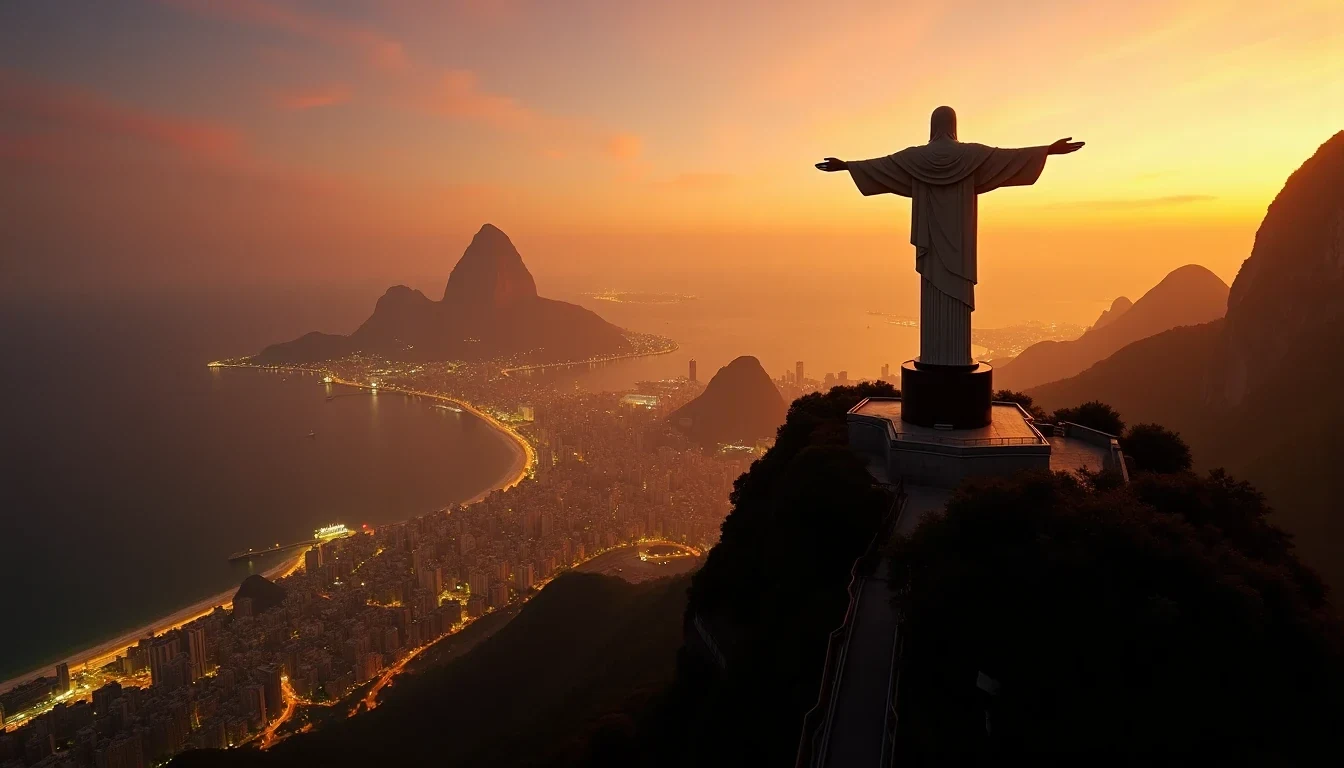
The first time you see Rio from Corcovado at sunset, you understand why the city has a reputation for drama that no postcard ever quite earns. The light performs, it does not simply fade. Guanabara Bay turns molten, Sugarloaf Mountain sharpens into a silhouette cut from cardboard, and the 30-meter figure of Christ the Redeemer shifts from concrete monument to something almost luminous against the darkening Tijuca Forest. This is not the same statue you photographed at noon with 400 other people jostling for position. The golden hour transforms a required tourist stop into the kind of moment you will describe badly to friends for years afterward.
Getting the timing right separates visitors who witness this from those who merely check a box.
When to Arrive and What to Book
Sunset at Corcovado demands precision. The summit sits 710 meters above sea level, and the temperature drops fast once the sun slips behind the mountains. Aim to reach the statue platform 60 to 90 minutes before the official sunset time. This window lets you absorb the full transition: the golden hour wash, the color shift in the sky, the first artificial lights flickering on across Zona Sul, and finally the complete darkness where Rio becomes a scattered constellation.
Advance booking is essential. It makes the difference between standing at the base of Christ with space to breathe and watching the sky change colors from a queue at Cosme Velho station. Both the Corcovado Train and the official Paineiras vans sell timed-entry tickets through their respective websites, and sunset slots disappear days ahead during high season and holiday weekends. The train, inaugurated in 1884 by Dom Pedro II and still Brazil’s oldest tourist transport, departs every 20 minutes from Cosme Velho for a 20-minute climb through Tijuca National Park. Van services run from Praça do Lido in Copacabana, Largo do Machado, and the midway Paineiras point. Book the train if you want the historic approach through Atlantic forest. Book a van from Paineiras if you want to cut transit time and maximize your minutes at the summit.
Arrive 30 to 45 minutes before your scheduled departure. Boarding queues swell unpredictably, and missing your window means watching the best light from the wrong elevation.
Choosing Your Ascent
The Corcovado Train justifies its popularity. The cogwheel railway climbs through dense Tijuca National Park, one of the world’s largest urban rainforests. Gaps in the vegetation offer teasing glimpses of the city below before the full reveal at the top. For visitors based in Zona Sul, the Cosme Velho station is straightforward to reach by taxi or the integrated metro-bus routes that serve the neighborhood.
Official vans suit travelers who want flexibility or who are already staying in Copacabana, where the Praça do Lido departure point sits within walking distance of most beachfront hotels. The Paineiras route makes particular sense if you have hired a private car or taxi for the day. No private vehicles may proceed beyond the Paineiras Visitor Center, located 2.5 kilometers below the summit, so even with a driver you will transfer to an accredited van for the final stretch.
Helicopter tours occupy a different category entirely. These depart from Jacarepaguá Airport or occasionally the Lagoa Rodrigo de Freitas helipad, with flights ranging from 7-minute statue flyovers to half-hour sweeps across the full coastline. The cost reflects the exclusivity. A helicopter at sunset is not a practical choice. It is for someone who wants to see Christ the Redeemer from the angle most visitors never imagine: level with the outstretched arms, the bay spreading beneath, the last light catching the soapstone surface. If your budget allows it once on a trip to Rio, this is the occasion.
What You Will See from the Summit
The 360-degree panorama from Corcovado repays patience. Directly east, Sugarloaf Mountain guards the entrance to Guanabara Bay. Its rounded summit often catches the final orange light before the rest of the city dims. The bay itself stretches toward Niteroi, where the Rio-Niteroi Bridge threads across the water and becomes a necklace of headlights after dark.
To the south, the crescents of Copacabana and Ipanema define the coastline, their promenades and high-rise grids gradually illuminating as dusk settles. Leblon and Botafogo fill out the shoreline, while the heart-shaped Lagoa Rodrigo de Freitas reflects sky colors and the surrounding apartment blocks. On clear evenings you can pick out Maracanã Stadium inland; its oval is unmistakable even at distance.
The immediate surroundings matter too. Tijuca National Park wraps Corcovado in green, and the contrast between untouched forest and dense urban development is the visual argument for Rio’s particular magic. As the light fails, this contrast intensifies: the forest becomes black texture, the city becomes scattered brightness, and the statue stands between them with its arms open.
Managing the Crowds and the Cold
Sunset popularity creates predictable friction. The main platform around Christ fills with photographers setting up tripods, couples posing for silhouettes, and tour groups moving in coordinated waves. The lower viewing levels, accessible by elevator and escalator from the upper drop-off point, often offer clearer sightlines with fewer bodies directly in front of the statue. Move around. The western edge of the platform gives the best angle for the sun’s descent itself. The eastern side preserves the Sugarloaf view longest after the direct light has gone.
Temperature management is more important than most visitors expect. A 30-degree afternoon in Copacabana can become genuinely chilly at 710 meters with wind exposure. Layering is essential. A light jacket or windbreaker in your bag will extend your stay past the point where underdressed tourists retreat to the gift shop or the van queue. Comfortable walking shoes help on the uneven surfaces around the viewing areas.
Bring a fully charged camera or phone, and a portable power bank if you plan to shoot video or use long exposures as the city lights emerge. The summit kiosks sell drinks and snacks at inflated prices, so carry water and something small to eat if you want to linger through the full transition.
Reading the Weather
Corcovado generates its own microclimate. The weather at sea level in Rio is not the weather at the statue. Fog can erase the entire view in minutes, and afternoon cloud buildup over the coastal mountains is common, particularly in warmer months. Check conditions specifically for Corcovado on the day of your visit, not just the generic Rio forecast. A clear morning does not guarantee a clear evening.
If the clouds roll in and the visibility drops below useful, you have a decision. The staff will not refund tickets for weather, so your sunk cost is real. Sometimes waiting 20 minutes clears a fog bank. Sometimes it thickens. The gamble is part of the mountain’s personality.
Why Sunset Changes Everything
A daytime visit to Christ the Redeemer is a civic obligation. You arrive, you photograph, you absorb the scale of the 30-meter figure, you identify landmarks from the railing, you descend. It is worthwhile and efficient, like visiting a museum with a checklist.
Sunset introduces duration and transformation. The statue that looked solid and administrative at noon becomes provisional, almost floating, as the light shifts. The city you mapped from above becomes mysterious as details dissolve into general glow. You are not observing Rio from a height. You are watching it become itself, the way locals experience it: a place defined by the meeting of natural drama and human habitation, neither fully comprehensible without the other.
The “butterflies” moment the operators describe is not sentimental packaging. It is the physical response to standing at a fixed point while everything visible changes. The golden hour, the color drain, the first artificial star-points of streetlights, the final darkness where only the statue remains distinctly visible against a sky still holding some color at the horizon. This sequence takes roughly 90 minutes if you arrive early enough to catch the beginning. Most visitors do not stay for all of it. The ones who do leave with a different understanding of why this particular monument, among all the world’s oversized religious statues, earned its place among the New Seven Wonders.
The Practical Summary
Book timed-entry tickets online well ahead. Choose the Corcovado Train for history and forest immersion, or a van from Paineiras for speed. Consider a helicopter tour if this is your single splurge moment in Rio. Arrive at the summit 60 to 90 minutes before sunset. Dress in layers. Check Corcovado-specific weather. Move to lower platforms if the main crowd thickens. Stay through the full light transition, not just the sunset itself. Bring power for your camera and patience for the descent queue that forms once darkness falls.
The statue will still be there at noon tomorrow, and the day after, receiving its millions of annual visitors. The sunset version is harder to catch, harder to plan for, and impossible to replicate once missed.