Esports
FalleN Coldzera And Brazil's CSGO Major Victories
Paulo Velloso's MIBR established Brazilian Counter-Strike professionally, setting the stage for FalleN's Luminosity Gaming to emerge and unexpectedly win the.
On 1 March 2003, Paulo Velloso put the name Made in Brazil on paper in Rio de Janeiro. He was not a player, but a businessman who saw that Brazilian Counter-Strike needed a jersey, a salary, and a plane ticket to compete outside the country. The five players he signed became the first roster to represent Brazil as a unit rather than a collection of online nicknames. For nine years MIBR set the standard domestically, but the organization dissolved in 2012 when sponsorships dried up and international flights stopped. The brand sat empty for four years until Velloso announced its return in March 2016, just as a group of players from São Paulo and Santa Catarina were about to change how the world thought about Brazilian CS.
That group had already gathered around Gabriel Toledo, who played under the tag FalleN. Toledo had cycled through several lineups before settling on a core that included Fernando Alvarenga from São Paulo, Marcelo David from São José dos Campos, Lincoln Lau from São Paulo, and Epitacio de Melo from São Bernardo do Campo. They operated briefly as Games Academy and then as Luminosity Gaming. The five players developed a style that combined aggressive map control with deep preparation. By early 2016 they had qualified for the first Major of the year in Columbus, Ohio. Nobody expected them to win it.
The First Major Title Won Outside Europe
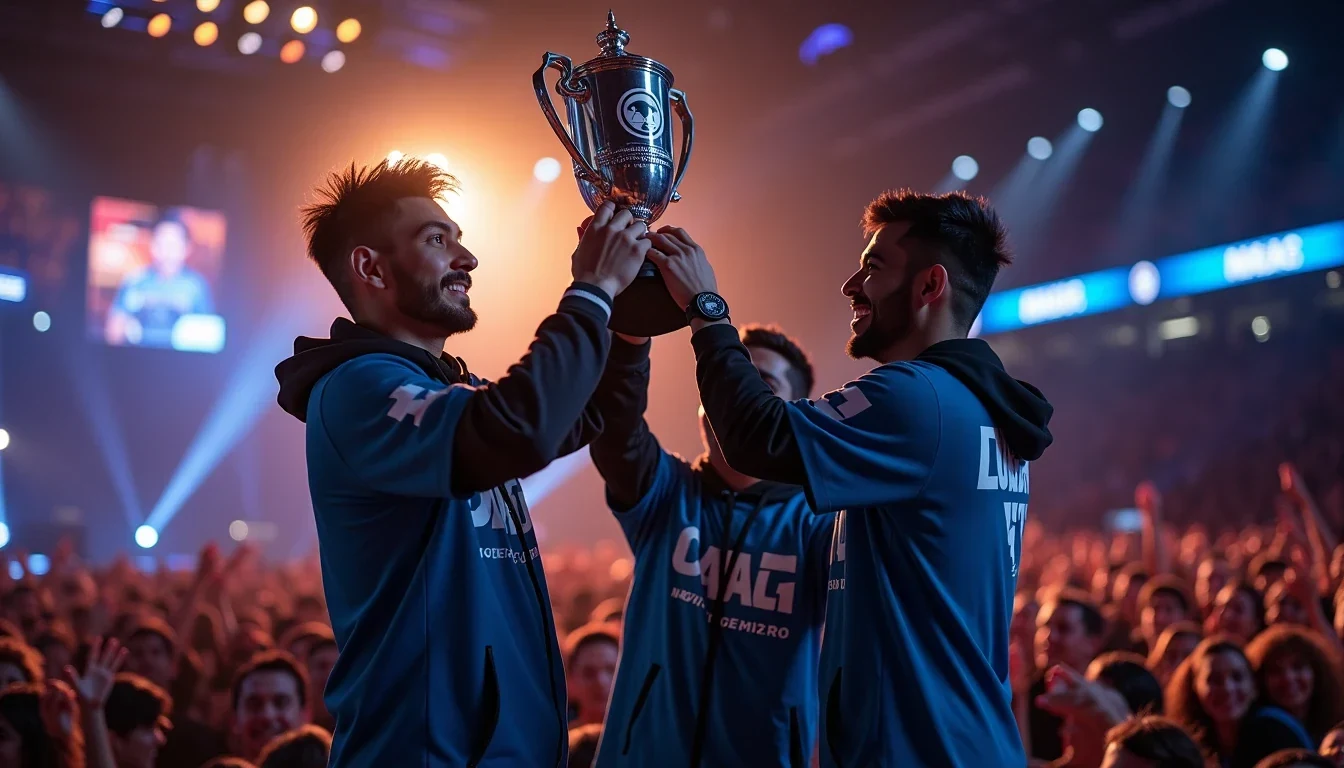
MLG Major Championship Columbus ran from 29 March to 3 April 2016 at the Nationwide Arena in Ohio. Luminosity entered as a dark horse and left as the first non-European team to lift a Major trophy. They took down Natus Vincere in two straight maps in the final, closing out the series with disciplined site executes and a defense that suffocated the Ukrainian side’s default attacks. Marcelo David, playing under the name coldzera, took the tournament MVP medal after posting a 1.17 rating across fourteen maps. The victory broke a European lock on the title and proved that a roster built entirely in Brazil could set the tactical pace against organizations with bigger budgets and longer histories. For fans watching at home in São Paulo and Rio de Janeiro, the final started late on a Sunday night and ended after midnight local time on 4 April.
The Mirage Comeback and the In-Game Graffiti
The semifinal against Team Liquid produced the moment still quoted in every highlight reel. On Mirage, Liquid reached map point at 15-9. Luminosity had to win six consecutive rounds to force overtime, and the North American side looked ready to close it out at B Apartments. David held an AWP near the van outside the apartments entrance. He jumped to clear the angle and fired a no-scope that killed Jonathan Jablonowski. He jumped again and killed Nick Cannella. The sequence gave Luminosity the round and the momentum to complete the comeback. They won Mirage 19-15 and took the series 2-0 to advance to the final. Liquid had been one round away from eliminating them.
Valve later added a winged-AWP graffiti on the Mirage wall beside B Apartments, exactly where David fired the shots. The play also won Competitive Play of the Year at the 2016 Golden Joystick Awards. Visitors who load the map today can still see the decal, which marks the spot as precisely as any plaque on a football pitch. The graffiti has survived every map update since 2016 and serves as a permanent reminder of the comeback.
Back-to-Back at ESL One Cologne
Four months later the same five players appeared at ESL One Cologne, but they wore the blue jerseys of SK Gaming. The transfer happened in July 2016 after a contractual dispute with Luminosity’s management. SK kept the roster intact and sent them to the LANXESS Arena from 5 to 10 July 2016. They met Team Liquid once more in the final, this time winning decisively to become back-to-back Major champions. The match made history as the first Major final without a European team. David collected his second consecutive MVP award, and SK took home US$500,000. The prize was the largest in CS:GO history at that time, and the Brazilian squad earned it against a field that had previously treated non-European teams as afterthoughts.
MIBR Returns and Splits Again
The MIBR name came back permanently in January 2018 when Immortals Gaming Club acquired the brand from Velloso. The squad re-entered competition in June 2018 with a roster that included Toledo, David, and other core members from the 2016 titles. The reunion lasted until September 2020, when Fernando Alvarenga, Epitacio de Melo, and coach Ricardo Sinigaglia left the team. Sinigaglia, known as dead, had received a ban from the Esports Integrity Commission for exploiting a spectator bug during online matches. The departure of three key figures in the same month ended the second MIBR era and scattered the remaining 2016 champions to different projects. Toledo and David would not play together again under the MIBR banner.
FURIA Carries the Line Forward
While MIBR struggled, Jaime Padua, Andre Akkari, and Cris Guedes started FURIA in 2017 and began building a separate legacy. FURIA Esports debuted at a Major during IEM Katowice 2019 and reached the semifinal at IEM Rio in 2022. Their longest-standing rifler, Kaike Cerato from Limeira, has anchored the lineup through multiple roster changes and remains the face of the team for many younger fans. In July 2023 FURIA signed Gabriel Toledo to an active roster spot, bringing the country’s most decorated in-game leader back to the top tier of Brazilian CS. The move linked the 2016 championship generation to the organization that now carries the Brazilian banner.
As of 2026, FURIA fields Toledo alongside Cerato and international talent in the Counter-Strike 2 circuit. Fans in São Paulo can watch them at local LAN events or follow the team through their Portuguese-language broadcasts. Visitors who want to walk through the history can load Mirage and check the graffiti beside B Apartments, or watch the 2016 Columbus final in full on Major archives. The winged AWP is still there. So is the footage. Both mark the same two-year stretch when Brazilian teams went from outsiders to the center of the game.