Street
Baile Funk's Fight for Its Place in Brazil's Streets
Baile funk, a vibrant Brazilian genre rooted in Rio's Black soul dances, navigates a complex reality of official recognition alongside police crackdowns.
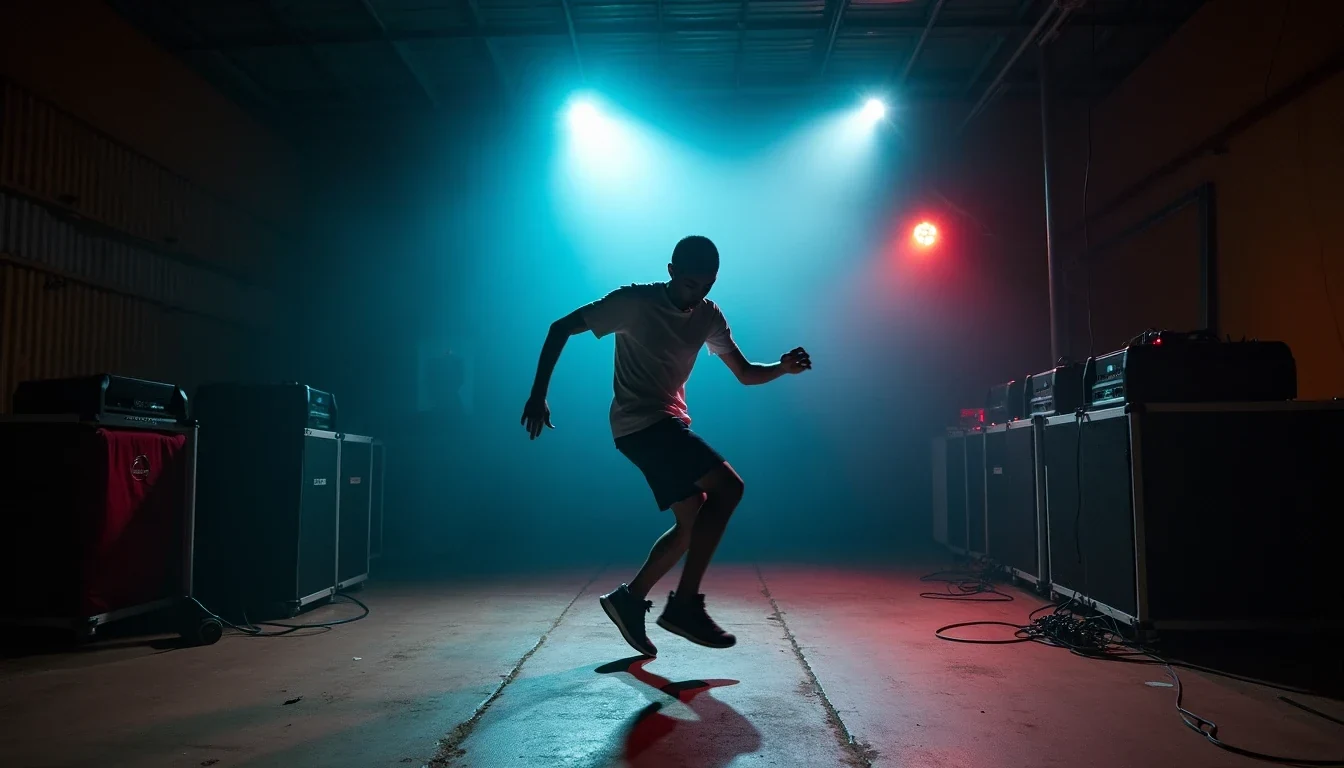
The sound system rattles the corrugated roof at three in the morning while a teenager from Jacarepaguá invents a footwork pattern that will be copied across three continents by next month. This is baile funk’s real product, not the moral panic that fills newspaper columns and legislative chambers. Fifty-five years after the first Baile da Pesada at Canecão in 1970, the genre still operates on a split screen: official heritage status on one side, police raids and funding bans on the other. The actual culture lives in the gap between those two realities.
From Soul Parties to National Heritage
The lineage starts in Rio’s Zona Norte, where black soul and charme dances in the late 1960s and early 1970s created spaces for working-class Black Brazilians to move to imported American records. The Baile da Pesada at Canecão in 1970, now commemorated by Dia Nacional do Funk on 12 July under Law 14.940/2024, was a party, not the birth of a genre. Participants chased pleasure and community, not institutional recognition.
Miami bass arrived in the 1980s with its booming 808s and stripped-down drum programming. Rio DJs like DJ Marlboro adapted those templates to local tastes, and the sound thickened. By the 1990s, Furacão 2000 had built a distribution and event infrastructure that turned neighborhood MCs into regional celebrities. Proibidão lyrics, with their explicit references to favela drug factions, drew police attention and media condemnation.
The 2000s brought geographic expansion and mutation. Funk carioca traveled southeast to São Paulo, where it absorbed local electronic music influences and became funk paulista, then pancadão. Pancadão was named for the massive sound systems mounted in car trunks that turned parking lots into mobile clubs. The passinho dance emerged from Rio’s favelas in the early 2010s, a rapid-fire footwork style that transformed the genre’s visual identity and eventually earned its own heritage protection under Rio State Law 10.289/2024.
Recognition has accumulated in layers. Rio State Law 5.543/2009 defined funk as a cultural movement. Law 10.113/2023 designated old-school bailes as intangible state heritage. The passinho followed in 2024. The national holiday came later that same year. Each law arrived after decades of cultural production, never ahead of it.
The Repression That Runs Parallel
Recognition has never extinguished hostility. In 2025, São Paulo city councilman Oruam lent his name to PL 26/2025, a bill that would ban publicly funded performances by artists accused of glorifying crime. The proposal, still pending at the Câmara Municipal, has already been replicated in other state capitals and several interior São Paulo towns. The mechanism is familiar: attach criminality to cultural expression, then restrict resources.
This is not a new strategy. Proibidão has been used since the 1990s to justify police raids on bailes, confiscation of sound equipment, and arrests of organizers. The framing shifts with the political moment, from public security to protection of public funds, but the target remains consistent. The response changes. Where earlier generations of funk artists operated in legal gray zones, contemporary MCs and DJs now cite heritage laws in court challenges and public statements.
The tension produces strange contradictions. A passinho dancer might perform at a state-sponsored cultural festival on Saturday and face police harassment at a community baile on Sunday. An MC whose lyrics are cited in a PL 26/2025-style ban might simultaneously have a track licensed for a government tourism campaign. The culture absorbs these contradictions because it has never depended on consistency from institutions.
Three Kinds of Baile, Three Kinds of Presence
Community bailes remain the form closest to the genre’s origins. These are neighborhood events, often free or charging R$ 5-20 (2025), held in sports courts, street intersections, or small covered halls in favelas and peripheral zones. Sound systems are local, MCs are often aspiring, and the crowd is drawn from walking distance. The atmosphere is dense, improvisational, and specific to that night and that place.
Ticketed club nights operate in established venues with professional sound, listed lineups, and door security. Entry runs R$ 30-80 (2025) in Rio and São Paulo. These events are more predictable and more accessible to visitors who lack local connections, although the energy is necessarily more contained.
Large-scale shows feature headline MCs in arenas or festival grounds, with production values approaching mainstream pop concerts. These are the most expensive and the most removed from baile funk’s street origins, though they remain important revenue streams for artists and introduction points for new audiences.
Each format demands a different approach. Community bailes require local accompaniment. Arriving with a resident who knows the terrain, the social codes, and the specific risks of that neighborhood is the basic condition for meaningful participation. Club nights and large shows are more navigable for independent visitors but still reward advance planning.
How to Show Up Without Showing Off
Practical preparation starts with transport. App-based services like Uber and 99 are the standard for arrival and departure, particularly after midnight when public transit thins and street availability of taxis becomes unreliable. Confirm driver and vehicle details before entering. For community bailes in less mapped areas, drop-off and pickup points may need coordination with your local contact.
Cash management is straightforward: carry only what you need for the night, in small denominations. Many community events do not accept cards. Visible large bills or expensive phones mark you as a target in any crowd, and bailes are no exception. Keep devices stored unless actively needed.
Drink safety follows universal nightlife rules with local emphasis. Purchase only from official vendors within the event perimeter. Do not accept open containers from strangers. Monitor your drink continuously. At community bailes, official vendor infrastructure may be minimal, so vigilance is correspondingly more important.
Photography is the etiquette point most often violated by visitors. Photographing individuals without explicit verbal consent is unacceptable. The prohibition is absolute, not contextual. Capture architecture, atmosphere, your own companions with their permission, and the general energy of the space. Do not frame individual faces without agreement. Many attendees have legitimate reasons, from employment concerns to active legal cases, to avoid documentation.
A Gentler Entry Point
For visitors uncertain about navigating community bailes directly, the Baile Charme under the Viaduto de Madureira offers a bridge. Designated city heritage since 2013, the event marked its 36th anniversary in May 2026. The charme lineage, with its slower tempos and couples dancing, predates funk carioca’s harder edges. The crowd skews older and the atmosphere is less intense. The same foundational values, community ownership and Black working-class cultural production, apply. The stakes of participation are lower for newcomers still learning to read the room.
The Baile Charme is not a sanitized version or a tourist-friendly reduction. It is a contiguous tradition, legally and culturally linked to the same heritage framework that protects passinho and old-school bailes. Attending with that understanding, rather than as a stepping-stone to “real” funk, is the respect the space demands.
The Names That Built It
Specific credit matters in a culture so often reduced to anonymous mass phenomenon. DJ Marlboro’s role in translating Miami bass to Rio’s parties in the 1980s established the sonic template that persists in modified form. Furacão 2000’s compilation series and events in the 1990s created the distribution network that professionalized the genre. Contemporary researchers like Hermano Vianna and others have documented the legal and social battles with the specificity that journalistic coverage often lacks.
Current MCs and DJs operate in the shadow of both this history and the ongoing legislative threats. Their names change rapidly with chart success, but the structural position, black working-class artist negotiating between community base and commercial crossover, remains constant.
What You Are Actually Attending
Baile funk is not a genre to consume and rate. It is a set of social practices that happen to produce music and dance as byproducts. The legal recognitions, the heritage designations, the pending bans, all orbit around this core fact without altering it. Visitors who understand this, who attend as participants in a social space rather than spectators of an exotic performance, will find the experience the genre has always offered: heavy bass, intricate movement, and the ongoing demonstration that culture can be simultaneously criminalized and celebrated without being diminished by either.