American Football
Brazil's American Football Journey With the Brasil Onças
Despite starting from scratch in 2007, Brazil's national American football team, the Brasil Onças, achieved a World Championship spot and developed new.
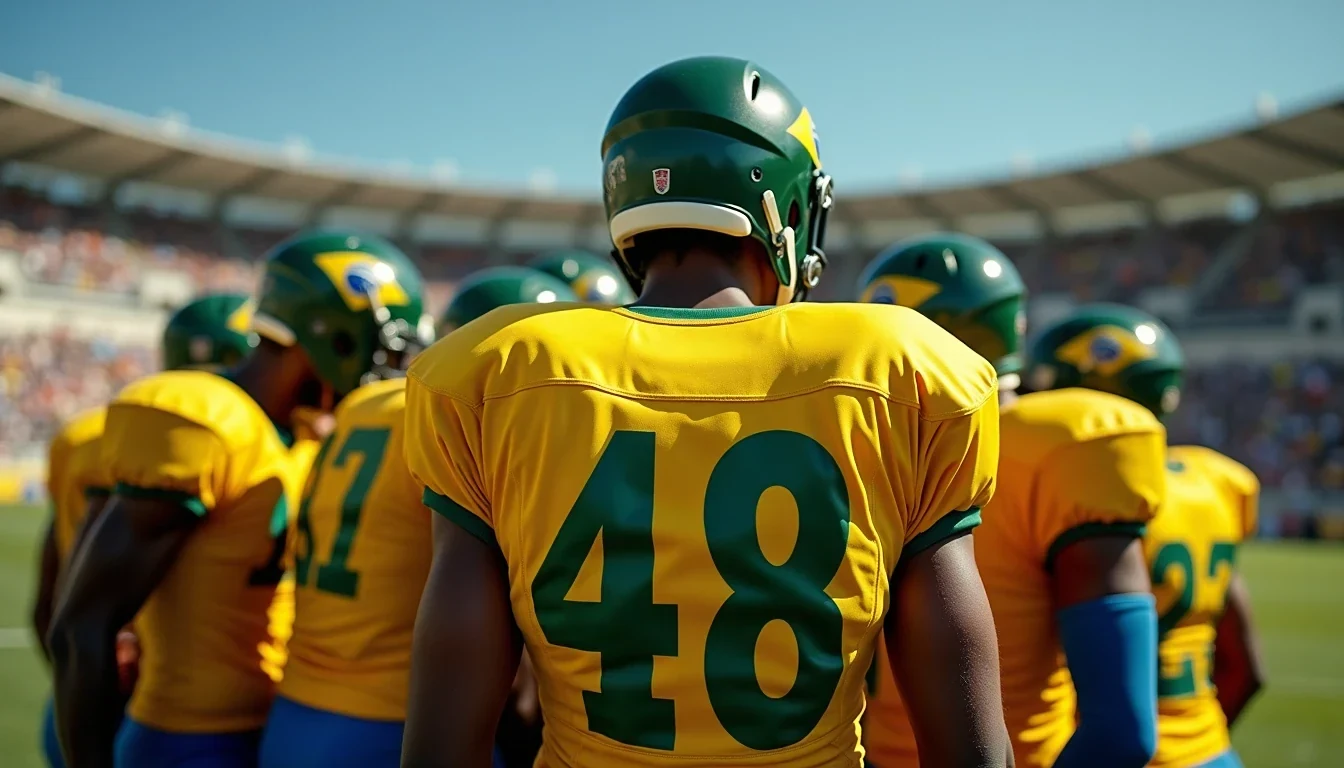
Brazil’s national American football team did not exist before 2007. When the Brasil Onças finally played their first match that year in Montevideo, the roster was built from beach football, flag, and touch athletes who had never worn pads for a national side. They lost 20-14 to Uruguay. Eight years later, the same program qualified for the IFAF World Championship in the United States and finished seventh among the world’s top programs. The sport remains invisible to mainstream sports pages in Rio or São Paulo, yet the Onças have produced a World Championship squad, a women’s trophy, and two flag teams now targeting Los Angeles 2028. The gap between public awareness and actual achievement defines American football here. That jump from scratch to a world tournament is the history of tackle football in Brazil, and it is still being written.
The national team and governing body
The Brasil Onças and the CBFA
The Brasil Onças is the nickname for every Brazilian national side in American football, covering men’s tackle, women’s tackle, flag, and youth categories. The Confederação Brasileira de Futebol Americano, or CBFA, manages the program as the national governing body and organizes the domestic competitions that feed it. Internationally, the CBFA sits under IFAF Americas, the continental arm of the International Federation of American Football. This affiliation opens the door to World Championships and Olympic qualifying events. Without it, the Onças would be an exhibition club rather than a national team with a recognized pedigree. The acronym CBFA distinguishes official national team news from club chatter online.
From first defeat to record victory
From Montevideo to the World Stage
The men’s tackle team debuted in 2007 at Estadio Charrúa in Montevideo. Uruguay won 20-14. Every athlete on that first roster had been pulled from recreational beach football, flag competitions, and touch games; organized tackle leagues were too thin to supply a national team on their own. A return fixture scheduled for Brazil in 2008 fell through when Uruguay withdrew. The program spent the next six years hunting for opponents willing to cross the border and scraping together enough gear for a full roster. On April 26, 2014, Brazil crossed the River Plate again and crushed Uruguay 49-0 on Uruguayan soil. No Onças men’s team has matched that margin since.
Debut at the 2015 World Championship
The 2015 World Championship in Ohio
The road to the 2015 IFAF World Championship began in Recife. The Onças faced a select squad drawn from the northeast leagues and posted a 57-0 win to test their systems against domestic talent before leaving the country. A one-sided result in the northeast sent them to Panama for a qualifier they could not afford to lose. They defeated the hosts 26-14 and punched Brazil’s first ticket to a World Championship. The World Championship itself was staged in the United States. Brazil played three games, secured one victory, and placed seventh overall. The harshest lesson came on July 9, 2015, in Canton, Ohio, where France handed them a 31-6 defeat. The scoreline exposed the gap between a Brazilian program built from scratch and European sides with deeper traditions. Seventh place in a debut World Championship meant the Onças had arrived as a serious national team.
Women’s success and youth struggles
Women’s Football and the Youth Pipeline
The men’s team is not the only national side wearing the Onças badge. The women’s tackle squad opened its account in São Bernardo do Campo with a 10-6 result against the AFE USA All Stars. That win delivered the Unity Bowl, a trophy taken against American competition by a roster that had to build a playbook from zero. Beating a United States all-star selection in a debut outing is a statement regardless of the opponent’s status. The youth track has been less forgiving. Brazil’s under-20 side traveled to Edmonton for its first appearance at the IFAF Junior Worlds and was demolished 110-0 by host nation Canada. The result was brutal. It placed Brazilian teenagers on the same field as a traditional powerhouse and gave the CBFA a clear benchmark for the development work still ahead.
Olympic flag football qualification
Flag Football and the Road to Los Angeles 2028
Flag football is where the Onças story turns toward the Olympics. The discipline has been added to the Los Angeles 2028 program, and Brazil has already positioned both its men’s and women’s flag teams for the cycle. In September 2025, the squads secured berths at the 2026 edition of the IFAF World Championships after competing at the Copa América in Panama. The 2026 tournament will serve as a direct stepping stone toward Olympic qualification. For athletes who started out in Brazilian flag tournaments, competing for a medal in Los Angeles is now a concrete objective. The CBFA has treated flag as a strategic priority since the Olympic announcement, and the 2025 qualification proved the investment is paying out early.
How to follow the Onças online
Where to Follow the National Teams
Fans who want to follow the Onças should bookmark the CBFA’s official website and monitor its social media accounts. The confederation publishes national team schedules, match results, and player rosters there. It also announces streaming partners for international tournaments when broadcasts are available. The sport still lacks the daily coverage given to soccer, so the CBFA channels are the only reliable source for confirmed dates and squad news. Attending local club games in São Paulo, Rio de Janeiro, Recife, or Curitiba is another way to support the pipeline; the athletes who wear the national team jersey start out in those state leagues. Check the CBFA calendar for fixtures while you are in town. National team call-ups are usually announced weeks in advance, so planning travel around a home qualifier or a Copa América stop is possible if you monitor the federation’s updates.