Celebrities
Rebeca Andrade's Paris Gold Cemented Her Brazilian Stardom
Rebeca Andrade's Paris Olympic gold made her Brazil's most decorated gymnast, a journey that began in a local social project and culminated in global.
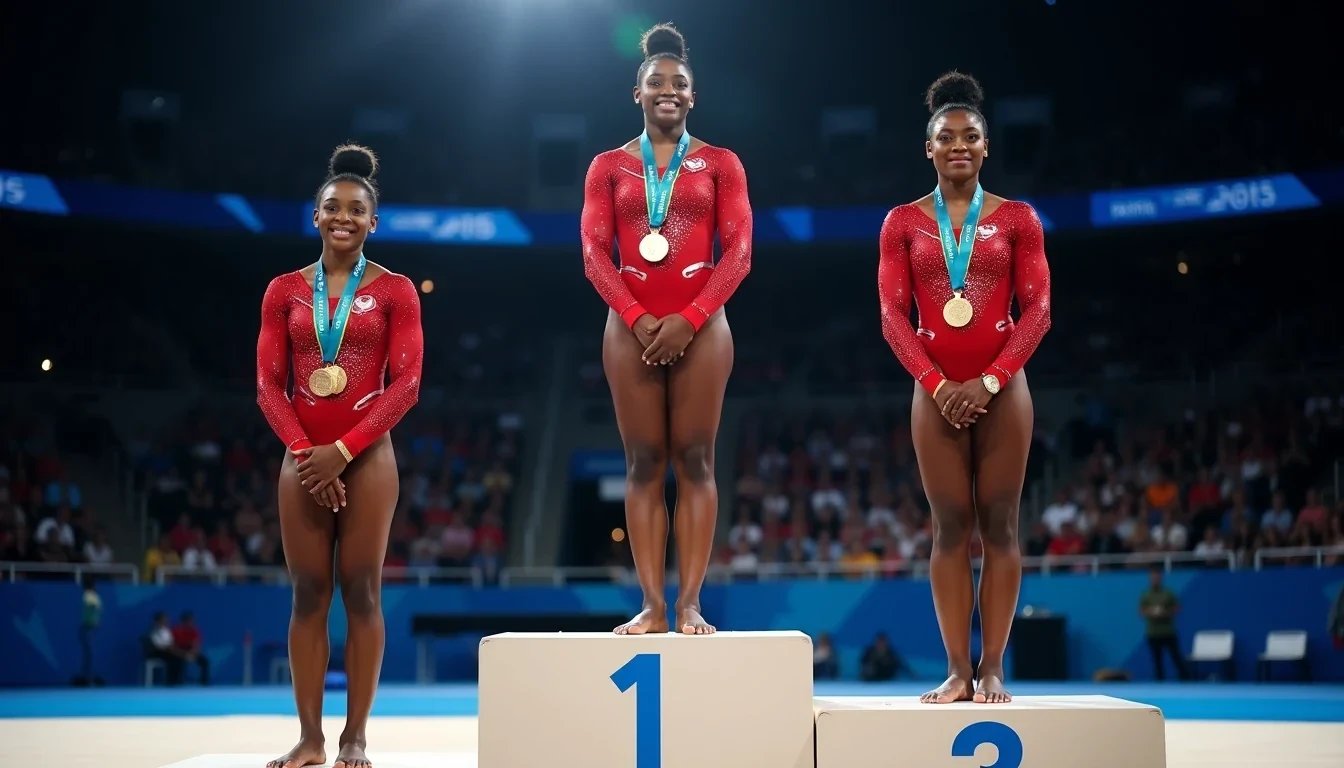
On 5 August 2024, Simone Biles and Jordan Chiles bent at the waist and bowed toward the centre of the podium. The gesture was not choreographed. It happened because Rebeca Andrade had just scored 14.166 on floor exercise and taken gold ahead of both Americans, and the image of that bow became one of the lasting photographs of the Paris Olympics. Andrade stood between them, the first Brazilian woman to win an Olympic gold in an individual gymnastics event, already the country’s most decorated Olympian before that routine ended. The bow was recognition. It was also an admission that the hierarchy of the sport had shifted, at least for one evening in Bercy.
From Guarulhos to the World Stage
Andrade was born on 8 May 1999 in Guarulhos, the dense industrial city that presses against São Paulo’s northeastern border. At six years old she entered gymnastics through a local social project, one of the thousands of grassroots programmes across Greater São Paulo that pull children into sport with minimal infrastructure and no guarantee of continuation. The pathway from these projects to elite competition is narrow. Andrade navigated it by moving to Rio de Janeiro as a teenager and joining Clube de Regatas do Flamengo, the club that has produced the bulk of Brazil’s national gymnastics talent.
Her early promise collided with anatomy. Between 2015 and 2022, Andrade tore the anterior cruciate ligament in her knee four times, each injury requiring surgery and rehabilitation that measured in months. She has described these periods in public interviews as isolating and financially precarious, noting that she continued training through pain and uncertainty without the security of guaranteed income. The comebacks were not merely physical. Each return required relearning skills she had already mastered, rebuilding confidence on apparatuses where a single misstep compounds joint damage. By Tokyo 2020, postponed to 2021, she had already accumulated two of her four ACL tears. She won vault gold and all-around silver anyway.
The Medal Count That Rewrote Records
The Paris haul gave Andrade four medals from a single Games: floor gold, all-around silver, vault silver, and team bronze. Added to her Tokyo vault gold and all-around silver, she reached six Olympic medals total. That collection, two gold, three silver, one bronze, pushed her past sailors Robert Scheidt and Torben Grael, who had held the Brazilian record at five medals each for more than two decades. Scheidt and Grael earned their records across multiple Olympiads in a sport where longevity is expected. Andrade reached six at 25, in a discipline where most athletes peak before that age and retire shortly after.
The floor final was the decisive moment. Andrade’s routine opened with a double layout, followed by a sequence of tumbling passes set to a medley of Brazilian pop and regional music that she had selected with her coaches. The choreography incorporated arm movements drawn from Afro-Brazilian dance forms, a choice she has said was deliberate, meant to mark her presence as a Black Brazilian woman on the sport’s highest stage. The score of 14.166 placed her 0.133 ahead of Biles, who had won the all-around title earlier in the week. Chiles took bronze at 13.666. The bow on the podium was spontaneous. Biles initiated it, Chiles followed, and photographers captured the three athletes in a triangle of mutual regard that circulated within minutes on social media and front pages.
Public Figure, National Symbol
Andrade’s return to Brazil after Paris triggered the sequence of honours that now accompanies Olympic success for athletes who transcend sport. President Luiz Inácio Lula da Silva awarded her the Order of Rio Branco, the country’s highest civilian decoration for foreigners and nationals, in a ceremony at the Palácio do Planalto. She appeared on the cover of Vogue Brasil and Forbes Brasil within months of the Games, the former photographing her in haute couture against backdrops of Rio’s coastline, the latter ranking her among the country’s most influential personalities under 30.
Her commercial endorsements follow a pattern she has articulated in interviews: she accepts partnerships only with brands she uses or believes she can represent without contradiction. Her current sponsors include Adidas, Samsung, and Banco do Brasil. She has declined approaches from betting companies, a stance that became public when she discussed it in a podcast interview in late 2024, citing her desire to avoid associations that could reach young fans who followed her from the social projects where she began.
The representation question she addresses directly. In multiple interviews since Tokyo, Andrade has stated that she understood her visibility as a Black woman from a working-class background in a sport historically dominated by other demographics. She has described receiving messages from parents of young Black girls who enrolled in gymnastics classes after watching her compete, and she has said that this feedback, more than medals, measures her impact. She does not present herself as an activist. She presents herself as evidence that the pathway exists.
Watching Andrade and Brazilian Gymnastics Live
For readers who want to see elite gymnastics in Brazil rather than through Olympic broadcasts, the calendar offers several entry points. The Confederação Brasileira de Ginástica organises two principal annual competitions: the Campeonato Brasileiro de Ginástica Artística, typically held in the second half of the year, and the Troféu Brasil, which functions as a qualifying series for national team selection. Locations rotate among Brazilian cities. The 2024 Brazilian Championship took place in Vitória, Espírito Santo, in October. The 2025 calendar had not been finalised at time of writing; the CBG publishes dates at cbg.org.br.
Flamengo occasionally opens training sessions or internal competitions to the public at its Ginásio Hélio Maurício in Rio’s Gávea neighbourhood. These are not regular events and require monitoring the club’s social media channels for announcements. Andrade trains primarily at this facility when she is not in international competition camps.
Ticket prices for national championships vary by session. Finals typically range from R$ 40 to R$ 120 (2024 prices), with premium seating closer to R$ 200. The Troféu Brasil qualification rounds are often cheaper or free, held in smaller venues with limited seating. For visitors planning around specific dates, the feriado weekends of Corpus Christi and Proclamação da República in June and November frequently host gymnastics events, though confirmation requires checking CBG announcements.
Rewatching the Paris Routines
Andrade’s Paris 2024 performances remain available through official Olympic channels. Olympics.com hosts full replays of all apparatus finals and the all-around competition, accessible without subscription but with regional availability that may require Brazilian IP addresses for some content. The official Olympic YouTube channel carries edited highlights of her floor final, vault final, and all-around performance, including the podium ceremony with Biles and Chiles. Brazilian broadcasters SporTV and GloboPlay retained replay rights for the Paris Games through late 2024; their archives may extend into 2025 depending on licensing renewals.
For viewers who want context rather than isolated routines, the CBG’s own YouTube channel uploads competition footage from domestic events with Portuguese commentary, useful for understanding how Andrade’s routines have evolved since Paris. Her floor music, the Brazilian medley that accompanied her gold medal, has been identified in fan analyses as combining sections from BaianaSystem and other contemporary Brazilian artists, though Andrade herself has not publicly confirmed the full tracklist.
What Comes Next, and What Already Is
Andrade has not announced retirement plans, and this article will not speculate on them. She has indicated in interviews that she intends to continue competing through the 2025 season at minimum, with the World Championships in Jakarta as a probable target. Her knee history makes long-term forecasting irrelevant. She has already exceeded every prior benchmark for Brazilian gymnastics longevity.
The more interesting question is what her presence has changed. Brazilian gymnastics programmes in social projects have reported increased enrollment since Tokyo, a trend that accelerated after Paris. The CBG has not published comprehensive national statistics, but individual clubs in São Paulo, Rio de Janeiro, and Belo Horizonte have described waiting lists for beginner classes. Whether this produces a generation of competitive athletes remains to be seen. What is already visible is the shift in who appears in Brazilian gymnastics marketing, in coaching staff photographs, in the audience at national championships. The default image of the sport in Brazil no longer defaults to a single demographic.
Andrade did not ask to carry this weight. She asked to perform her floor routine cleanly, to stick her vault landings, to complete her bar routine without the errors that have occasionally cost her in all-around competition. The bow from Biles and Chiles was not about any of that directly. It was about the fact that she had done it, repeatedly, through injuries and financial uncertainty and the structural neglect that Brazilian athletes in non-revenue sports learn to navigate. The bow said: we see what this cost. Andrade’s career says: the cost was worth paying, and the pathway, however narrow, is now wider behind her.