Combat Sports
Capoeira's Banned Combat History And Where To Join a Roda
Capoeira, once a criminal offense in 19th-century Brazil, evolved from a banned fighting system into a UNESCO-recognized symbol of national identity.
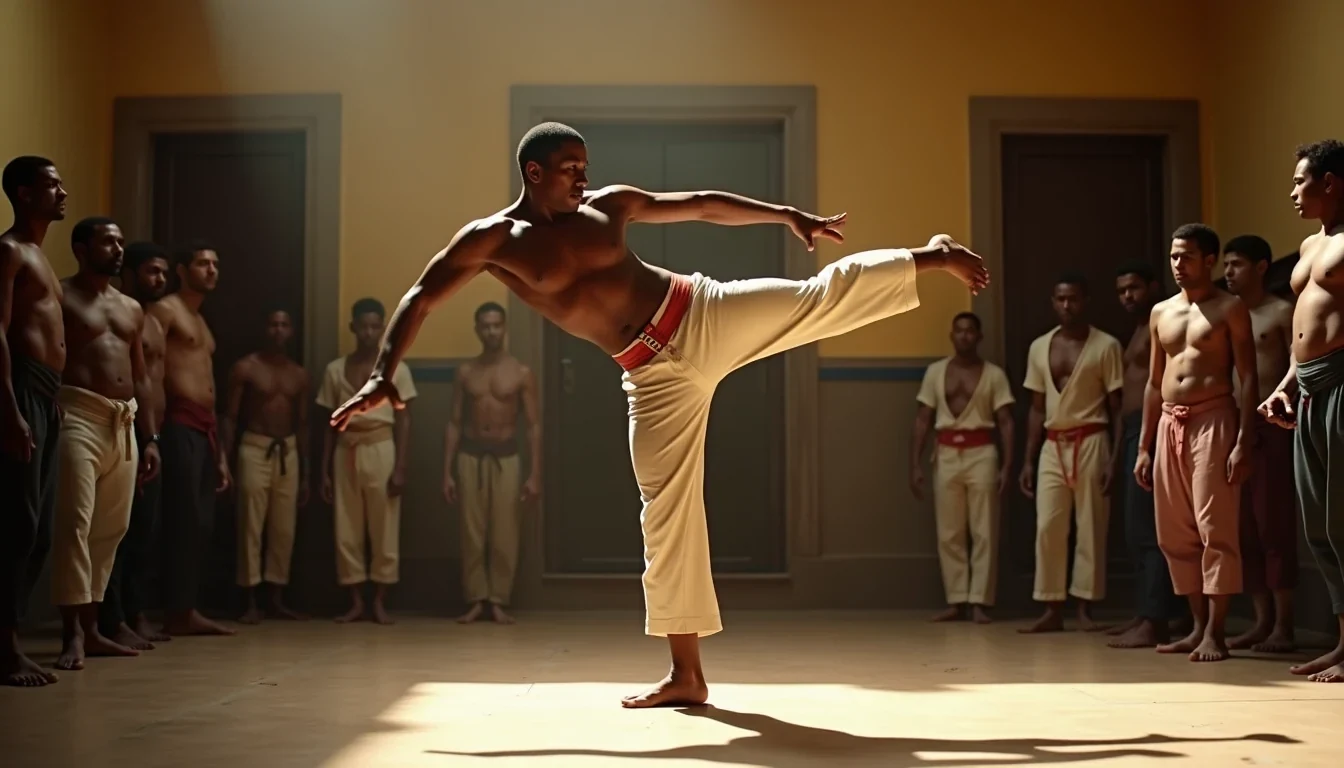
The 1890 penal code threatened capoeiristas with between two and six months behind bars for playing in public. Brazil’s young republic had abolished slavery in 1888; two years later it criminalised the martial art those communities carried with them. Officials recognised a fighting system in the kicks, sweeps, and headbutts, and they chose to stamp it out.
By 2014 the same art had become a symbol of national identity. UNESCO admitted the roda de capoeira to its roster of living heritage that year, defining the circle as a space where a master plays a single-string percussion instrument, the berimbau, flanked by a counter-master and disciples. The distance between a prison cell and a heritage certificate spans barely more than a century, crossed by men who treated capoeira as combat long before the state decided to celebrate it.
From Outlawed Fight to World Heritage
The ink on Brazil’s first republican constitution had barely dried when lawmakers targeted capoeira. The 1890 code treated street practice as a crime against public order, punishable by two to six months in jail. Police swept through Salvador and Rio de Janeiro breaking up circles, confiscating instruments, and arresting players. The violence was deliberate. Capoeira had developed among Afro-Brazilian communities in the late nineteenth century as a method of self-defence, cultural preservation, and collective memory. A state that had just ended slavery saw those gatherings as threats.
The art moved into back alleys, warehouse basements, and the private courtyards of trusted elders. By the early 1930s the risk remained real, yet Manuel dos Reis Machado decided to teach openly. Operating in Salvador, he advertised his classes as Luta Regional Baiana, a regional fighting method, because the word capoeira itself could still summon a police baton. The school opened in 1932. Students learned upright kicks, evasions, and sequences in a formal room rather than a hidden corner.
The strategy worked. In 1937 President Getúlio Vargas removed capoeira from the penal code, granting it a legal existence for the first time since the empire fell. Sixteen years later Bimba was invited to demonstrate the art at the presidential palace. Vargas reportedly described capoeira as the one national sport that belonged authentically to Brazil. The statement carried political weight, giving the martial art a legitimacy no police edict could erase and opening doors to academies across the northeast and eventually the world.
The final seal arrived in 2014. UNESCO’s inscription recognised the movements and the full social world of the roda, from the berimbau’s command to the communal singing that surrounds the players.
Bimba’s Speed and Pastinha’s Stealth
While Bimba was building his school in Salvador, capoeira still carried the stigma of criminality. He responded by systematising it, creating fixed teaching sequences, drilling upright strikes at speed, and treating the roda as a laboratory for combat efficiency. The approach became known as Capoeira Regional. In the 1960s his line devised the first formal ranking method, presenting students with coloured cords, called corda or cordão, during a batizado graduation. Most academies across Brazil now use some version of that system.
Vincente Ferreira Pastinha, known as Mestre Pastinha, opened a different school in Salvador in 1941. Capoeira Regional chased speed and structure, but Capoeira Angola sank low to the ground. Pastinha’s players moved with ritual patience, hiding attack inside feints and using malícia, the cunning that turns a smile into a trap. The music slowed. The game became a dialogue of deception rather than a race to land the first kick.
The difference is visible within seconds of watching a roda. A Regional player stands taller, closes distance quickly, and throws direct strikes in flurries. An Angola player crouches, rocks slowly, and might spend a minute circling before committing to a single sweep or headbutt. Regionalists point to objective technique and physical conditioning. Angola players argue that without malícia and the old rituals, capoeira loses its soul. Visitors will hear both claims inside the first week in Salvador, often from teachers who respect each other even while disagreeing.
The Vocabulary of the Fight
Every capoeirista begins with the ginga, the rocking sway that never stops. The constant shift of weight between both feet hides whether the next step is escape, feint, or attack. A fighter who cannot ginga cannot play; the step is the alphabet from which every other movement is spelled.
From that base the fighter can launch a rasteira, a low sweep that cuts the opponent’s supporting leg out from under them. The move is hard to anticipate because it erupts from the same sway that looks like a retreat. The martelo follows a different path, a roundhouse kick driven through with the instep or shin and aimed at the body or head. It demands hip rotation and balance, and when it lands cleanly it ends the exchange.
The meia-lua de compasso demands that the player plant one hand on the floor and spin the body through a wide arc, delivering a heel strike with the force of the full rotation. The technique turns the capoeirista into a sweeping blade, covering distance in a single motion. At close quarters the cabeçada becomes relevant, a headbutt driven into the torso when kicks are too slow or the opponent has been pulled off balance. None of these moves exist in isolation. In a live roda they thread together inside the sway of the ginga, so a bystander might miss the attack entirely until someone hits the ground.
How the Roda Works
The berimbau controls everything. The single-string bow sets the rhythm, which dictates whether the game inside the circle is fast and combative or slow and ceremonial. A mestre usually sits beside the instrument and leads the roda, setting the tempo while singers and percussionists around the edge answer his call. The drum, the atabaque, and the tambourine-like pandeirola fill out the sound, but the berimbau remains the voice of authority.
Two players enter at a time. They approach the instrument’s base and crouch, asking permission to begin. Once inside, the pair talk with their bodies, kicking, sweeping, dodging, and sometimes vaulting over one another while the circle claps and sings. The game ends when the mestre stops the music, when one player clearly quits, or when the energy simply exhausts itself. Another pair replaces them, and the roda continues until the last candle burns out or the last bus leaves.
The ritual governs safety, hierarchy, and the boundaries of acceptable force. A good mestre reads the room, slowing the rhythm when beginners step in and accelerating it when experienced fighters circle each other. The circle itself is a wall; step backwards into the crowd and the game pauses. Break the etiquette and you may find the berimbau silenced until you remember your place.
Watching or Training in Salvador
Travellers looking for a genuine roda should skip the choreographed street shows marketed to tourists and head directly to the academies. In Salvador, guides generally place lineages connected to Mestre Bimba around the Pelourinho, while Angola rodas traditionally gather at the Forte de Santo Antônio, in the district beyond Carmo. As of 2025, operating hours and regular class schedules at both locations remain difficult to confirm; visitors should message or phone an academy directly rather than relying on outdated listings.
The safest entry is an open evening or a beginner class. Arrive in training clothes, remove jewellery, and wait for the mestre to invite you onto the floor. If you only want to watch, stand at the edge of the circle and keep phones in pockets until you have asked explicit permission to film or photograph. Capoeira is a live conversation, and uninvited cameras interrupt the sentence.
Drink water before you arrive. Salvador’s heat, often climbing past 30 °C, does not forgive dehydration. Wear light trousers or leggings that cover the knees; the floor is often concrete or packed earth. Finally, bring cash for a taxi home. Many rodas end late, and the historic centre empties quickly after dark. Plan the exit before the berimbau starts, and you can focus entirely on the game.