Festivals
An Insider's Calendar For Salvador's December To Carnaval
Discover Salvador's vibrant street festival cycle, the *festas de largo*, from December's red Santa Bárbara celebrations to Carnaval, understanding its unique.
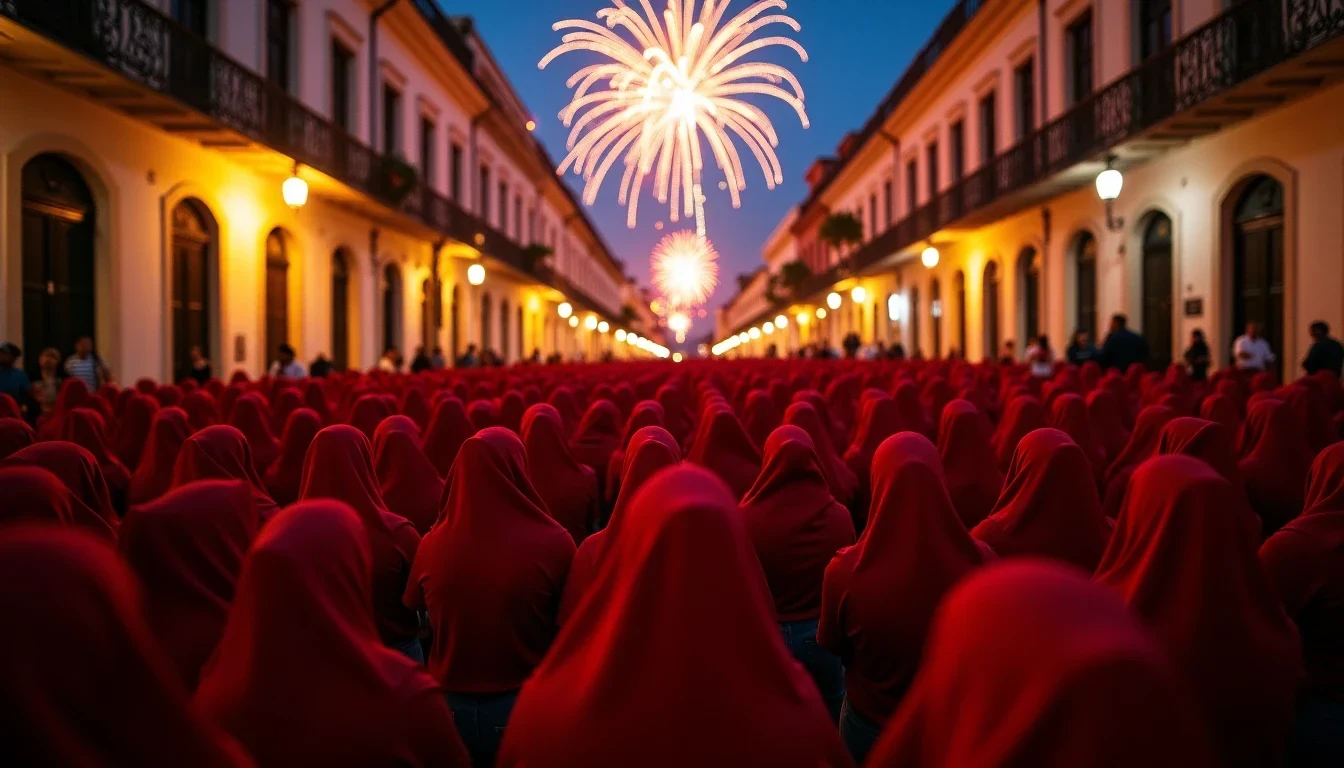
The fireworks start before dawn on 4 December. By the time the sky turns pink over the Baía de Todos os Santos, the Centro Histórico is a river of red. Santa Bárbara’s devotees fill the cobblestones from Pelourinho to Baixa dos Sapateiros. If you visit Salvador in early December, you will wonder why half the city dresses like a flame. This is the opening act of the festas de largo, the street festival cycle that runs from that first explosion of colour straight through to Carnaval. It operates on a logic that is neither fully Catholic nor fully Candomblé but something older and specific to Bahia. The city shifts between these dates: red in December, white in mid-January, blue and white by early February. Each colour announces which orixá and which saint are being honoured that week, which streets will close, which barracas will sell acarajé at three times the usual rate, and whether you should wear comfortable shoes or accept that your feet will hurt.
Santa Bárbara and Conceição da Praia in December
Santa Bárbara arrives on 4 December with the subtlety of a percussion section. The predawn fogos wake anyone within two kilometres of the Igreja de Nossa Senhora do Rosário dos Pretos. The procession that follows threads through the Centro Histórico toward Baixa dos Sapateiros. Devotees wear red because Santa Bárbara is the patron of firefighters and because the colour belongs equally to Iansã, the orixá of wind and lightning, with whom she shares her day. The procession stops at the fire brigade headquarters on Rua do Tesouro, where uniformed bombeiros receive blessings. It stops again at the Mercado de Santa Bárbara, where commerce and devotion dissolve entirely. By mid-morning the mass has ended and the largo has begun: samba de roda circles form in the Praça, barracas selling acarajé and efó compete for space with beer carts, and the red-clad crowd moves as a single organism toward the nearest sound system.
Four days later, on 8 December, the colour palette shifts to yellow and light blue for Nossa Senhora da Conceição da Praia at the basilica in Comércio, steps from Mercado Modelo. This is often cited as Brazil’s oldest continuous religious festival, though the density of the crowd matters more than any historical claim. The procession circles the church and spills onto Avenida Contorno. While the Catholic rite dominates inside the basilica, the orixá Oxum, associated with fresh water and prosperity, receives her share of attention in the prayers and offerings of those who know both calendars. The Comércio neighbourhood on this day is a logistical puzzle: roads close from before dawn, bus routes fragment, and anyone trying to reach the ferry terminal should plan to walk the last kilometre. Dress for heat, not for ceremony. The basilica is beautiful and cool, but the largo is asphalt and full sun.
Bom Jesus and the Lavagem Frame January
1 January in Salvador is not a recovery day. The maritime procession of Bom Jesus dos Navegantes departs from the same Conceição da Praia basilica where the December crowds gathered, but instead of circling the neighbourhood it crosses the bay. Boats of every size, from fishing skiffs to decorated ferries, follow the image of Bom Jesus toward the Igreja de Nossa Senhora da Boa Viagem, where he is received with more fireworks, more music, more largo. The Catholic frame is the blessing of seafarers; the Candomblé reading honors Oxalá, the oldest orixá, the creator, the force of new beginnings. Participants wear white, a color that carries meaning for both faiths: purity for the Catholics, the color of Oxalá’s terreiro for the Candomblé initiates. The bay crossing takes hours, and the waiting crowds at Boa Viagem begin their own celebrations before the lead boat is halfway across.
The Lavagem do Bonfim on Thursday 14 January 2027 is the gravitational center of the entire cycle. The date moves: it falls on the Thursday before the second Sunday after Epiphany, which means it shifts year to year within a two-week window. For reference, the 2025 and January 2026 editions followed the same rule, and the Prefeitura de Salvador confirms the exact timing annually alongside the Arquidiocese. The procession covers eight kilometers from Conceição da Praia to the Colina Sagrada, where the Igreja de Nosso Senhor do Bonfim overlooks the city. Everyone wears white. The baianas in their traditional lace and full skirts lead the washing of the church steps with perfumed water, a ritual that is Candomblé in its mechanics and Catholic in its setting, honoring both Nosso Senhor do Bonfim and Oxalá simultaneously. The walk itself is the event. Arrive hydrated, in shoes you have already broken in, with no expectation of finding a taxi anywhere near the route for six hours before and after. The Prefeitura’s annual announcement of road closures and altered bus routes typically comes two to three weeks ahead; checking prefeitura.salvador.ba.gov.br is the only reliable way to know which streets will become pedestrian-only and which will become parking lots for sound trucks.
Iemanjá and the Carnaval Threshold in February
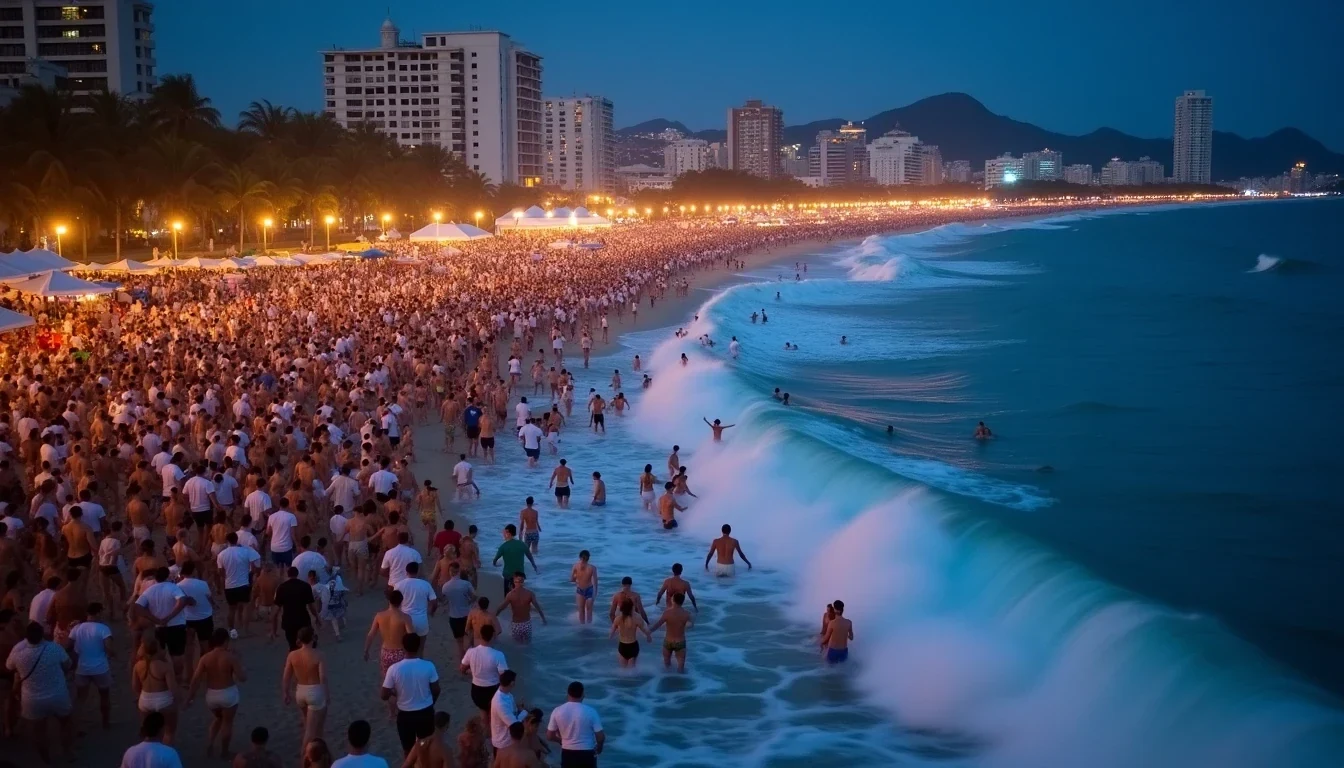
2 February is Iemanjá’s day, and Rio Vermelho becomes the city’s spiritual shoreline. The Casa de Iemanjá at the beach’s edge is the focal point, but the entire neighborhood participates. Devotees dress in blue and white, Iemanjá’s colors, and carry offerings to the water’s edge: flowers, perfume, mirrors, combs, small boats loaded with gifts that the current will carry out to the orixá of the sea. The Catholic overlay is Nossa Senhora dos Navegantes, Our Lady of Seafarers, though on this day the distinction barely registers. The crowd is dense, the beach is narrow, and the combination of salt water, candle wax, and spilled beer creates a surface underfoot that demands caution. There is no fixed procession route; the movement is from the street to the water, from the barracas to the tide line, back and forth all morning and into the afternoon.
Carnaval follows, though by early February the city has already been celebrating for ten weeks. The festas de largo do not stop to make room for it. They accelerate into it, the rhythms of samba de roda and axé that have soundtracked every December and January street party now amplified across the entire city. The same barraca owners who sold acarajé at Santa Bárbara now operate at ten times the scale along the Carnaval circuits. The color coding loosens; Carnaval is every color at once. But the calendar that preceded it has trained the city’s body to move, to process, to close streets and reopen them, to honor the saints and the orixás in the same breath.
What to Wear and What to Carry
Each festa has its own dress code. Ignoring it marks you immediately as an observer rather than a participant. Wear red for Santa Bárbara on 4 December. Wear white for Bom Jesus on 1 January, and non-negotiable white for the Lavagem do Bonfim. Wear blue and white for Iemanjá. For Conceição da Praia, the colors are less rigid, but yellow or light blue will place you in the Oxum current. Beyond the color rules, the practical requirements are consistent: light fabrics that dry quickly, closed-toe shoes with grip for the Lavagem’s eight kilometers, a hat or cap for the December and January sun, and a small bag that stays in front of your body.
Safety in the Crowd
The festas de largo are not dangerous by design, but they are dangerous by density. Pickpockets work the Santa Bárbara crowd in Pelourinho, the Lavagem walkers on Avenida Bonfim, the Iemanjá devotees pressed together at Rio Vermelho’s tide line. Carry a money belt under your shirt, not a backpack. Keep your phone in a front pocket and use it sparingly; the person checking messages on a crowded street is advertising their distraction. Do not bring your passport. A photocopy of your ID and a single card, plus cash in small denominations, is sufficient. The Polícia Militar presence is visible at the larger events, and 190 is the emergency number, but prevention is the only strategy that functions in a crowd moving to percussion.
Confirming Dates and Routes
The Prefeitura de Salvador and the Arquidiocese release official schedules annually, typically confirming dates and procession routes two to three weeks before each event. The 2025 and January 2026 editions are the most recent complete references; the 2027 Lavagem do Bonfim is confirmed for 14 January, but full programming for that year remains pending. The Prefeitura’s website and the Arquidiocese’s communications are the authoritative sources. Third-party event listings often carry outdated routes or approximate dates that do not account for the variable calculation of the Lavagem. For the festas de largo, the Catholic calendar and the Candomblé calendar are both living documents, and their intersection on Salvador’s streets changes shape slightly every year.