Food
Belém's Ver-o-Peso Where Amazonian Flavors Awaken at Dawn
Uncover the true taste of Amazonian açaí at Belém's Ver-o-Peso market, where fresh berries arrive by boat at dawn for immediate consumption, far from processed.
The açaí you know is a lie. Somewhere between the juice bars of São Paulo and the Instagram bowls of Los Angeles, a working-class staple from the mouth of the Amazon was rebranded as dessert. The real thing is thick enough to hold a spoon upright, bitter enough to make you blink, and eaten by the litre alongside fried fish and fermented manioc flour. To understand what happened, stand on the quayside at Ver-o-Peso in Belém, Pará, while it is still dark outside.
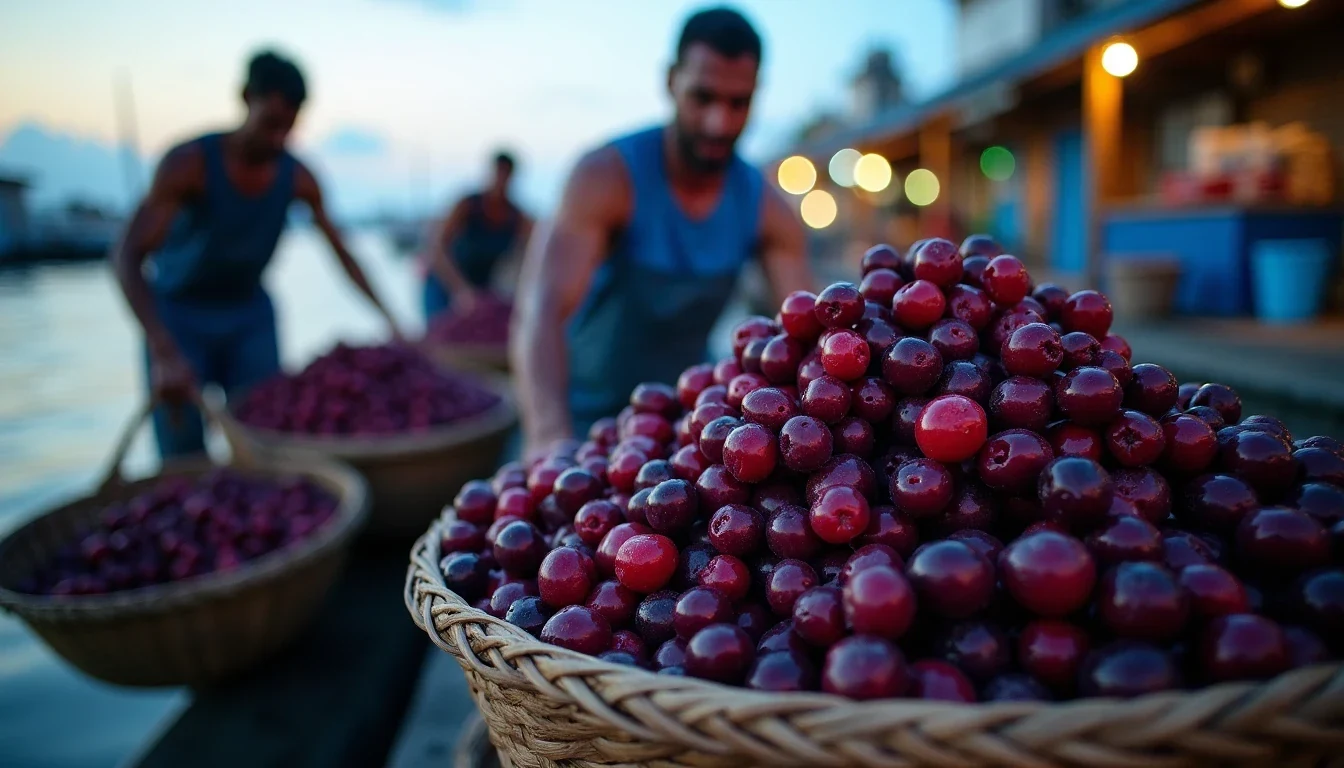
This is where the boats come in. Long before the first tourist camera clicks, wooden vessels from river islands like Combu, Cotijuba, and Marajó nudge against the dock. Crews unload hand-woven baskets called rasas, each piled high with açaí berries harvested the previous day. The Feira do Açaí has been operating since around 2:00 or 3:00 in the morning. By 5:00, the transaction floor is already slick with purple pulp and loud with negotiation. During peak season from July through December, the volume doubles. The fruit never sees refrigeration. It moves from river to market to grinder to consumer within hours, a velocity essential to its appeal.
What Locals Actually Order
Walk past the fruit sellers and head for the food stalls locals call boxes. Here, the açaí education begins. In Pará, açaí is graded by viscosity, not sweetness. Grosso is the thickest, almost pudding-like, the consistency of wet concrete. Médio slides easier. Fino is runny, considered inferior, sometimes cut with water. You order by the litre, not the bowl. The standard accompaniment is farinha d’água, a fermented manioc flour with a sharp, almost cheesy tang, or plain tapioca pearls. The protein is fried fish, grilled meat, or shrimp. This is lunch, not breakfast; savory, not sweet.
The first spoonful confuses southern Brazilian palates accustomed to granola and banana. The açaí is earthy, slightly tannic, aggressively purple. The farinha adds grit and salt. The fried fish provides crunch and oil. It is a complete meal, designed for people who will spend the next eight hours on their feet in tropical humidity. The energy release is slow and substantial. Rio de Janeiro turned açaí into a post-gym treat, but Belém never stopped treating it as fuel.
The 2025 renovations for COP30 rebuilt this entire section. Over three hundred stalls were reconstructed, the Feira do Açaí infrastructure was replaced, and the iron Mercado de Peixe reopened after structural work. The market still looks like organized chaos, but the drainage functions and the electrical wiring no longer presents an active fire hazard.
The Dishes That Define the Region
Açaí is the entry point. The deeper cuts require more adventurous ordering.
Tacacá arrives in a cuia, a hollowed gourd that keeps the contents hot. The base is tucupi, a fermented manioc broth with a bright, vinegary punch that comes from Indigenous preparation techniques. Vendors thicken it with goma, a tapioca starch slurry, then add jambu, a leafy green that triggers an immediate, surprising numbness on the tongue and lips. Dried shrimp float on top. The combination is sour, saline, and neurologically active. Afternoon is the traditional window, and the stalls that specialize in it often do not open before 11:00.
Maniçoba demands more patience than most visitors can spare. Ground manioc leaves contain cyanogenic compounds that require approximately one week of continuous cooking to break down. The result is a dark, dense stew with a mineral depth somewhere between collard greens and slow-cooked beef. It is the ceremonial dish of the Círio de Nazaré, Belém’s massive October religious festival. Ordering it outside that context still carries a sense of occasion. The cooking time makes it expensive and scarce. When you find it, the portion is small and the price is not negotiable.
Pato no tucupi covers similar territory with more protein. Duck simmers in tucupi broth with jambu until the meat relaxes and the broth reduces to something that stains fingers for days. Festival kitchens produce it in volume. Individual market stalls that offer it are showing off.
The fruit stalls operate in a separate register entirely. Cupuaçu smells like chocolate and pineapple having an argument. Bacuri is custard-sweet and spoonable. Taperebá, also called cajá, delivers a tart slap that wakes the mouth. Muruci is small, intense, and almost impossible to find outside northern Pará. These are not smoothie ingredients. They are eaten fresh, with the juice running down wrists, or processed into concentrated pulps that locals freeze and dilute through the off-season.
How to Move Through the Market
Ver-o-Peso rewards early arrival and punishes hesitation. The complex opens around 5:00 on weekdays, with individual sectors staggering their hours through Saturday evening. Sunday operations are reduced and unpredictable. The Prefeitura de Belém maintains official schedules, but enforcement is theoretical. Vendors set their own rhythms.
The layout is roughly geographical by product. The iron Mercado de Peixe handles the catch from the previous night, with whole tucunaré and pirarucu laid out on tiled counters that get hosed down between customers. The meat hall sits adjacent, separated by a corridor of herb and mandinga stalls selling banhos de cheiro, aromatic bath preparations used in Afro-Brazilian spiritual practice. Farinha sellers occupy the northern edge, with dozens of varieties of manioc flour arranged by fermentation degree and texture. The food boxes cluster where foot traffic is heaviest, competing for attention with shouted prices and the visible turnover of fresh oil in frying pans.
Payment requires preparation. Cash in small denominations remains essential for transactions under R$ 20. PIX is increasingly accepted by vendors with smartphones, but connectivity fluctuates in the covered sections. Card machines exist at larger stalls and are unreliable before 8:00 when network traffic peaks.
Food safety is observable. Choose stalls where the cook handles money separately from food, where oil is visibly fresh and golden rather than dark and recycled, and where a queue of locals indicates turnover fast enough to prevent spoilage. The market has improved post-COP30, but it is still an open-air operation in tropical heat. The consequences of optimism are gastrointestinal and memorable.
The UNESCO Context and What It Means
Belém became a UNESCO Creative City of Gastronomy in 2015, a designation that recognized what locals already knew: the convergence of Indigenous manioc processing, riverine protein sources, and Afro-Brazilian flavor construction creates a cuisine without direct parallel. Ver-o-Peso is the physical expression of that recognition. The market is not a museum or a performance for visitors. It is the supply chain for a city of 1.5 million people, and outsiders can walk through it incidentally.
That authenticity creates friction. The 2025 renovations improved infrastructure but also raised rents, displacing some smaller vendors to peripheral locations. The rebuilt Feira do Açaí is cleaner and better lit, which helps photography but does not change the product. The tension between preservation and development is visible in the new paint on old iron, the covered walkways over previously open gutters.
For visitors overwhelmed by the sensory density, Estação das Docas offers a controlled alternative. The renovated warehouse complex ten minutes west provides restaurants with printed menus, fixed prices, and air conditioning. The food is competent and the setting is pleasant. It is also two steps removed from the source. Use it for recovery, not for discovery.
The Practical Frame
Plan for a minimum of three hours, preferably starting at 6:00 on a Tuesday or Wednesday when weekday volume meets weekday organization. Eat açaí first, while the grinders are fresh and the grosso grade has not sold out. Move to tacacá after 11:00. Save fruit purchases for departure, when you can judge what you can realistically consume or transport. Carry R$ 50 in mixed bills, confirm PIX availability before ordering, and wear shoes that can handle uneven, occasionally wet flooring.
The main harvest runs July through December. Outside those months, açaí is available but prices rise and quality thins. The Círio de Nazaré in October transforms the entire city, including the market, into a compressed, high-energy environment that rewards planning and punishes spontaneity.
What you are eating at Ver-o-Peso is not a trend or a discovery. It is a continuous practice, thousands of years old in its manioc techniques, hundreds of years old in its market form, currently surviving the attention of global climate conferences and food tourism. The açaí will still be thick and unsweetened when the visitors leave. The jambu will still numb unfamiliar tongues. The question is whether you will taste it as it is, or keep looking for the version you already know.