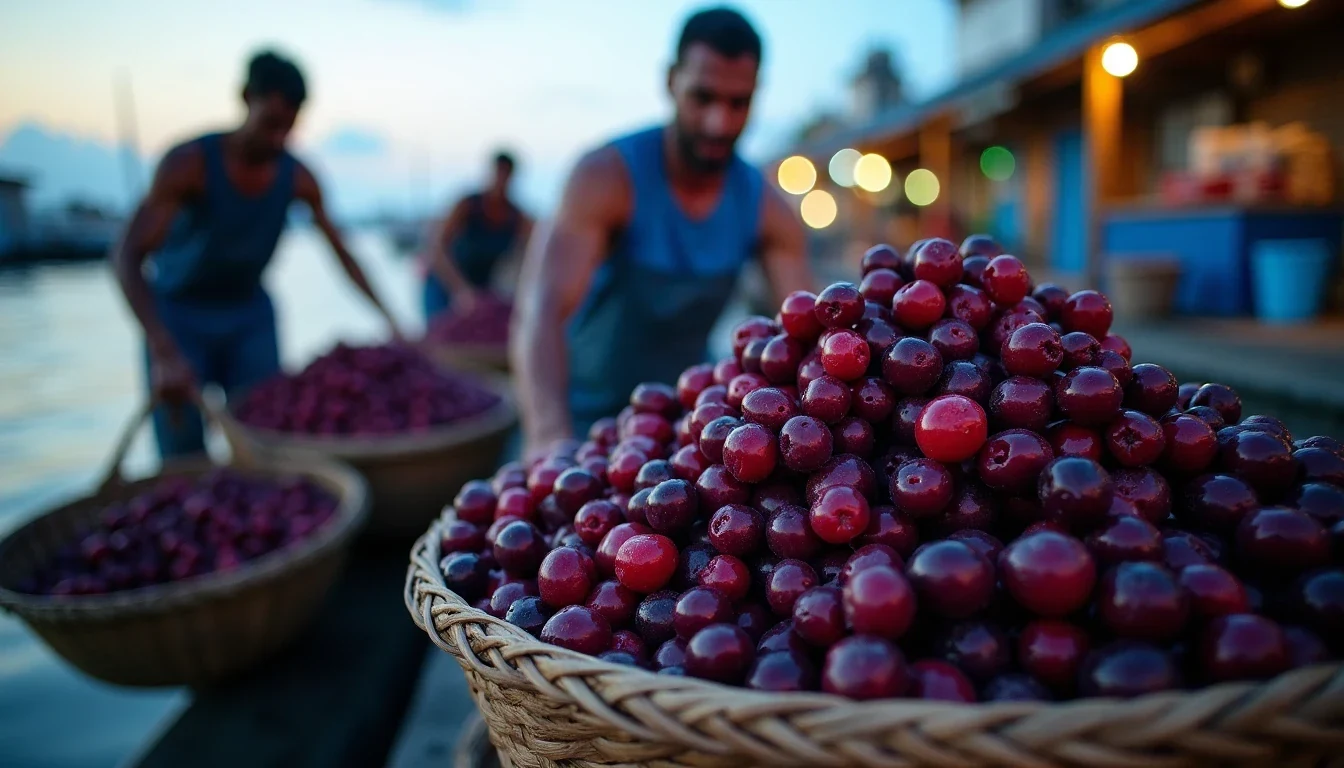
Food
Brazil's First Three-Star Michelin Restaurants and Native Flavors
São Paulo's Evvai and Tuju have achieved Brazil's first three Michelin stars, a historic moment for Latin American cuisine that blends native flavors with.
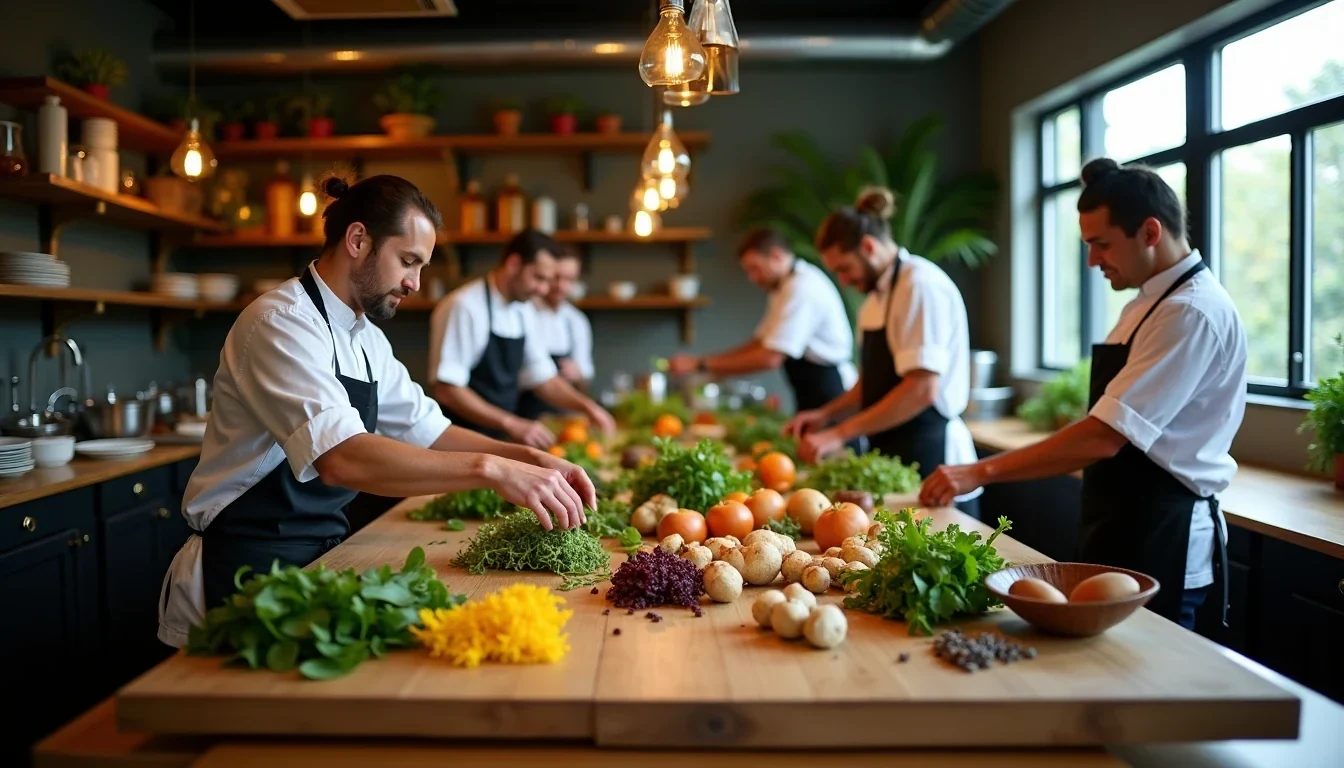
Brazil waited longer than any major food culture for its first three Michelin stars. When they finally arrived on April 13, 2026, they landed as a pair. The Copacabana Palace ceremony gave São Paulo’s Evvai and Tuju the guide’s highest rating, making them the first three-star restaurants in all of Latin America, according to Michelin’s own classification. For a country whose ingredients have shaped global gastronomy while its restaurants stayed invisible to the French guide, the moment feels like a correction rather than a discovery. These kitchens were always this good; now they have the stickers.
Evvai and Tuju at the Summit
Luiz Filipe Souza’s Evvai earned its third star through relentless refinement of contemporary Brazilian cooking. The restaurant builds plates around textural tension, crisp against yielding, hot against cold, with local ingredients pushed through techniques borrowed from European training and then stripped of their foreign accent. Souza worked in Spain and Denmark before returning to São Paulo. His kitchen shows the marks of that discipline without performing it. The food reads as Brazilian to anyone who has eaten here long enough to recognize the baseline.
Ivan Ralston’s Tuju operates on different terms entirely. The restaurant commits to what Michelin calls “conscious-gastronomy” and what Ralston practices as seasonal absolutism: no imported produce, no out-of-season shortcuts, and a menu that rewrites itself according to what Brazilian soil currently offers. This sounds like farm-to-table common sense until you consider the logistics. Brazil’s seasons do not map neatly onto European templates, and many of the country’s most distinctive ingredients, from certain palm varieties to specific manioc cultivars, have never entered standardized supply chains. Ralston’s team sources directly from small holders, foragers, and Indigenous cooperatives, then builds technique around what arrives. The three-star recognition validates this approach as luxury rather than limitation, redefining what fine dining can afford to exclude.
Both restaurants sit in São Paulo, confirming what locals have long known: Rio may have the postcard, but São Paulo has the knife work.
The Two-Star Hold and Advance
Three restaurants kept or gained two stars in the 2026 guide, with geography split evenly between the two covered cities. Alex Atala’s D.O.M. in São Paulo remains the most internationally recognized name in Brazilian gastronomy, though the 2026 guide finally frames his achievement with proper attribution. Atala did not discover Amazonian ingredients; Indigenous communities and river traders knew them for millennia. He built a kitchen capable of translating that knowledge into a language the global restaurant industry could read, then insisted on naming his sources rather than absorbing their discoveries into chef mythology. The guide’s 2026 language reflects this shift, noting D.O.M.’s “long work with Amazon ingredients and Indigenous knowledge” as a collaborative rather than extractive relationship.
In Rio, Rafa Costa e Silva’s Lasai and Felipe Bronze’s Oro held their two-star positions. Lasai occupies a converted house in Laranjeiras and practices a form of controlled improvisation. Costa e Silva often adjusts dishes mid-service based on the particular quality of that day’s delivery. Oro, in Leblon, takes a more architectural approach, with Bronze constructing multi-course narratives around Brazilian biomes. Both restaurants benefit from Rio’s more relaxed operational rhythm, though neither lets that relaxation touch the plate.
One Star, One Newcomer, Nineteen Total
Nineteen restaurants carried one star in the 2026 selection, with a single new entry among established names. Madame Olympe, opened by Claude Troisgros and Jéssica Trindade in Rio, joined the list through explicit engagement with heritage ingredients that many high-end kitchens treat as rustic obstacles. Tucupi, the sour yellow broth extracted from wild manioc root, appears on their menu as a foundation, not folklore. Palmito, the palm heart that has become a supermarket staple stripped of its context, returns here to its original textural range, from crisp young shoots to more mature, fibrous preparations. Trindade, who trained in Troisgros’s existing kitchens before this partnership, brings particular attention to Afro-Brazilian techniques that the French-Brazilian Troisgros dynasty had previously approached more cautiously.
Returning one-star holders include Maní, where Helena Rizzo’s legacy continues under current leadership, and Casa 201, a São Paulo restaurant that has maintained consistent quality through several chef transitions. The full list of nineteen rewards breadth as much as brilliance, from precise Japanese-Brazilian fusion to revived colonial-era recipes.
Special Awards and the Cocktail Recognition
Michelin introduced a new cocktail award for the 2026 Brazil guide, giving it to Anderson Oliveira at D.O.M. This signals a shift in how the guide treats beverages. Oliveira’s work with Amazonian fruits and fermented preparations deserves attention, but the award’s significance lies in its broader message. The guide has historically treated beverages as service infrastructure rather than creative output. Extending recognition to cocktail programs acknowledges that Brazilian drinking culture, from cachaça production to regional fruit wine traditions, carries as much specific knowledge as the food it accompanies.
Other special awards went to Pedro Coronha of Koral as Young Chef, Robério de Sousa Queiroz of Maní as Sommelier, and Raphael Zanon of Casa 201 for service. Coronha’s award is notable for Koral’s simultaneous Bib Gourmand recognition, suggesting a chef operating at star-level ambition with gourmand-level accessibility.
The Bib Gourmand Expansion
Six new restaurants entered the Bib Gourmand category, the guide’s value designation for quality cooking at manageable prices. Koral, Jiquitaia, Manioca JK, Ping Yang Thai, Tabôa, and Tanit join existing holders, expanding options for diners who want skilled preparation without the tasting-menu commitment.
Koral, in Rio, operates under Coronha’s direction with a menu that shares DNA with more expensive kitchens while keeping individual dishes below Bib Gourmand thresholds. Jiquitaia, also in Rio, focuses on Northeastern Brazilian preparations rarely seen in formal Rio dining. Manioca JK, Ping Yang Thai, Tabôa, and Tanit represent São Paulo’s more diverse mid-range landscape. Ping Yang Thai notably brings non-Brazilian cuisine into a guide that has historically privileged local or European traditions. The inclusion suggests Michelin’s Brazil evaluators are broadening their definition of what constitutes relevant dining in a city where Thai, Korean, and Lebanese communities have operated for generations.
What Conscious Gastronomy Actually Means
Michelin’s 2026 guide specifically named A Casa do Porco, Corrutela, and Tuju as practitioners of “conscious-gastronomy,” a term that risks becoming as empty as “farm-to-table” if left undefined. In these Brazilian contexts, it carries specific content. A Casa do Porco, run by Jefferson and Janaína Rueda, sources entire pigs from designated farms and uses every part. More significantly, it prices accessibly enough that the technique serves a local audience rather than tourists seeking authenticity. Corrutela, in São Paulo’s Vila Madalena, operates as a zero-waste kitchen in a country where restaurant waste infrastructure remains underdeveloped. This commitment requires active problem-solving rather than contracted disposal.
The guide’s emphasis on crediting Indigenous and Afro-Brazilian sources rather than chefs alone represents a genuine editorial shift. Previous Latin American guides have celebrated chefs as discoverers of “new” ingredients that were staples of specific communities. The 2026 Brazil language, applied to D.O.M.’s Amazon work and to broader guide framing, attempts to reverse this narrative. Whether it succeeds depends on whether the restaurants themselves maintain the attribution in their own communications, or whether the guide’s language becomes a performative wrapper around unchanged practice.
Practical Notes for Eating at This Level
Booking requires patience and planning. Three-star restaurants in São Paulo typically open reservations thirty to sixty days ahead. Prime tables, Friday and Saturday evenings, disappear within hours of release. Tuju and Evvai both use online systems supplemented by waitlists. Direct phone contact, increasingly rare in global fine dining, remains viable in São Paulo’s more relationship-based restaurant culture. Two-star restaurants offer slightly more flexibility, though D.O.M.’s international recognition means its booking window functions similarly to the three-star tier.
Pricing, as of 2026, reflects both ingredient costs and the small scale of these operations. Tasting menus at Evvai and Tuju start around R$850-R$1,200 per person before wine pairings or service charges. D.O.M., Lasai, and Oro occupy a lower but still significant band, roughly R$600-R$900 for their extended menus. One-star restaurants vary more widely, with some offering à la carte options that allow strategic ordering below tasting-menu thresholds. The Bib Gourmand selections generally permit full meals, starter through dessert, in the R$150-R$300 range, though wine can double this.
Dress codes are enforced with Brazilian informality: smart casual as baseline, with jackets expected for men at three-star dinners though rarely required by explicit rule. The real standard is attention. These kitchens notice whether you are eating what they serve, and the social contract runs both ways.
The Limitations Built Into the Guide
The 2026 Michelin Guide for Brazil covers only Rio de Janeiro and São Paulo. This geographic restriction distorts the country’s actual culinary distribution. Bahia’s Afro-Brazilian food traditions, Minas Gerais’s cheese and meat culture, Pará’s riverine ingredients, and the South’s wine and immigration-influenced cooking all remain invisible to the guide’s evaluators. This is not a Brazilian problem specifically; Michelin’s national guides have always concentrated on capital cities and economic centers. But it matters more here, where regional diversity is the defining characteristic of the food culture. The best moqueca or carne de sol may never appear on a starred menu because it is cooked in a city the guide does not visit.
The 2027 selection may alter the table, as the brief notes. Michelin has expanded geographic coverage in other countries after initial concentration, though the timeline is unpredictable. For now, the guide offers a useful but partial map, excellent at identifying technical precision in São Paulo and Rio while remaining silent on the broader territory.
What the Stars Actually Changed
Brazilian gastronomy operated at a global level before 2026. Atala was already cooking in international festivals. Souza and Ralston were already fully booked. The stars change external perception more than internal reality, and they change the economics of being a young cook in Brazil. The prestige now attaches to staying, to building in São Paulo or Rio rather than leaving for Europe or the United States, and to treating Brazilian ingredients as sufficient rather than as raw material requiring foreign refinement.
Whether this produces lasting transformation or a brief moment of national pride depends on what happens next. Three-star restaurants can become museums of their own achievement, or they can continue to evolve. The 2026 guide’s language about Indigenous and Afro-Brazilian credit suggests an awareness of the political stakes. The practical test is whether the next edition maintains that awareness, and whether the restaurants it celebrates do the same in their daily operations.