Formula 1
Ayrton Senna's Unforgettable 1991 Brazil Sixth Gear Victory
After years of frustration and near-misses, Ayrton Senna finally claimed his first home victory at the 1991 Brazilian Grand Prix, driving the final laps with.
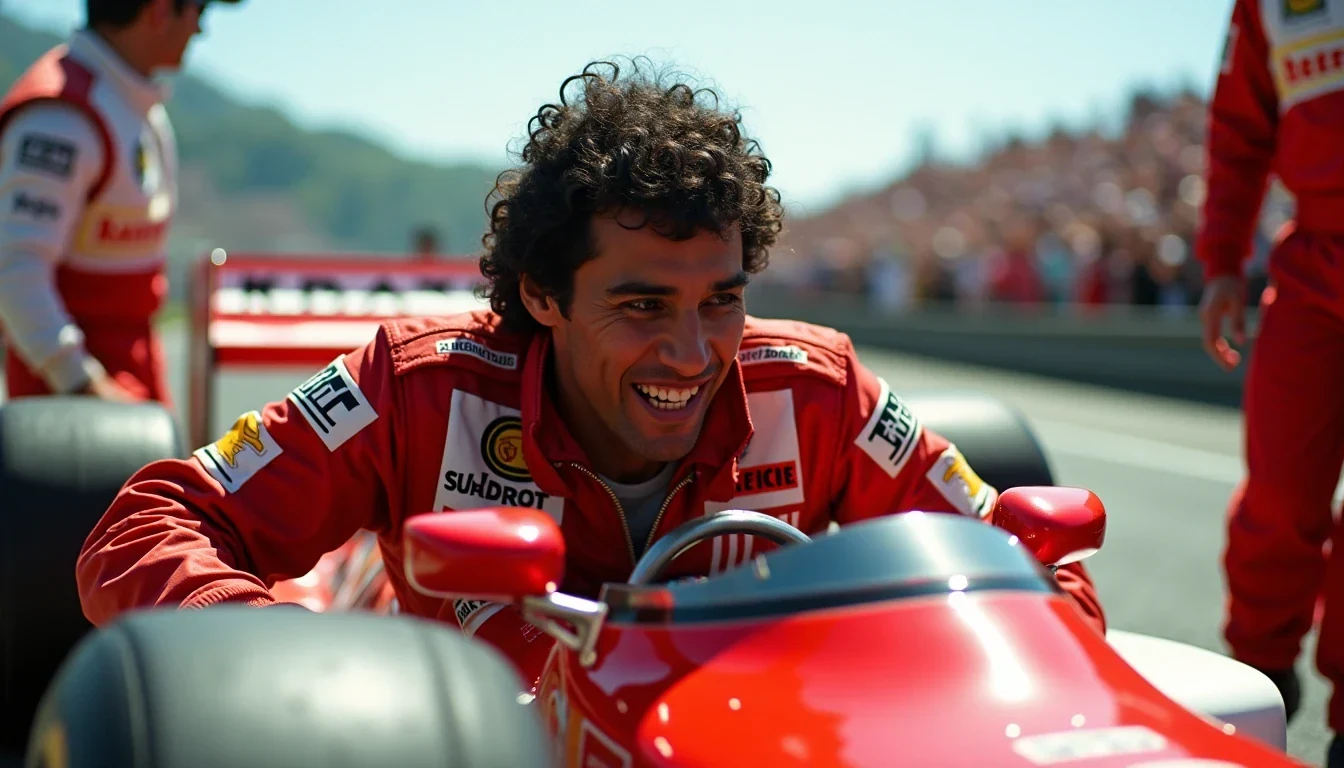
Seven times Ayrton Senna had tried to win his home race. Seven times he had failed, four of those from pole position. On 24 March 1991, at the Autódromo José Carlos Pace in Interlagos, São Paulo, he finally did it. He drove the final laps with only one gear working, screaming into the radio, and crossing the line with a lead of roughly three seconds that felt like nothing at all.
The Weight of Interlagos
Senna’s relationship with his home circuit had become a story of near-misses and raw frustration. He first raced at Interlagos in 1984 with Toleman. By 1991 he had started from pole there four times: in 1986, 1988, 1989, and 1990. The 1989 race brought a second-place finish, his best result to that point. The 1990 edition delivered the cruellest blow: while leading, he collided with the lapped Tyrrell of Satoru Nakajima and retired. That incident, on a wet track, cost him a victory that had seemed certain. The pattern was established. Senna was the fastest driver in Brazil, but speed alone had never been enough.
The 1991 season opened with the United States Grand Prix in Phoenix, where Senna won. Round two brought the circus to São Paulo for the Brazilian Grand Prix, 71 laps of the 4.325-kilometre Interlagos circuit. He arrived as defending champion, driving car number 1 for McLaren Honda. The new Honda V12, designated RA121E, powered the MP4/6 chassis. Senna put it on pole again. The eighth attempt began with familiar advantage and familiar dread.
The Race Until It Broke
Nigel Mansell in the Williams-Renault provided the main challenge. The Englishman hounded Senna through the early and middle phases of the race, the two cars separated by seconds rather than corners. Mansell’s Williams was quick, particularly on the straights where the Renault V10’s power told. Senna managed the gap from the front, controlling pace through the infield sections where the McLaren’s mechanical grip and his own precision compensated.
On lap 60, Mansell’s challenge ended. A mechanical failure, later identified as a gearbox issue of his own, forced the Williams to retire. Senna inherited a lead of roughly 25 seconds over Riccardo Patrese, Mansell’s teammate. With eleven laps remaining and a comfortable margin, the race appeared settled. The crowd of 80,000 at Interlagos prepared to witness the overdue home victory.
Then the McLaren’s gearbox began to fail.
Gear by Gear
Fourth gear went first. Senna felt the selector refuse to engage, the lever loose where it should have been firm. He tried to work around it, using third and fifth to bridge the ratios. Third failed next, then fifth. The sequence left him with sixth gear alone, the tallest ratio in the box. It was designed for speeds above 280 km/h on the long back straight, useless for the slow corners that dominate Interlagos.
The final laps, perhaps seven in number though sources vary on the precise count, became an exercise in momentum management and physical violence. Senna could not downshift for the tight left-hander at Ferradura, nor for the slow Descida do Lago complex. He kept the Honda V12 revving, used the clutch to prevent stalling, and hurled the car through corners at speeds that made no tactical sense except as the only speeds possible. The engine nearly died several times. Each save required a snap of the throttle, a stab of the clutch, a wrench of the wheel to keep the car pointing forward.
Rain began to fall. Not a downpour, but enough to slick the surface, enough to make sixth gear through a damp corner an act of faith. Patrese, in the second Williams, found his car suddenly competitive. The gap began to shrink.
The Three Seconds That Felt Like None
Patrese closed with the relentless efficiency of a driver who senses blood. He could select any gear he chose. His Williams-Renault handled the wet patches with full aerodynamic balance, its suspension working as designed. Senna’s McLaren fought him through every metre. The radio broadcasts captured what the television cameras could not fully convey: screams of effort, of pain, of a driver using his entire body to keep a broken machine on the racing line.
The final lap took an eternity. Senna exited the last corner, Juncao, and accelerated onto the short start-finish straight. The chequered flag waved. Patrese crossed 3.3 seconds later, close enough to have seen the McLaren’s struggles, not close enough to pass. The official margin was three seconds. It might as well have been three centimetres.
The Aftermath
Senna stopped the car on the slowing-down lap and sat motionless for long seconds. Marshals reached him first, then medical staff. He could not climb out unaided. Muscle spasms locked through his neck, shoulders, and arms, the physical toll of wrestling the steering and pedals without the mechanical assistance of lower gears. His body had absorbed the forces the gearbox could no longer distribute.
The podium ceremony revealed the cost. Senna, in his yellow and green helmet colours, could barely lift the winner’s trophy. He managed it briefly, then needed support. The image of that struggle, more than any victory photograph, became the defining visual of the 1991 Brazilian Grand Prix. He had won 28 Grands Prix before this one. None had extracted so much.
The radio broadcasts had gone out live. Brazilian television played the screams on loop through the evening news. For viewers who remembered the Nakajima collision, who recalled the poles without wins, the sound was cathartic and disturbing in equal measure. This was not the smooth domination of Senna’s Monaco victories or the tactical precision of his Suzuka triumphs. This was something ragged, something forced.
What Came After
The 1991 season developed into Senna’s third world championship. He added victories in Monaco, Hungary, and Belgium, among others, and clinched the title with sufficient margin to make the final races procedural. The Interlagos win remained the emotional anchor of the year, the race he referenced most often in interviews, the one that appeared in Brazilian media retrospectives with a frequency disproportionate to its championship points value.
He won again at Interlagos in 1993, driving the McLaren Ford MP4/8 in wet conditions that recalled the drama of 1991 without matching its mechanical extremity. That second home victory allowed a calmer celebration, a proper podium, a trophy lifted without assistance. It confirmed what 1991 had established: the curse was broken, the circuit was his.
The 1991 race retains its particular status because of the circumstances: the gearbox failure that should have cost everything, the three-second margin that Patrese could not close. Younger Brazilian fans searching for the full story of “Senna sexta marcha” find a narrative that transcends statistics. Foreign fans who know the legend in outline discover, in the details, a specificity that explains why the legend persists: the exact sequence of gear failures, the exact lap of Mansell’s retirement, the exact margin at the finish, the exact impossibility of what was achieved.
The Autódromo José Carlos Pace still hosts the Brazilian Grand Prix, though on a modified layout since 1991. The Ferradura corner where Senna could not downshift remains, re-profiled but recognisable. The podium where he could not lift the trophy stands in the same location, rebuilt but continuous. Visitors to Interlagos on non-race days can walk the asphalt where sixth gear was the only option, where rain fell on a broken car, where three seconds measured the distance between failure and the most necessary victory of Ayrton Senna’s career.