Volleyball
Brazil's Three Men's Olympic Volleyball Gold Medals
Discover the intense stories behind Brazil's three men's Olympic volleyball gold medals, revealing how their team conquered different eras and opponents to.
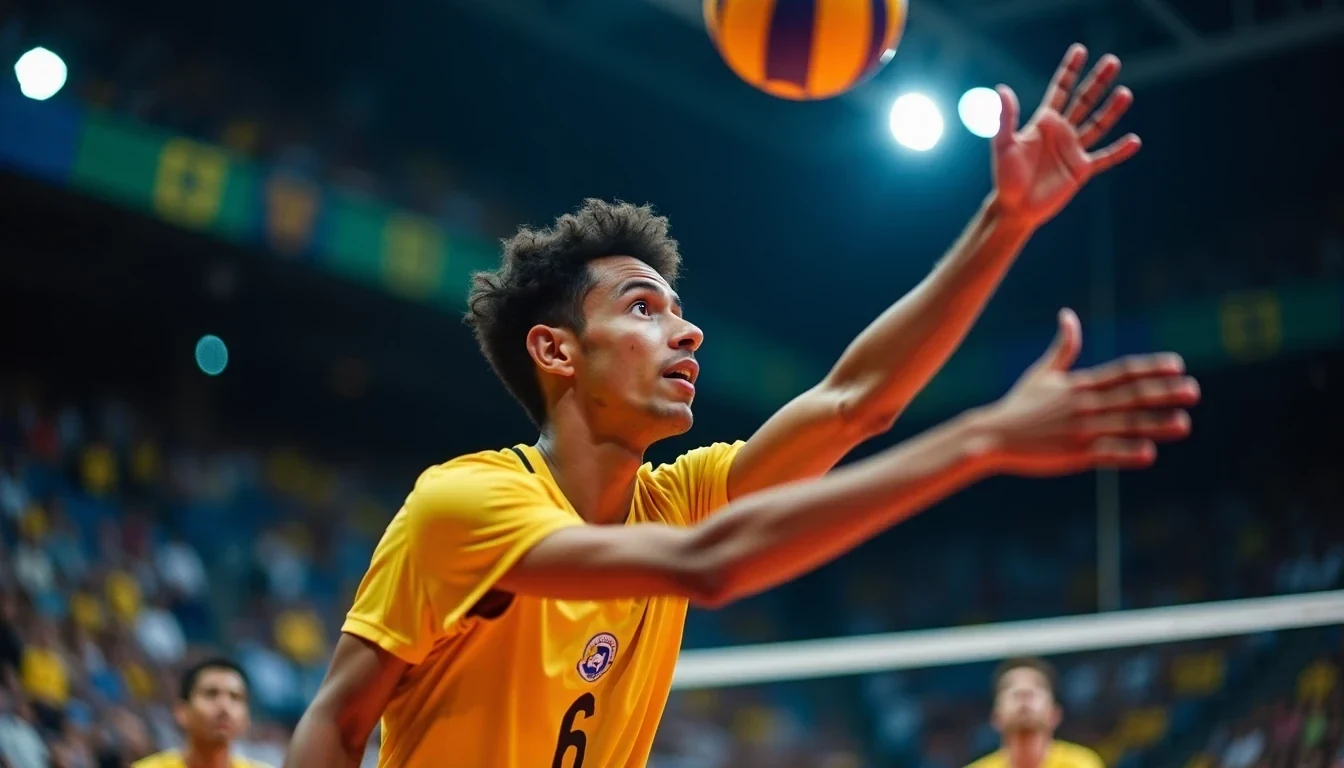
Brazil’s men’s volleyball team owns three Olympic gold medals, each won in a different era and against a different opponent. All three followed the same pattern of building pressure until the final point. The three finals tell the story for fans explaining why the sport dominates Brazilian television schedules, or for visitors wondering what fills the Maracanãzinho when football is not playing.
Barcelona 1992 and the Unbeaten Run
The 1992 Barcelona tournament remains the only time Brazil has gone through an Olympic men’s volleyball competition without losing a match. Coach José Roberto Guimarães led a squad that dropped just three sets across the entire draw. In the semi-final at Palau Sant Jordi, Brazil beat the United States 3-1 to set up a final against the Netherlands.
The Dutch offered little resistance. Brazil swept the final 3-0 with set scores of 15-12, 15-8, and 15-5, playing under the old rally-point system where sets ran to 15. Marcelo Negrão ended it with a service ace, the ball hitting the floor before any Dutch player moved. The victory gave Brazil its first Olympic gold medal in any team sport. No football team, basketball squad, or relay team had managed it before.
The Gap and the Handover
Nine years separated the first gold from the second. The transition began in 2001 when Bernardo Rezende, already known as Bernardinho, took charge of the men’s national team. He had coached the women’s side to Olympic bronze in 1996 and gold in 2000. Moving to the men’s program, he imposed the same conditioning standards and tactical discipline.
The results arrived immediately. Brazil won the 2002 World Championship in Argentina, the first of three world titles under Bernardinho. The others followed in Japan in 2006 and Italy in 2010. Between those tournaments, the team collected nine World League titles. No other national program matched this rhythm of sustained success during those years.
Athens 2004 and the Second Gold
The 2004 Olympic final in Piraeus pitted Brazil against Italy at the Peace and Friendship Stadium. Brazil won 3-1. This scoreline looks comfortable but required navigating Italian blocking systems that had eliminated other favourites. This was Bernardinho’s first Olympic gold with the men’s team, validating the overhaul he had begun three years earlier.
Libero Serginho played a central role in the victory. His reception patterns allowed setter Ricardo Garcia to run fast combinations through the middle. The defensive foundation Serginho provided would remain a constant through the next two Olympic cycles.
The Two Silvers
Brazil reached the final in both 2008 and 2012 without winning either. In Beijing 2008, the United States beat Brazil in the gold medal match, ending a 20-year American wait for Olympic men’s volleyball gold. Four years later in London, Brazil again took silver. These results created the narrative pressure that would define the home Olympics.
Rio 2016, Set by Set at the Maracanãzinho
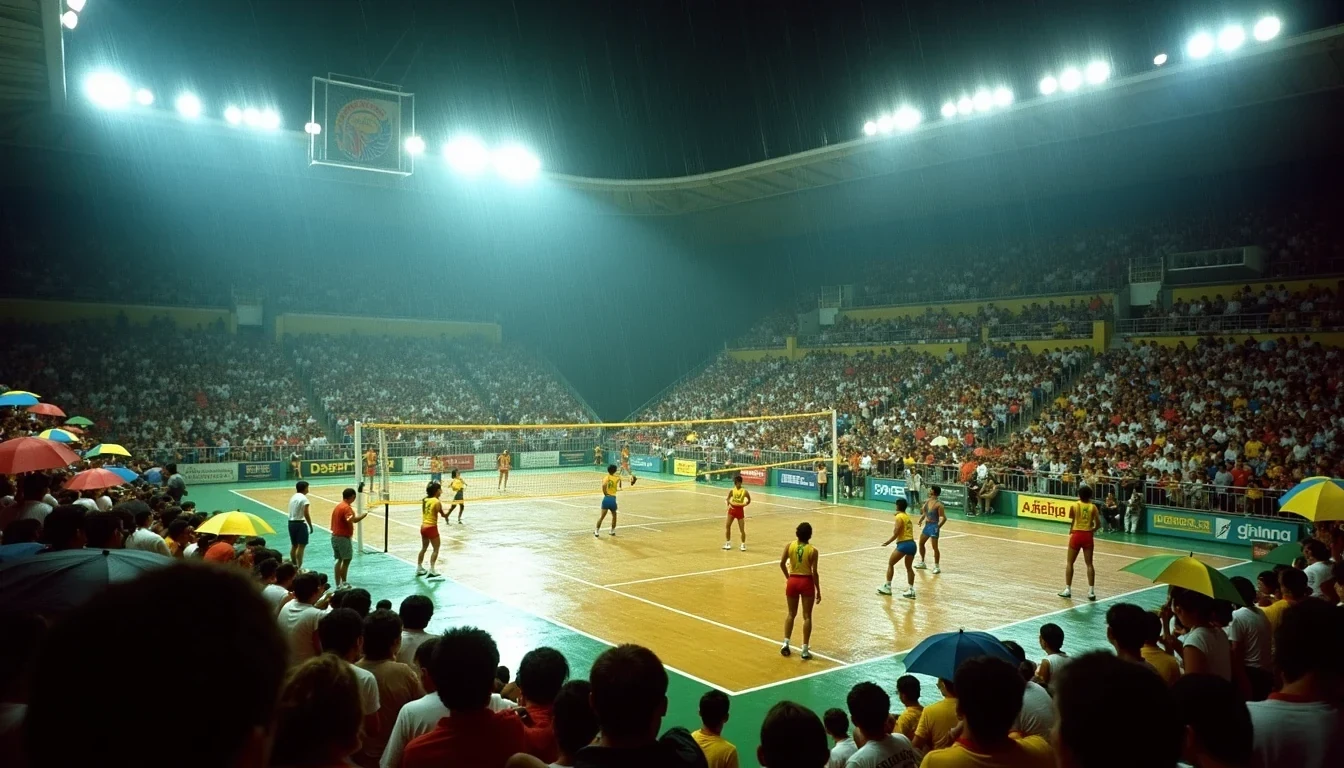
On 21 August 2016, Brazil faced Italy again, this time in front of a full Maracanãzinho in Rio de Janeiro. The venue, built for the 1954 World Cup and renovated for the 2007 Pan American Games, held 11,800 spectators that night. The match was the host nation’s seventh gold medal of those Games.
First set: Brazil won 25-22. The score stayed tight through the technical timeout, with Italy’s blocking keeping the margin at one or two points. Brazil pulled clear on serves that forced Italian setter Simone Giannelli into difficult passing positions.
Second set: Brazil won 28-26. This was the critical stretch. Italy had set point at 26-25 after a net violation call against Brazil. The home crowd noise peaked during the replay challenge, which confirmed the call. Brazil then scored three consecutive points: a Wallace spike off the block, an Italian hitting error, and a quick middle attack by Lucas Saatkamp that caught the Italian defence shifting late.
Third set: Brazil won 26-24. Again Italy reached set point first, at 24-23. Again Brazil erased it, this time with a defensive play by Serginho that led to a transition kill by Wallace. The opposite hitter finished the match with 20 points, the highest individual total. His final spike, a cross-court shot from the back row, landed inside the line as the Italian libero dived past it.
Captain Bruno Rezende, known as Bruninho, accepted the gold medal as team captain. Serginho, already on the roster for 2004, collected his fourth Olympic medal across four Games. The victory gave Brazil its third men’s Olympic volleyball title and completed the set: one won in Europe as outsiders, one won in Europe as favourites, and one won at home under maximum pressure.
The Three Finals
| Year | Opponent | Score | Venue | Coach |
|---|---|---|---|---|
| 1992 | Netherlands | 3-0 (15-12, 15-8, 15-5) | Palau Sant Jordi, Barcelona | José Roberto Guimarães |
| 2004 | Italy | 3-1 | Peace and Friendship Stadium, Piraeus | Bernardo Rezende (Bernardinho) |
| 2016 | Italy | 3-0 (25-22, 28-26, 26-24) | Maracanãzinho, Rio de Janeiro | Bernardo Rezende (Bernardinho) |
Where to Watch Now
The Maracanãzinho remains active. The venue hosts Superliga matches, international friendlies, and occasional concerts. For tickets to Brazilian national team matches, the Confederação Brasileira de Voleibol (CBV) announces fixtures through its official channels. Superliga regular-season matches in Rio typically run R$ 30-80 for upper seating as of 2024, with finals and national team dates pushing toward R$ 150-300 depending on opponent.
The Brazilian men’s team continues to play under Bernardinho’s long-established system, though the roster has turned over since 2016. Visitors in Rio during international tournament windows can check the venue schedule. The experience of Brazilian volleyball in a packed indoor arena differs sharply from the beach version played along the Zona Sul coastline. Both are worth seeing, but the Maracanãzinho on a gold-medal night is the reference point.