Volleyball
Why Brazil's Volleyball Dominance Began on a Rainy Night in Rio
Brazil's volleyball ascent began with a record-setting match in 1983, fueled by Carlos Nuzman's strategic commercialisation of the sport since 1975.
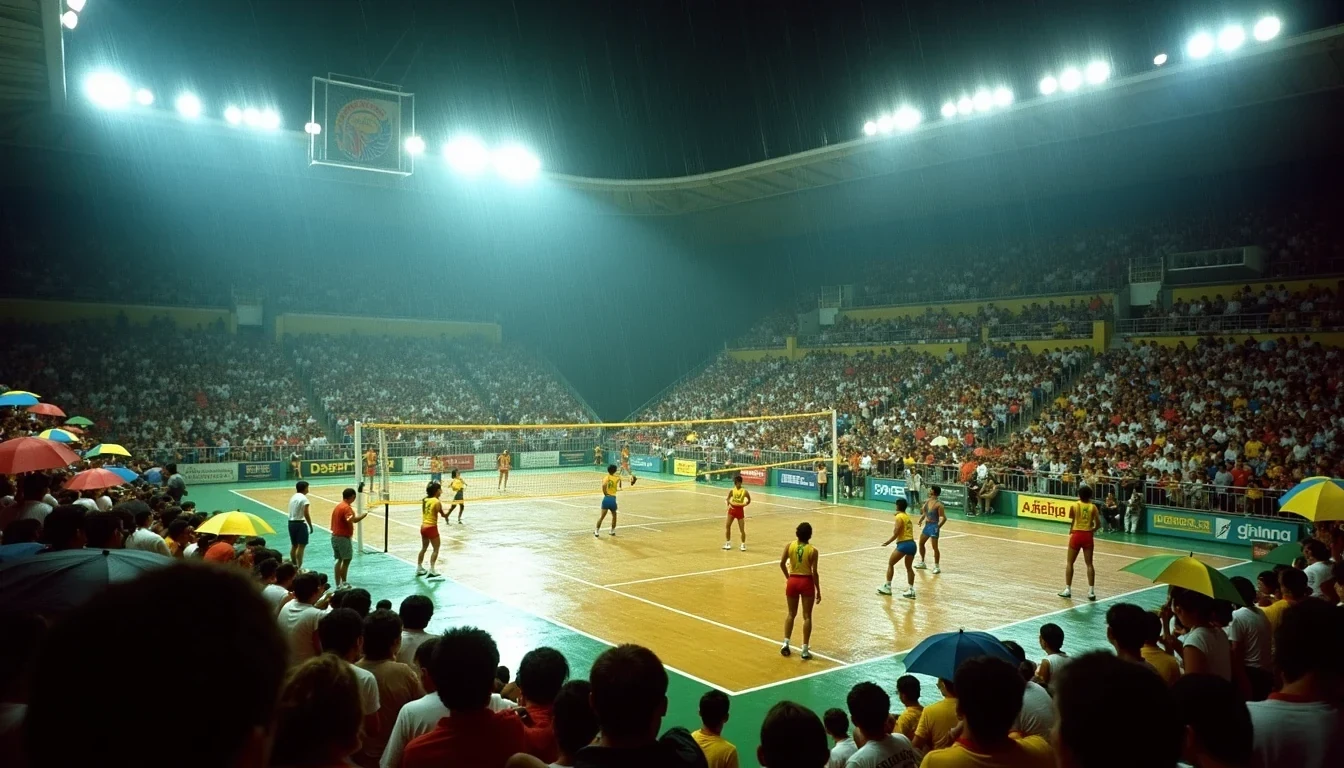
On 26 July 1983, 95,887 people paid to watch a volleyball match in the rain at Maracanã, the football cathedral in Rio de Janeiro. They saw Brazil beat the Soviet Union three sets to one, setting a world record for a volleyball crowd that still stands. That night filled a stadium and announced Brazil had become a volleyball nation.
The sport had arrived there through deliberate business strategy rather than organic growth. Carlos Nuzman took over the Confederação Brasileira de Voleibol (CBV) in 1975, two decades after the federation’s founding on 6 August 1954. The CBV headquarters sat in Barra da Tijuca, a Rio neighbourhood then being carved from sand and scrub into something more ambitious. Nuzman stayed for twenty years, until 1995, treating volleyball as a product to be marketed rather than a pastime to be administered. He hired staff with commercial backgrounds, pursued broadcast deals, and packaged the national team as entertainment. The national club championship, launched in 1976, gave players salaries and schedules. By the early 1980s, Brazil had the infrastructure of a professional sport without yet having the audience to match it.
The Night That Changed the Audience
The Soviet Union arrived in Rio as the established global power in men’s volleyball. They had won gold at the 1964, 1968, and 1980 Olympics, plus the 1977 World Cup. Brazil had never reached an Olympic podium. The friendly at Maracanã was designed as a spectacle, and the weather nearly ruined it. Rain fell through the open roof, making the floor slick and the ball unpredictable. The crowd stayed. Many had never seen elite volleyball live. They discovered a game of vertical drama, players suspended in floodlight against the grey sky, spikes delivered with the force of a penalty kick.
Brazil won 3-1. The scoreline mattered less than the scale. No volleyball match anywhere had drawn so many paying spectators. The figure, 95,887, entered the FIVB record books. It also entered Brazilian sporting memory as proof that volleyball could command the country’s attention without borrowing football’s calendar or its stars. The players on court that night became instantly recognisable: Bernard Rajzman, the left-handed opposite with a spike that seemed to bend physics; William, the setter whose distribution controlled tempo; Renan Dal Zotto, the hitter with range from both back row and front; Amauri, the middle blocker who timed his jumps to intercept what seemed already past. They were young, Brazilian, and suddenly famous. The press named them the Geração de Prata, the Silver Generation, though the silver lay ahead and the gold would come later.
From Maracanã to Los Angeles
The team that flew to the 1984 Los Angeles Olympics carried the weight of that Maracanã night. Bebeto de Freitas, their coach, had built a squad around speed and improvisation rather than the Soviet model of height and system. The United States hosted the tournament, and the Americans had their own motivation: volleyball was native to California, and the 1984 Games offered a chance to claim a sport the Eastern Bloc had long dominated. The Soviet boycott of Los Angeles removed one obstacle, but the field remained strong. Italy, Argentina, and the defending Olympic champions from 1980 still competed.
Brazil reached the final. They lost to the United States in a match played on 11 August 1984 at the Long Beach Arena. The score was 3-0 to the hosts, though the sets were tight: 15-9, 15-10, 15-7 in the old scoring system. The margin flattered the Americans, and the result still stung. For Brazil, though, the silver medal represented something unprecedented. No Brazilian volleyball team, men’s or women’s, had ever finished higher than fourth at an Olympics. The CBV’s investment, the Maracanã crowd’s faith, and the players’ development had produced a concrete outcome. Bernard Rajzman, William, Renan Dal Zotto, and Amauri stood on a podium with medals around their necks, and Brazilian television carried the image live.
What the Generation Built
The Geração de Prata did not disband into retirement and nostalgia. They became the scaffolding for what followed. The national club championship, running since 1976, took the name Superliga in the 1994-95 season. By then, it operated as a fully professional league with multiple television contracts and imported foreign players. The audience cultivated in 1983 and confirmed in 1984 stayed loyal. Volleyball became a fixture of Brazilian sports broadcasting, filling the gaps between football seasons with a product that had its own stars and its own rhythms.
Several players moved into coaching. Renan Dal Zotto eventually returned to the men’s national team, this time in the head coach’s role. He applied the tactical vocabulary he had learned under Bebeto de Freitas to a new generation that would win Olympic gold at Barcelona 1992. That Barcelona victory, eight years after Los Angeles, completed the arc that began at Maracanã: from spectacle to silver to sustained dominance. Bernard Rajzman pursued administration rather than coaching, and in 2015 was elected to the International Olympic Committee, the first Brazilian volleyball figure to hold that position. His presence in Lausanne gave Brazilian volleyball a voice in global sports governance that Nuzman’s marketing strategy alone could not have secured.
Where to Find the Legacy Now
The CBV headquarters remains in Barra da Tijuca, though the neighbourhood has transformed from Nuzman’s frontier into one of Rio’s most densely developed districts. The Maracanã still stands, its roof now closed, its primary tenant still Flamengo and Fluminense football. Volleyball no longer fills it; the sport has its own venues, built with the revenue from the television audience and sponsorship pipeline that the 1983 match proved possible. The Superliga runs from October to April, with men’s and women’s divisions. Tickets for regular-season matches in São Paulo, Belo Horizonte, or Curitiba typically cost between R$30 and R$120 depending on the seat and the year.
Visitors to Rio can watch volleyball at Maracanãzinho, the smaller indoor arena beside the main stadium, where the national team sometimes plays World League or Nations League fixtures. The Brazilian Volleyball Museum, maintained by the CBV at its Barra headquarters, holds memorabilia from the 1983 match and the Los Angeles silver medal. Access is by appointment. For those who want to play rather than watch, beach volleyball courts line the Rio coastline from Copacabana to Recreio. The rental of a net and ball costs roughly R$20-40 per hour at posted kiosks, though prices vary by season and exact location.
The Geração de Prata’s direct influence faded by the late 1990s, as the players aged out of active roles. Their structural influence persists in every Brazilian Olympic volleyball medal since, in every Superliga broadcast, and in the now automatic assumption that Brazil belongs among the sport’s elite nations. That assumption began with a business plan, a rainy night, and 95,887 people who decided volleyball was worth their time.