Basketball
Brazil's 1994 Women's Basketball World Title and Olympic Silver
Brazil's women's basketball team, featuring stars Hortência, Paula, and Janeth, claimed the 1994 World Championship and Olympic medals, a historic run.
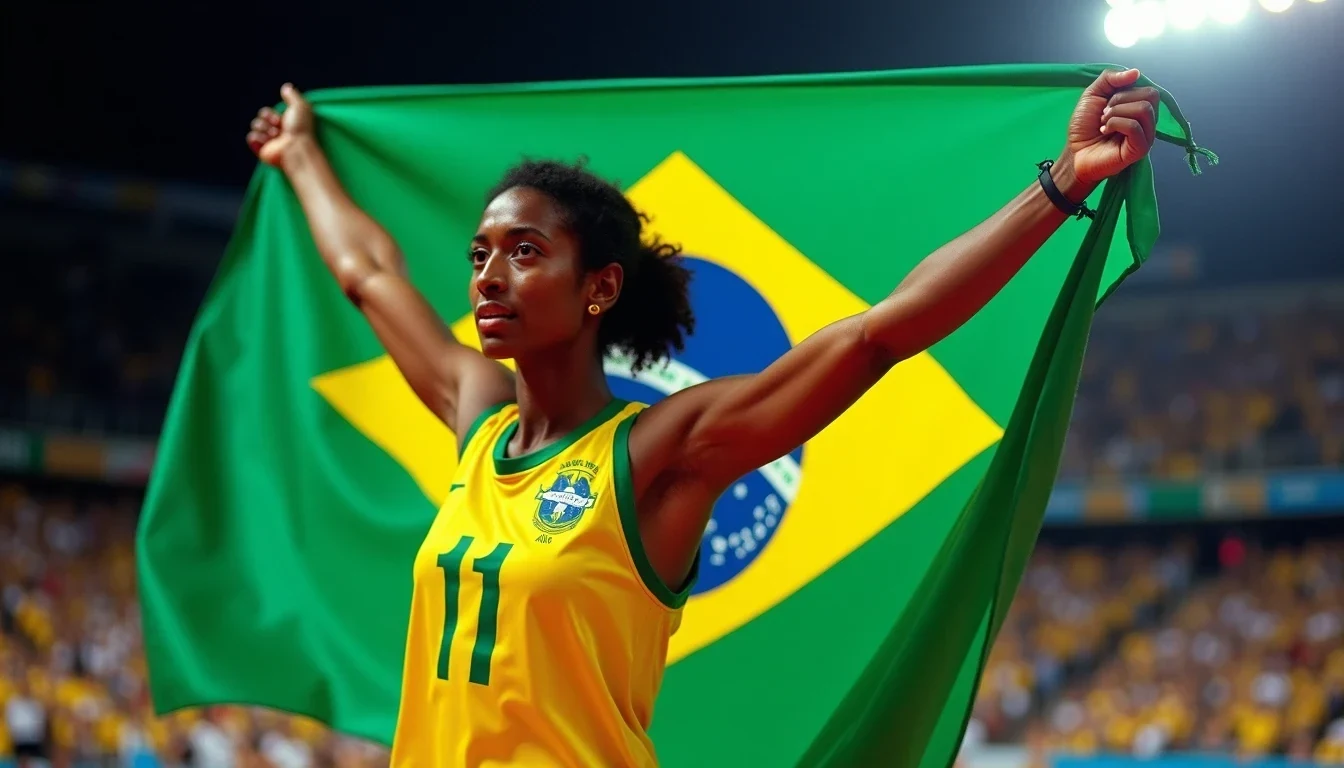
Brazil’s men last won a basketball world title in 1963. The women ended the wait on 12 June 1994, beating China 96-87 at the Sydney Entertainment Centre to claim the FIBA World Championship. No Brazilian team, male or female, has stood on that summit since. At the time, the victory barely registered in a country transfixed by the men’s World Cup in the United States.
The squad was built around three names: Hortência Marcari, Maria Paula “Magic Paula” Silva, and Janeth Arcain. They turned an eleven-day tournament in Australia into the brightest chapter the sport has produced in this country, then backed it with an Olympic silver medal in Atlanta two years later and a bronze in Sydney in 2000. The run lasted six years. The men have not come close in the three decades since.
The Three Who Defined the Era
Hortência Marcari arrived in Sydney as the squad’s eldest star and its deadliest scorer. She poured in 27.6 points per game across the tournament, the highest average of any player in the draw. Opponents knew the ball was leaving her hands, but her mid-range release was quick enough that knowing did not help. She was 34 years old during the championship run, already a veteran of multiple world campaigns, and she treated the 1994 title as a farewell. The retirement lasted less than two years. Her game was built on footwork rather than elevation, a style that aged well and frustrated taller defenders who expected a shooter to fade.
Maria Paula Silva earned the nickname Magic Paula for the same reason every great point guard gets a label: she saw passing lanes open half a second before anyone else did. At five-foot-seven, she directed traffic against taller backcourts without forcing the tempo. Her final tournament in national colors was the 1997 FIBA Americas Championship, but her most visible moment in a Brazil jersey came after the basketball stopped. On 4 August 1996, at the closing ceremony of the Atlanta Olympics, she carried the Brazilian flag into Centennial Olympic Stadium. This was a rare acknowledgment for a women’s basketball player in a country where footballers usually claim that honor.
Janeth Arcain supplied the physical counterweight. A forward who could score inside and stretch the floor, she was 25 years old in 1994 and already the team’s most reliable rebounder. While Hortência handled the headlines, Arcain compiled the quiet arithmetic of efficient shooting and defensive stops. She would outlast both of her famous teammates, leading Brazil in total scoring at the Atlanta Games with 142 points and collecting a bronze medal at the Sydney 2000 Olympics before her own international career closed. Her longevity meant the program did not collapse the moment the two elder stars stepped away.
The Eleven-Day Run in Sydney
The 1994 FIBA World Championship for Women opened on 2 June and closed on 12 June, with sixteen countries divided across Australian cities before the medal rounds converged on the Sydney Entertainment Centre. Brazil moved through the preliminary phase without a loss, though the bracket was forgiving enough that the real test would come in the knockout games against the northern hemisphere powers.
The semi-final on 11 June pitted Brazil against the United States, the sport’s reigning aristocracy. The Americans had won every Olympic gold since 1984 and most world titles since the tournament began. Brazil beat them 110-107 anyway. Hortência scored in bursts, Arcain cleaned the glass, and Silva made the late decisions that kept the offense from stalling. Brazil outscored the USA over forty minutes and took the result. The margin was three points, but the psychological distance was larger: for the first time, a Brazilian team had gone toe-to-toe with the Americans in a knockout game and walked off the winner.
Less than twenty-four hours later, on 12 June, the same Brazilian five walked onto the same floor to face China. The Chinese were anchored by Zheng Haixia, the tournament’s Most Valuable Player, a center who stood nearly seven feet tall and who had dominated the paint through the opening rounds. Brazil won 96-87 by forcing a faster pace than Zheng could sustain, stretching the floor and relying on Hortência’s scoring to build a lead China could not erase. The back-to-back games in forty-eight hours revealed a conditioning edge that surprised both opponents. When the final buzzer sounded, Brazil had its first world title in basketball since the men’s triumph in 1963.
Atlanta Silver and the Last Glow
Hortência’s retirement lasted only until the Olympic cycle demanded her back. She returned for the Atlanta 1996 Games, joining Arcain and Silva for one more tournament. Brazil reached the gold-medal match, where the United States waited with a roster of professionals and college stars. The final score was 111-87. The loss was decisive, but the silver medal was Brazil’s first ever in Olympic women’s basketball, and it confirmed that the Sydney title had been no fluke. For a country that had spent decades treating basketball as a minor satellite of football, the podium in Atlanta forced a reassessment.
Paula’s selection as flag bearer at the Atlanta closing ceremony on 4 August gave the achievement a ceremonial capstone. Arcain, meanwhile, led all Brazilian scorers through the Olympic tournament with 142 points, a total that underlined her shift from supporting player to primary offensive option. The numbers suggested a changing of the guard even while the old guard was still present.
The core aged quickly after Atlanta. Hortência and Paula were gone by the end of the decade, but Arcain remained for the Sydney 2000 Games. She captained a younger squad to a bronze medal, Brazil’s third podium finish in six years. It was the last Olympic medal the women’s program has won. The men have never reached an Olympic final, let alone won a medal since 1964.
Hall of Fame and the Game Today
The international institutions eventually recognized what Brazilian fans already knew. The Women’s Basketball Hall of Fame welcomed Hortência in 2002. She was a 2005 inductee into the Naismith Hall of Fame. FIBA enshrined her in 2007, in its first class. The Women’s Basketball Hall of Fame honored Paula in 2006, and FIBA added her to its Hall of Fame in 2013. Arcain’s résumé lacks the same triple-induction headlines, but her scoring title in Atlanta and her longevity through Sydney 2000 place her in the same conversation without dispute. Collectively, they established the benchmark by which every subsequent Brazilian player is measured.
The legacy shows up today in the Liga de Basquete Feminino, the professional league that stages games in arenas across São Paulo, Rio de Janeiro and Salvador. The national team still qualifies for World Cups and Olympics through FIBA Americas competitions, usually playing home windows in the southeast where Hortência and Paula first learned the game. For travelers who want to watch basketball in Brazil, the LBF offers the clearest live connection to that lineage.
Check the LBF fixture list before you travel; schedules post a few months ahead of each season. National team qualifying games land less predictably, but they typically appear on the Confederação Brasileira de Basquete calendar six months in advance. Arrive early. Brazilian basketball crowds are small enough that a general-admission seat puts you within three meters of the floor. You will not need a hospitality package to hear the sneakers squeak.