Celebrities
Brazil's F1 Paddock Where Entertainment Royalty Met Racing
Brazil's F1 paddock became a celebrity hotspot as stars like Neymar Jr. blended motorsport with entertainment, creating a vibrant scene that captivated global.
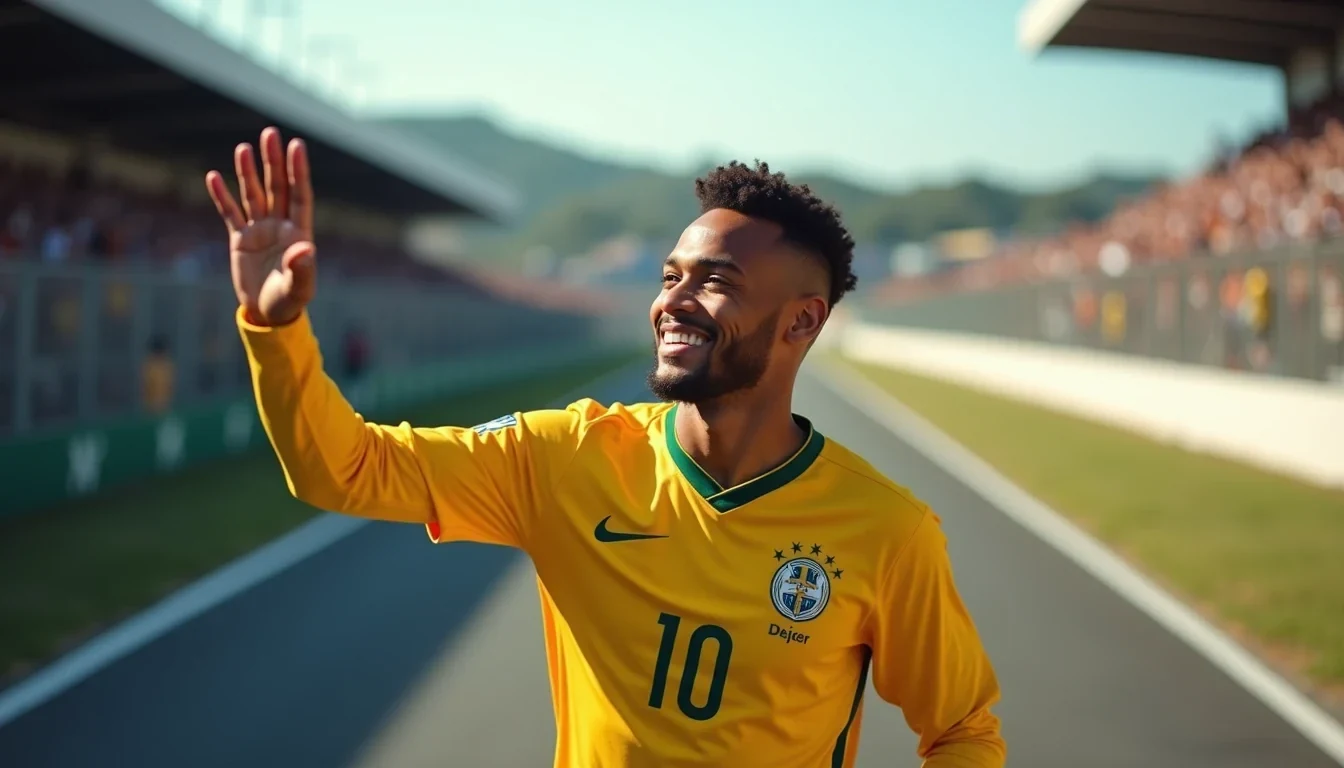
The 2023 São Paulo Grand Prix paddock at Interlagos felt less like a motorsport garage and more like the VIP section of a festival headlined by racing engines. Neymar Jr. stood at the finish line waving the chequered flag for Lando Norris. Luísa Sonza moved through the paddock in outfits that earned their own news cycle. Gabriel Leone, the actor preparing to become Ayrton Senna for Netflix, drew camera crews away from the garages. Formula 1 has always courted glamour, but this was different. Brazilian celebrity culture claimed the event as its own stage.
The flag and the footballer
Neymar’s role as flagman for the race finish was the image that travelled furthest. A football superstar of his magnitude performing the sport’s most traditional gesture gave the moment an almost ceremonial weight. Photographers caught him with Max Verstappen, with Lewis Hamilton, and with Mercedes principal Toto Wolff. Each interaction became content for global sports media and, more importantly, for the players’ own social channels reaching hundreds of millions combined.
The choice was deliberate. F1 has spent years cultivating the “Drive to Survive” generation, and planting Neymar at the finish line was a calculated expansion into territory where football still dominates Brazilian attention. For the footballer himself, recovering from injury with Al Hilal, it maintained visibility without requiring him on a pitch.
Music and the machinery
Luísa Sonza’s presence operated on a different frequency. Neymar brought sporting authority, but she brought style credibility that translated across entertainment pages and fashion coverage. Her paddock appearances were dissected by outlets that do not typically run race reports. Sertanejo star Luan Santana added another demographic entirely; his massive interior fanbase overlapped only partially with Sonza’s urban pop following. Together they represented a musical breadth that no single genre could claim.
Digital influencers Jade Picon and Vanessa Lopes completed the generational spread. Picon parlayed social media prominence into acting roles, and Lopes, whose TikTok reach runs into the tens of millions, brought audiences that do not consume traditional sports broadcasting. Their real-time posts from the paddock functioned as parallel coverage, often reaching viewers before professional media filed.
The Senna shadow
Gabriel Leone’s attendance carried a resonance no other celebrity could match. Interlagos is where Ayrton Senna became myth, and Leone arrived as the man selected to embody him. Brazilian outlets including Folha de S.Paulo and Estadão treated his interviews as significant cultural moments, not promotional fluff. The questions ran deeper than standard celebrity puffery: How does it feel to walk where Senna walked? To breathe the same paddock air?
This was the “Senna effect” in operation. Leone had not yet filmed a frame that audiences had seen, yet his presence activated something older and more specific than general celebrity excitement. For Brazilians of a certain age, Senna remains the standard against which national heroes are measured. For younger viewers discovering him through parents or documentaries, Leone offered a bridge between reverence and contemporary relevance. Netflix’s marketing department could not have engineered better positioning.
What changed about coverage
Previous São Paulo Grands Prix attracted famous faces. The difference in 2023 was the density and the deliberate architecture. Entertainment reporters joined the sports press corps. Fashion critics wrote about paddock outfits with the seriousness previously reserved for Cannes. The event’s social media footprint expanded through coordinated celebrity participation, not organic accident.
Major outlets placed these stories in lifestyle and entertainment verticals, not as sidebar items to race reports. The paddock became a red carpet by design, with access negotiated and appearances scheduled for maximum cross-platform impact. Where once a Brazilian actor at Interlagos might warrant a brief mention, Leone’s presence generated dedicated features. Where once a musician’s attendance passed unnoticed, Sonza’s generated standalone coverage.
The broader wager
This convergence reveals a strategic bet by F1’s commercial operation. Brazil represents the sport’s third-largest television market globally, but traditional motorsport culture has aged. The paddock celebrity strategy targets younger demographics who follow personalities before they follow championships. By integrating figures from football, pop music, and digital-native fame, F1 attempts to make itself unavoidable in Brazilian cultural conversation.
For Brazilian celebrities, the calculation runs reciprocal. Association with a globally prestigious event carries international signalling power. Neymar’s flag-waving played on screens worldwide. Sonza’s paddock looks entered global fashion discourse. Leone’s Senna connection positioned him as bearer of national heritage, not merely another actor with a streaming deal.
The risk is dilution. If every Grand Prix becomes indistinguishable from a festival VIP area, the specific thrill of motorsport competes with general celebrity spectacle. The 2023 São Paulo edition navigated this by anchoring the glamour in specific narrative weight: a footballer performing ritual, an actor channeling legend, and musicians representing distinct regional audiences.
Whether this model sustains depends on whether future races can find equivalent symbolic hooks, or whether the celebrity presence becomes routine enough to ignore. For one November weekend at Interlagos, at least, the machinery and the fame generated genuine friction, and the sparks were visible from anywhere with an internet connection.