Esports
How Brazil Became the World Champion of Rainbow Six Siege
Brazil's journey to becoming Rainbow Six Siege world champions involved a unique pipeline of international defeats, intense learning, and player evolution.
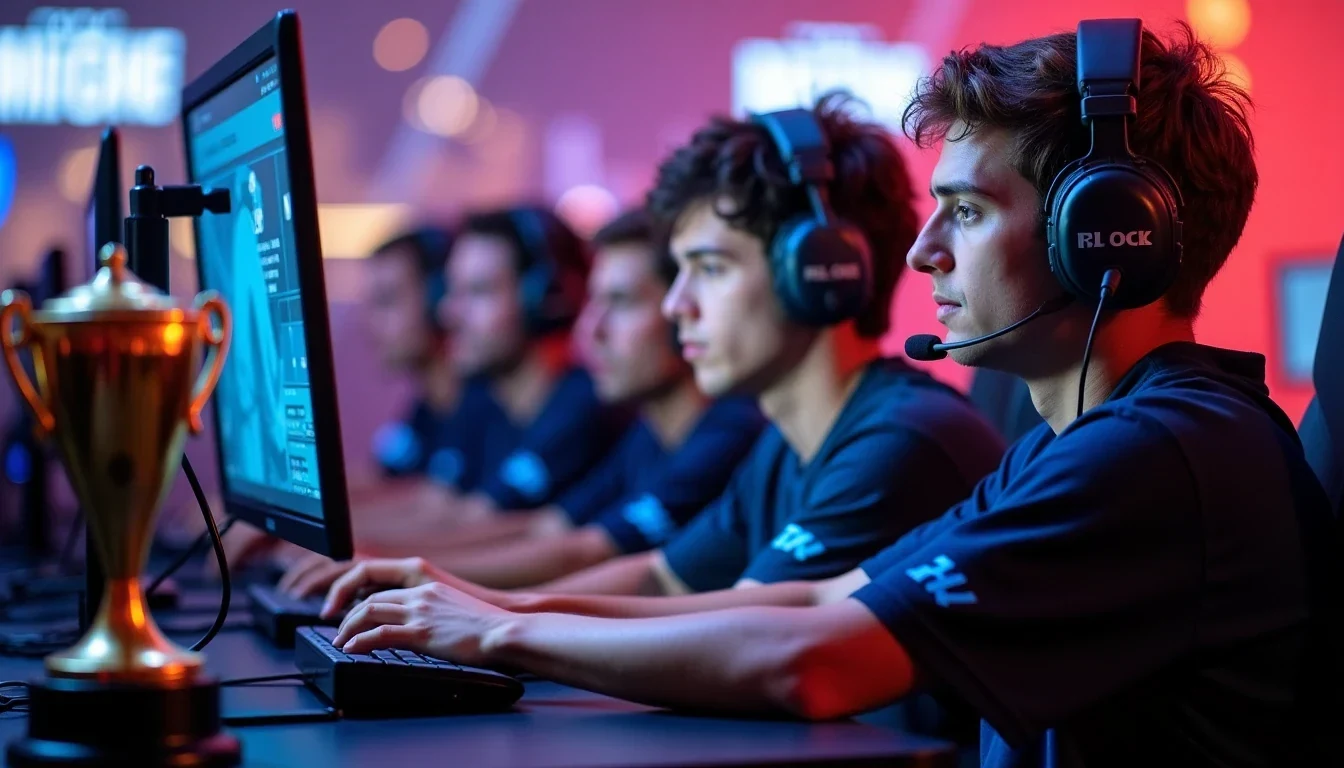
Brazil’s Rainbow Six Siege scene started with a team that could not win. Black Dragons entered the Pro League in 2017 as the country’s first representative, a roster built around Thiago “ziGueira” Morais, Luiz “Bullet1” Alves, and André “nesk” Oliveira. They lost often. But those three names would reappear one year later on Team Liquid, and that squad would deliver Brazil’s first international title at the Pro League finals. The pipeline was already forming: lose internationally, learn the meta, then return with the same players wearing different jerseys.
That pattern of regeneration defines Brazilian Siege more than any single victory.
The First Titles and the Belief They Created
Team Liquid’s Pro League win proved Brazilian talent could close tournaments, not just reach them. ziGueira, Bullet1, and nesk had absorbed the punishment of Black Dragons’ early Pro League seasons and converted it into something functional. The victory opened wallets and attracted organizations. Sponsors who had treated Brazilian Siege as a curiosity began signing multi-year deals.
The second breakthrough came from an unexpected source. Team oNe, not Liquid and not NiP, won the Six Mexico Major in 2021. This was Brazil’s first Major title, arriving during a pandemic-era tournament cycle when European teams were still adjusting to online-hybrid formats. Team oNe exploited the chaos with aggressive, coordinated attacks that looked reckless until they worked. The win expanded the talent pool. If a squad outside Brazil’s traditional big three could win a Major, the depth of competition was real.
But the Six Invitational remained the barrier. The annual world championship in February carried a weight that Pro League seasons and mid-year Majors did not. Brazilian teams had reached finals before but had not lifted the trophy.
Ninjas in Pyjamas changed that in Paris on 23 May 2021. Their lower-bracket run at the Six Invitational 2020 had already convinced Brazilian players the trophy was reachable. NiP lost that 2020 final to SpaceStation Gaming. The following year, they met Team Liquid in an all-Brazilian final and won 3-2. The date and scoreline enter the country’s esports canon: 23 May 2021, 3-2, Paris. Two Brazilian teams contested a world final that European and North American organizations had dominated since 2017. NiP’s victory meant Brazil had arrived at the highest level of Siege.
The 2024 Final That Redefined Home Advantage
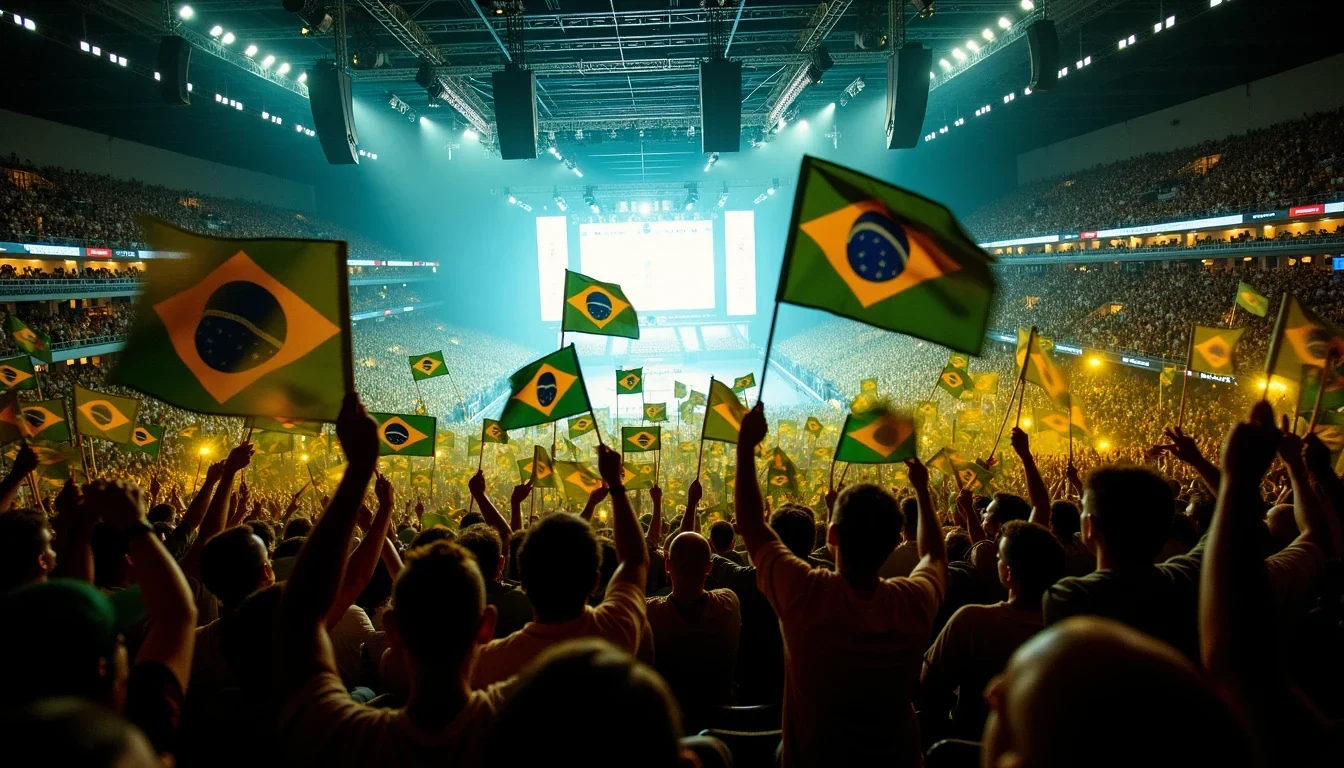
The Six Invitational 2024 moved to Ginásio do Ibirapuera in São Paulo. The tournament became a demonstration of what Brazilian fandom could do when given a world championship on domestic soil.
w7m esports reached the final after losing the 2023 edition to G2 Esports, a 3-1 defeat in Montreal that had looked like a ceiling. FaZe Clan stood across from them in 2024, making it an all-Brazilian final in front of 9,000-plus fans at the Ibirapuera gymnasium. The building, designed by Oscar Niemeyer in the 1950s, has hosted volleyball world championships and NBA exhibitions. It had never held an esports crowd this loud.
The match went to a fifth map. On the decider, FaZe Clan reached match point at 6-1. w7m won seven consecutive rounds to close it 8-6. The comeback from 1-6 remains one of the most extreme reversals in Six Invitational history. w7m took the series 3-2 and the $1 million first prize.
The numbers surrounding that final are now benchmark figures for the entire esport. Peak online viewership hit 521,323 concurrent viewers, a record for Rainbow Six Siege. The tournament operator BLAST and developer Ubisoft confirmed the figure. For context, that audience exceeds the listed capacity of Maracanãzinho, the indoor arena adjacent to Rio’s main football stadium.
Back-to-Back and the New Standard
FaZe Clan’s response to losing that São Paulo final was to win everything that followed. They took the Six Invitational 2025 title, then became the first organization in Siege history to defend a world championship. The 2026 final returned to Paris, held at Adidas Arena on 15 February 2026. FaZe defeated Team Secret 3-1. Thiago “Handyy” Ferreira, a Brazilian player who had developed in the country’s tier 2 scene, was named MVP. The prize pool had tripled to $3 million since w7m’s million-dollar win two years prior.
The back-to-back achievement matters for competitive genealogy. Before FaZe, no roster had solved the problem of maintaining form across an entire Siege offseason, when rosters shuffle and tactical innovations spread. FaZe’s Brazilian core, built around players who had matured in domestic competitions, found a way.
Why Brazil Keeps Producing Champions
The surface explanation for Brazilian dominance points to population and passion. Both exist. Brazil’s PC gaming cafes and console LAN centers operate at density levels that North American suburbs and most European towns do not match. But the structural explanation runs deeper.
Brazil maintains a tier 2 scene with actual stakes. Domestic competitions feed directly into Pro League qualification. Young players enter professional environments at sixteen or seventeen, not as prospects to develop in academy leagues but as contributors expected to win immediately. The pressure crushes some, but it accelerates others.
Tactical adaptation follows a specific Brazilian pattern. Teams study European defensive setups, particularly the methodical, information-heavy styles developed by Nordic and French rosters, then increase the tempo. The adaptation is not pure aggression; it is aggression with European structural discipline underneath. The combination is difficult to scout because it changes between tournaments.
Streaming culture amplifies the pipeline. RazaH, among others, maintains viewership numbers that convert directly to player recruitment. Teenagers watch his streams, copy his angles, post clips to social media, and attract attention from tier 2 team managers. The loop operates faster in Brazil than in regions where Siege competes with League of Legends or Valorant for streaming hours.
What to Watch and Where to Find It
For readers in São Paulo, the Ibirapuera complex now carries Siege history. The Ginásio do Ibirapuera hosts volleyball and basketball regularly; esports returns for major BLAST events. Tickets for the 2024 final ranged from R$ 120 to R$ 450 depending on seating sector. Future Six Invitational editions rotate globally, but Brazilian qualification rounds and domestic finals occur at smaller venues in Barra Funda and Pinheiros, with ticket prices typically between R$ 40 and R$ 150 as of 2024.
For visitors, the practical entry point is the BLAST R6 broadcast on Twitch and YouTube, with Portuguese-language casting that captures the crowd energy absent from English feeds. The Brazilian Pro League, branded as Liga Brasileira de Rainbow Six Siege, streams Thursday evenings Brasília time. Matches determine qualification for international events and reveal the next generation of talent before European or North American audiences learn their names.
The country’s next feriado long weekend will see someone, somewhere in São Paulo or Belo Horizonte or Curitiba, playing ranked Siege in a gaming cafe at 2 AM, copying a w7m execute they watched that afternoon. In three years, that player might be in Paris or Montreal or back at Ibirapuera, holding a trophy. The system that built Black Dragons into Liquid, that turned NiP’s 2020 final loss into 2021’s victory, that forged w7m’s 1-6 comeback and FaZe’s back-to-back titles, is still running. It does not pause for celebrations.