Festivals
Celebrate New Year's Eve At Salvador's Virada Festival
Experience Salvador's Virada Festival, a five-night New Year's celebration with free concerts and rich culture, offering more than Rio's brief display.
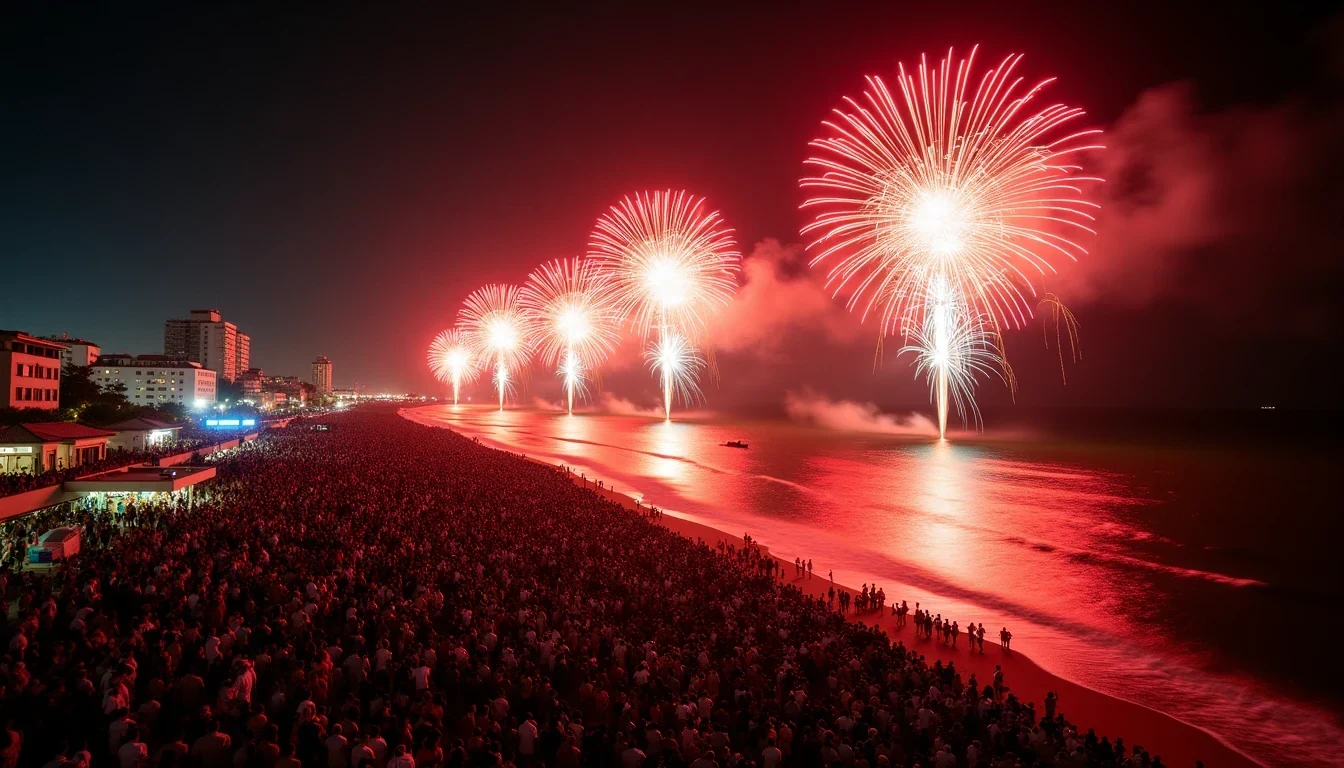
Copacabana gets the postcards, but Salvador gets the better party. Two million people pack onto a single Rio beachfront to watch a ten-minute fireworks display. Festival Virada Salvador, in contrast, stretches across five nights of free concerts, multiple fireworks launch points, and a cultural depth no postcard version of Brazil can touch. For the 2026-2027 Réveillon, the city is betting even bigger.
What Festival Virada Actually Is
Festival Virada Salvador runs from 30 December 2026 through 3 January 2027 at Arena O Canto da Cidade, built directly on the Boca do Rio seafront. The main concert space is free and open to the public, no ticket required. Saltur, Salvador’s municipal tourism company, manages the event alongside Prefeitura de Salvador. Both entities confirm dates, line-up additions, and logistics annually through official channels and major Brazilian outlets like g1 and Folha.
The scale is deliberate. Arena O Canto da Cidade is designed to absorb hundreds of thousands of bodies without the single-point crush that defines Copacabana’s midnight moment. Multiple entry gates spread crowd load. Security personnel manage flow at each point. You need to arrive early, especially on 31 December, if you want sightlines to the main stage and the fireworks overhead.
Who Is Playing and When
Only the 31 December headliners are locked in as of this writing. Ivete Sangalo leads the countdown into 2027. Bell Marques shares the bill that night. Saltur is still negotiating the remaining four nights, and full announcements typically land closer to the event through the same official channels.
This is standard for Virada’s planning cycle. The 31 December anchor acts get confirmed first because that night drives hotel bookings and flight demand. The surrounding nights fill in as negotiations complete. If you’re booking travel now, plan around the five-night window rather than any specific non-31 December performer.
The Free Arena Experience
Access to Arena O Canto da Cidade costs nothing. Entry operates first-come, first-served. Gates open hours before the first act, and the crowd builds steadily through the evening. On 31 December, the density peaks at countdown and holds through the first hour of the new year.
Arrive with minimal baggage. Saltur and Prefeitura de Salvador announce specific prohibited items annually, but large bags, glass containers, and anything that reads as a potential weapon at security screening are always banned. Small cross-body bags or secure pockets work better than backpacks, which slow your passage through entry points and mark you as a target in crowds.
The arena layout uses multiple exit corridors to prevent a single-crush scenario. Security personnel direct flow, but your own awareness is important. Note your exit route when you enter. Pick a landmark visible above the crowd. The seafront location helps, because the ocean gives you one fixed directional reference point.
Paid Options and the Ingresso Solidário
The camarote tiers offer an escape from the arena floor. Elevated platforms, dedicated bars, food service, private restrooms, and often air-conditioned lounge spaces separate the paid experience from the free-for-all below. Pricing for 31 December 2026 runs R$ 1,840 at full price and R$ 920 for meia-entrada (students, elderly, and other eligible categories under Brazilian law). A five-night passport covering all camarote access costs R$ 3,143.40 at full price.
The ingresso solidário offers a reduced-rate path into the camarote in exchange for 2 kg of non-perishable food donation. The collected items go to local charities and food banks serving vulnerable communities in Salvador. You bring the food to a designated collection point, receive your discounted access, and the charity network handles distribution. It is one of the cleaner implementations of social ticketing in Brazilian festival culture, with visible partner organizations rather than vague promises.
Tickets move through official festival websites and authorized vendors, typically opening sales three to four months before the event. The 31 December camarote sells out fastest. The five-night passport offers better value if you plan to attend multiple nights, but only if you actually use it. Many buyers attend two nights and waste the remainder.
Fireworks Beyond the Main Stage
The 2025 edition of Virada deployed fireworks from 22 points across Salvador, and the 2026-2027 edition is expected to match or expand that distribution. This is the structural advantage over Copacabana’s single-launch format. You can see multiple displays from various neighborhoods, each with different character and crowd density.
Boca do Rio hosts the largest concentration and the most elaborate launch synchronized to the main stage countdown. Rio Vermelho offers a bohemian alternative, with bar and restaurant gatherings that launch smaller displays and attract an older, more local crowd. Barra positions you near the Farol da Barra with beachfront views and its own fireworks tradition. Private boats and exclusive venues around Baía de Todos-os-Santos sell access to panoramic views of multiple launch points across the water, at premium prices that vary by vessel and catering package.
The citywide distribution means you do not need to be in the arena to experience midnight properly. This is worth internalizing if you dislike crowds or if mobility limitations make the arena environment untenable.
Getting There and Moving Around
Private vehicles are effectively useless near Boca do Rio during Festival Virada. Prefeitura de Salvador closes roads extensively around the arena, particularly on 31 December and during peak evening hours. The closures are announced annually through official channels, with specific street-level detail arriving two to three weeks before the event.
Public bus routes expand and redirect to drop passengers within walking distance of the arena. The metro does not reach Boca do Rio directly, but connects to transfer points for buses or ride-shares closer to the festival zone. Uber, 99, and similar services operate designated drop-off and pick-up zones that may require a ten-to-fifteen minute walk to the actual entrance. Surge pricing applies, predictably, on 31 December between 23:00 and 02:00.
Pre-book your return transport if possible. The post-midnight exodus creates demand spikes that strand even prepared travelers. Walking to a pickup zone outside the immediate festival perimeter often saves time and money over waiting in the designated crush.
What to Wear and What to Do at Midnight
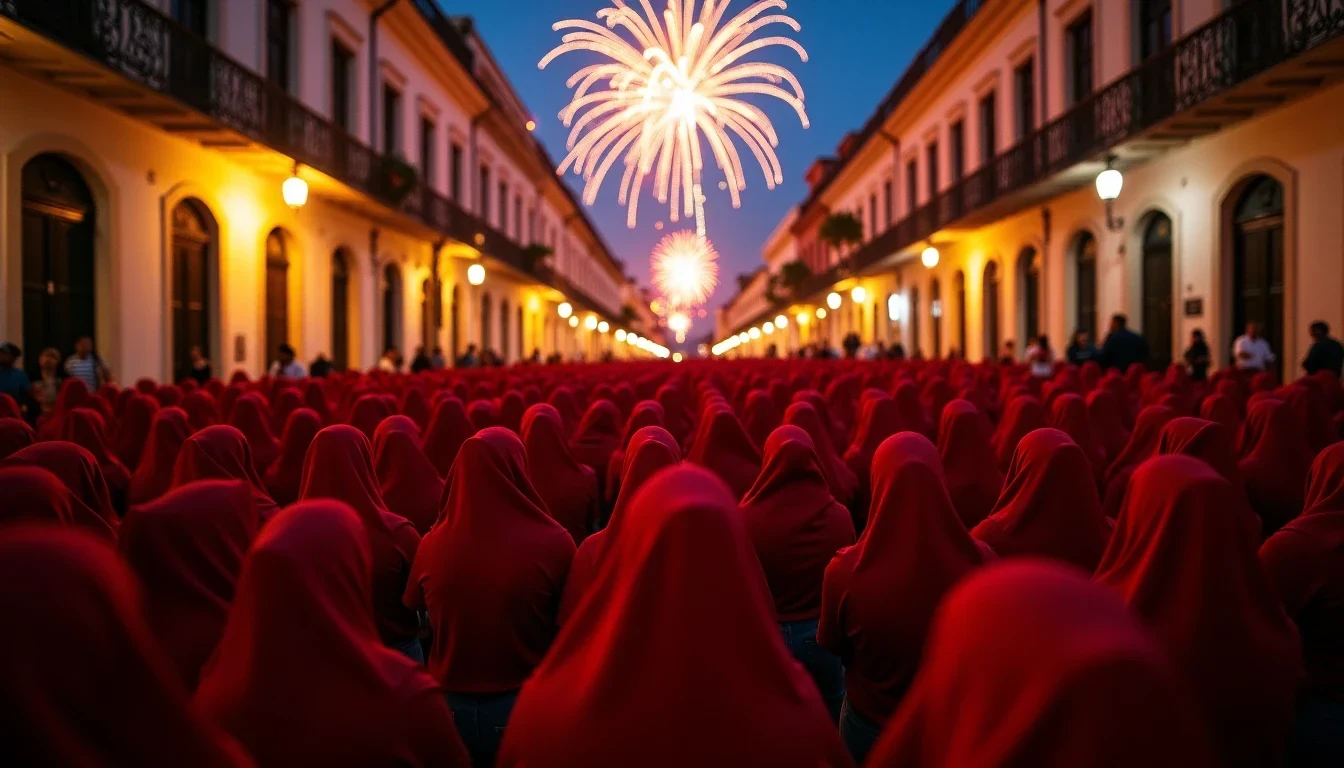
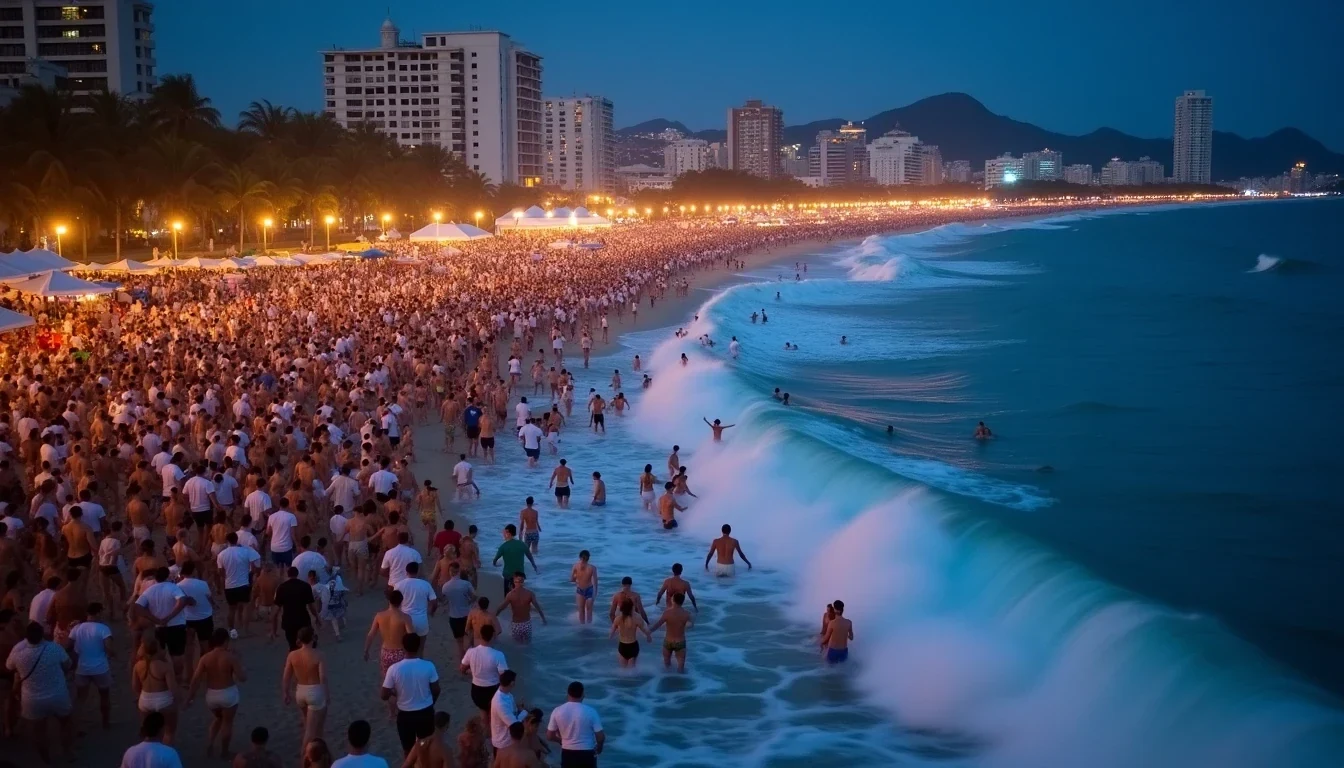
White clothing dominates Salvador’s Réveillon. The tradition carries specific weight here, more so than in Rio or São Paulo, because of the city’s deep Afro-Brazilian spiritual practice. White symbolizes peace, new beginnings, and the invitation of positive energy for the year ahead. You will stand out if you wear other colors, though no one will stop you.
The Iemanjá offering is the other non-negotiable cultural element. At or near midnight, thousands of people move to the water’s edge to cast flowers (white roses most commonly), perfumes, small mirrors, and other gifts into the Atlantic. Iemanjá, the orixá of the sea, receives these offerings as gestures of gratitude and requests for protection and prosperity. The practice is religious in origin but widely participated in by people across belief systems.
If you participate, do so respectfully. Buy flowers from the vendors who appear along the beachfront rather than picking from hotel landscaping. Do not wade into the water to place offerings; the current and the crowd make this dangerous. Cast from the shoreline and step back.
Safety in Practice
Large free events in Brazil attract opportunistic theft. The standard advice applies with extra force at Virada because of the crowd density and the distraction of midnight celebration.
Carry minimal cash. Use PIX or cards where possible, though network congestion can slow mobile payments at peak moments. Keep phones in front pockets or cross-body bags, not back pockets or loose external pouches. The exit crush after midnight is the highest-risk window, because movement is constrained and attention is fragmented.
Stay with your group. If separated, pre-arrange a rendezvous point outside the arena rather than attempting to find each other inside. The cell network often saturates at countdown, making real-time communication unreliable.
Hydration is important across five nights of outdoor celebration. Free water points exist in the arena, but lines form. Carry a small sealed bottle if bag policy permits, or budget for vendor purchases.
The Verdict
Festival Virada Salvador is not a smaller Copacabana. It is a different proposition entirely: longer, distributed across more nights and more spaces, rooted in specific cultural practice, and free at its core. The 2026-2027 edition confirms Ivete Sangalo and Bell Marques for the marquee night, with four additional nights of programming to follow. The camarote tiers and bay parties offer escape valves for those who need them. The free arena delivers the essential experience without financial barrier.
The practical trade-offs are real. You will walk more than at a contained venue. You will wait in lines. You will need to plan transport deliberately. The payoff is a Réveillon that belongs to Salvador specifically, not to a generic international party circuit. For Brazilian travelers tired of Rio’s inflation and international visitors seeking the specific texture of Bahia, that specificity is the point.