Formula 1
Fittipaldi And Piquet Brazil's Formula 1 World Champions
Before Ayrton Senna, Emerson Fittipaldi and Nelson Piquet won five Formula 1 titles, establishing Brazil as a motorsport force and paving the way for future.
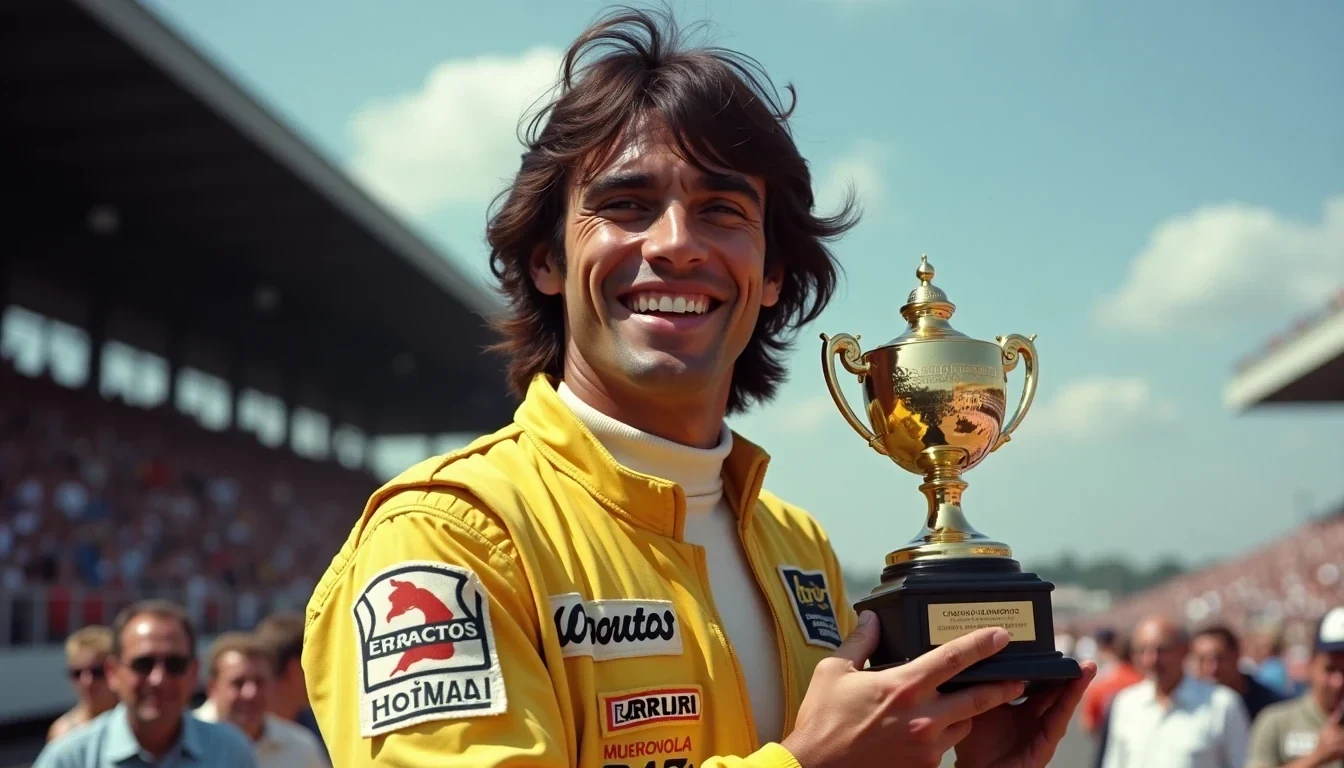
Brazil has produced three Formula 1 world champions who hold eight titles between them. Ayrton Senna is the one everyone names first, with his three championships and his near-mythic status since Imola 1994. But five of those eight titles came earlier, claimed by Emerson Fittipaldi and Nelson Piquet in a fourteen-year stretch that turned Brazil from a curious outlier into a motorsport power. Without that groundwork, Senna’s story would be different.
The Count and the Context
Fittipaldi won two titles and Piquet won three. Senna’s three came later. The arithmetic is simple; the sequence matters more than the total. When Fittipaldi took his first championship in 1972, no South American had won the drivers’ title since Argentina’s Juan Manuel Fangio in the 1950s. Brazil had no grand prix on the calendar until 1973. By the time Piquet sealed his third title in 1987, Brazil had hosted fifteen championship rounds, produced two multiple champions, and established a pipeline of talent, engineering interest, and domestic sponsorship that fed directly into Senna’s ascent.
The country became an F1 nation because two drivers forced the issue, not because the infrastructure existed waiting for them.
How Fittipaldi Broke Through with Lotus in 1972
Emerson Fittipaldi reached Formula 1 in 1970, aged 23, after a rapid climb through British junior formulae. Colin Chapman gave him a seat at Team Lotus alongside Jochen Rindt. When Rindt died at Monza that September, Fittipaldi inherited team leader status for the final races. He won at Watkins Glen, his fourth grand prix start. He was 23 years and 97 days old, the youngest winner the sport had seen.
The 1972 season brought his first full campaign as a title contender. He drove the Lotus 72D in its black-and-gold John Player Special livery, a car already proven but refined with inboard brakes and torsion-bar suspension that kept the weight low. Fittipaldi won five of the twelve rounds: Argentina, Spain, Belgium, Britain, and Austria. He scored consistently even when he did not win, finishing second in France and Germany. The championship was his with two races remaining. He was 25 years old. That youth record stood until Fernando Alonso took the 2005 title at 24, thirty-three years later.
The 1973 season brought disappointment in the title fight. Jackie Stewart took his third and final championship for Tyrrell. But Fittipaldi claimed one result that resonated domestically: he won the first world championship Brazilian Grand Prix, held at Interlagos in São Paulo on 11 February 1973. He started from pole, led 57 of the 40-lap race’s effective distance, and beat Denny Hulme’s McLaren by over thirteen seconds. The crowd at the Autódromo José Carlos Pace, then still carrying its original name, saw a Brazilian win on home soil in an official championship round for the first time.
The 1974 McLaren Title and the Second Interlagos Win
Fittipaldi moved to McLaren for 1974, a switch that placed him with a team hungry for its first constructors’ success. The M23 was a conventional Cosworth-powered car against Ferrari’s flat-12 312B3 and the new Lotus 76, but it was reliable and Fittipaldi extracted the maximum. He won in Brazil, Belgium, and Canada, added second places in South Africa, Spain, and the Netherlands, and took the title by three points from Ferrari’s Clay Regazzoni at the final round in Watkins Glen. McLaren won its first constructors’ championship in the same season.
The Brazilian Grand Prix that year returned to Interlagos on 27 January. Fittipaldi qualified second behind Carlos Reutemann’s Brabham, took the lead on lap five, and won by thirteen seconds from Regazzoni. He had two consecutive home victories, two different teams, and two championship seasons. He would not win again in Brazil; his final F1 victory came at Silverstone in 1975, by which point his relationship with McLaren had frayed. He left for his brother Wilson’s Copersucar-funded Fittipaldi Automotive project in 1976, a move that consumed his remaining competitive years. He scored 14 grand prix wins in total, a Brazilian record until Senna surpassed it.
Piquet’s European Apprenticeship
Nelson Piquet arrived in Europe in 1977, a decade after Fittipaldi had made the same journey. The path was deliberate. Piquet had raced karts and Formula Super Vee in Brazil, but Fittipaldi advised him directly: go to Europe, race against the best, prove yourself there or not at all. Piquet took the advice, entered British Formula Three in 1978, and won the championship. Bernie Ecclestone signed him to Brabham for 1978 as a test driver; he started his first grand prix at the 1978 German Grand Prix, replacing John Watson for one race, then took a full seat in 1980.
That first full season brought immediate contention. Piquet finished second in the 1980 championship, behind Alan Jones’s Williams FW07B. He won at Long Beach, the Netherlands, and Italy. The Brabham BT49 ran the Cosworth DFV against the increasingly dominant ground-effect cars, and Piquet’s precision in tyre management and racecraft kept him in the fight until the final rounds. Jones clinched the title with a race to spare. Piquet had announced himself.
How Piquet Won the 1981 Title in the Brabham BT49
The 1981 season brought rule changes that restricted ground effect and banned skirts. The Brabham BT49, designed by Gordon Murray, adapted well. Piquet won three races: Argentina, San Marino, and Germany. The championship battle ran to the final round, the Caesars Palace Grand Prix in Las Vegas, a parking-lot circuit in the Nevada heat. Piquet started fifth, finished fifth, and took the title by one point from Carlos Reutemann, whose Williams suffered a gearbox failure that dropped him from the lead to eighth. Piquet spent the final laps vomiting in his helmet from exhaustion and dehydration. He was 29, Brazil’s second champion, and the first to win a title with a turbocharged future already visible on the horizon.
How Piquet Won the 1983 Title with BMW Turbo Power in the Brabham BT52
That future arrived emphatically in 1983. Renault had pioneered turbocharging in 1977; Ferrari and Brabham-BMW followed. The Brabham BT52, designed by Murray around the BMW M12/13 four-cylinder turbo, produced massive power in bursts but demanded new skills in throttle control, fuel management, and thermal discipline. Piquet mastered it better than anyone. He won in Brazil, Italy, and Europe (the race at Brands Hatch), but the season turned on consistency against Alain Prost’s Renault. Prost led the championship into the final round at Kyalami in South Africa. Piquet finished third there while Prost’s turbo failed. The margin was two points. Piquet became the first champion of the turbo era, and BMW’s first title winner.
The Brazilian victory that year came at Jacarepaguá in Rio de Janeiro on 13 March. The circuit, built on reclaimed land near Barra da Tijuca, hosted the grand prix while Interlagos underwent safety revisions. Piquet qualified on pole, led from start to finish, and won by over ten seconds from Patrese’s Brabham teammate. It was his first home victory.
How Piquet Won the 1987 Title with Williams Honda
Piquet moved to Williams for 1986, partnering Nigel Mansell in a team now powered by Honda’s RA166E V6 turbo. The partnership was fractious. Mansell won five races to Piquet’s four in 1986, but reliability failures cost both a title shot; Alain Prost took the championship for McLaren. The 1987 season brought the Williams FW11B, which was more powerful and more reliable. Mansell won six races but crashed in practice for the Japanese Grand Prix at Suzuka, sustaining injuries that ended his season. Piquet, who had already won in Germany, Hungary, and Italy, finished second to teammate Riccardo Patrese in Japan to secure his third championship. Williams took the constructors’ title. Honda had its first drivers’ champion.
Piquet’s second Jacarepaguá victory came in 1986, the year before his final title. He won from pole on 23 March, leading 61 of 61 laps in a race shortened by time limit after a restart. The circuit was never loved by drivers; the surface was patchy, the layout flat and featureless compared to Interlagos’s plunging elevation. But Piquet owned it, twice, in front of crowds who travelled from across Rio.
The Numbers Side by Side
| Emerson Fittipaldi | Nelson Piquet | |
|---|---|---|
| World titles | 2 (1972, 1974) | 3 (1981, 1983, 1987) |
| Teams | Lotus, McLaren | Brabham, Williams |
| Grand prix wins | 14 | 23 |
| Pole positions | 6 | 24 |
| Home wins | Interlagos 1973, Interlagos 1974 | Jacarepaguá 1983, Jacarepaguá 1986 |
| Youngest champion record | Held 1972-2005 |
The comparison is useful only to a point. Fittipaldi broke the path; Piquet widened it. Fittipaldi’s titles came with two different manufacturers in an era of greater mechanical variety. Piquet’s three titles spanned the transition from normally aspirated to turbo power, a technical shift that rewarded adaptability more than raw speed alone.
What Remains to See
Interlagos still hosts the Brazilian Grand Prix, now the São Paulo Grand Prix in official FIA nomenclature, though no Brazilian has won there since Felipe Massa’s emotional but ultimately futile 2008 victory. The circuit in Jacarepaguá closed to motorsport in 2012; the land became part of the Olympic Park for Rio 2016, and the area is now the Parque Olímpico da Barra, open to the public with jogging tracks and sports facilities where Piquet once took pole. The old pits and start-finish straight are gone.
For visitors to São Paulo, the Autódromo José Carlos Pace runs track days, driving experiences, and the annual grand prix in November. The Museu do Grande Prêmio, a small private collection near the circuit entrance, holds Fittipaldi and Piquet memorabilia among other Brazilian racing history. Entry is irregular; check current opening hours before travelling. The Interlagos district itself, in the southern zone of São Paulo, offers little tourist infrastructure, but the Morumbi and Brooklin neighbourhoods nearby have hotels and restaurants that fill up on race weekends. Expect R$ 400-800 per night for mid-range accommodation during the 2024 grand prix period, with prices rising closer to the event.
Fittipaldi, now in his late seventies, remains visible at historic events and in Brazilian motorsport promotion. Piquet’s public profile has diminished since health issues and controversies removed him from regular commentary roles. Their racing records stand independently of any later judgment. Five titles, two drivers, one continuous thread of Brazilian presence at the highest level, established before Senna ever sat in a Formula 1 car.