Street
Experience Rio's Best Monday Samba Nights at Pedra Do Sal
Rio's Mondays come alive with two distinct samba rodas, including the historic Pedra do Sal, offering a deep dive into the genre's cultural roots and vibrant.
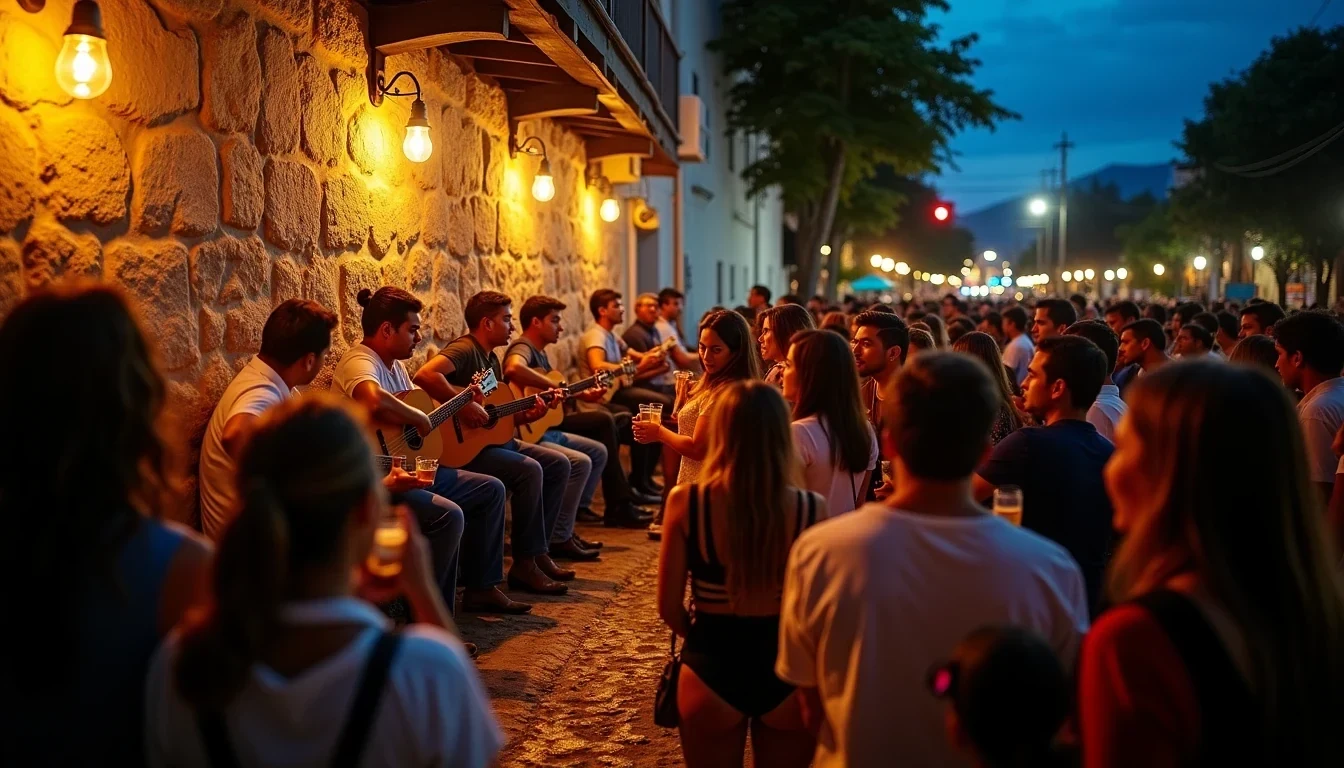
Monday in Rio is not a recovery day. While the rest of the city nurses weekend hangovers, two rodas de samba build theirs from scratch. One is in a cobblestone square that was already old when your grandfather learned to walk. The other is in a club where a master conductor still programs every set by hand. They map the full terrain of samba de raiz: the street-born and the stage-sharpened, the free and the ticketed, the accidental and the deliberate. You do not need to choose; you need to know what each demands of you.
Where Samba Was Quicker Than the Law
Pedra do Sal sits in Saúde, a neighborhood that earned its name from the salt deposited there when the port still moved human beings as cargo. Enslaved Africans unloaded the mineral at this stone outcrop, then gathered in the surrounding alleys to preserve what the city tried to strip from them: rhythm, religion, language, community. The area became Pequena África, a dense settlement of freed and escaped people who sheltered Candomblé ceremonies, capoeira rodas, and the earliest forms of urban samba in homes where Tia Ciata served food and guarded the door. The federal government recognized Pedra do Sal as a remnant urban quilombo territory in 2005, the same year the Monday roda began its current run. UNESCO had already listed Cais do Valongo, the largest slave port in the Americas, ten minutes away on foot.
The roda starts around 19:00 and runs until roughly midnight, though no one announces last songs. Crowds thicken from 21:00 onward, compressing against the stone wall where musicians set up. Instruments run through amplification, but voices do not. You hear the cavaquinho and the surdo clearly, but the singers strain against the ambient noise of the square, and the crowd’s refrains rise to meet them. Beer moves through a token system: cash exchanged for plastic chips at one window, chips for cold cans at another. This mechanism keeps lines short and money visible, a practical necessity in a crowd this dense.
The Conductor and His Repertoire
Samba do Trabalhador operates on different physics. Renascença Clube occupies Rua Barão de São Francisco 54 in Andaraí, a neighborhood with no metro station and no tourist foot traffic. Entry costs R$30-R$40 as of recent seasons, collected at a door staffed by people who remember irregulars. Moacyr Luz leads the roda from Monday afternoon into evening, a schedule that catches workers on early release and retirees who have earned their seats. His band moves through samba’s full chronology without apology: Cartola’s melancholy constructions, Nelson Cavaquinho’s harmonic tension, Zeca Pagodinho’s conversational ease. The room has chairs and a bar with printed menus. The sound is balanced by someone whose job is balancing sound.
This is not a lesser authenticity; it is a different contract. At Pedra do Sal you accept uneven audio, unpredictable set lengths, and the possibility that rain will end everything. At Renascença you pay for continuity, curation, and shelter. Both are real, but only one lets you plan around it.
How to Behave in the Circle
Roda etiquette is not decorative. Musicians at Pedra do Sal play inches from listeners who have not paid for separation; crowding the table means someone cannot reach a tuning peg or a spare pandeiro. Conversation during performance is the most common visitor error. The music is not background; it is the reason the square exists on Monday nights. Learn the coros, the refrains that repeat after each verse, because participation is the floor, not the ceiling. Vendors circulate with beer, with caipirinha, with grilled meat on skewers. Buy from them and tip them. The roda survives on this circulation, and the people selling have often been there longer than the musicians.
At Renascença the structure is more forgiving, but the principle is identical. Moacyr Luz performs on a raised stage; the distance is physical, not social. Applause between songs, sung responses during them, and patience with tempo changes that favor dancers over listeners all signal that you understand where you are.
Getting There and Leaving Intact
Metro Line 1 serves Pedra do Sal through Uruguaiana or Carioca stations, both requiring a short walk through streets that empty quickly after 22:00. Last trains depart near midnight, which cuts the evening short if you intend to stay for final songs. The better departure protocol: walk to Largo João da Baiana, a trafficked plaza where app cars and taxis collect passengers under streetlight. Do not cut through empty side streets to save two minutes. Keep phones in front pockets, bags closed and forward, and move with purpose rather than hesitation.
Renascença Clube demands no such choreography. Its location in Andaraí means most visitors arrive by app car or taxi direct to the address. Return trips are simpler because the neighborhood’s residential density means drivers know the street.
What to Verify Before You Commit
Both events shift. Pedra do Sal has paused for rain, for police operations, and for holidays that fall on Mondays. Renascença adjusts schedules around Moacyr Luz’s touring commitments and club maintenance. Instagram remains the only reliable source for start times, entry prices, and cancellations. Check the organizers’ accounts the same day you plan to attend. If you do not do the research, you might spend Monday night in a closed square or a dark club, wondering where everyone went.
The best Monday samba in Rio is not one place. It is the willingness to start at the stone where the genre was criminalized, then move to the club where it was rehabilitated, and to treat both as living practices rather than heritage displays. The city still makes that possible, one Monday at a time.