Food
Baianas of Acarajé Keep Brazil's Sacred Culinary Soul Alive
Acarajé, prepared by Brazil's Baianas, is a sacred culinary tradition with historical roots in slavery and freedom, now celebrated nationally for its role in.
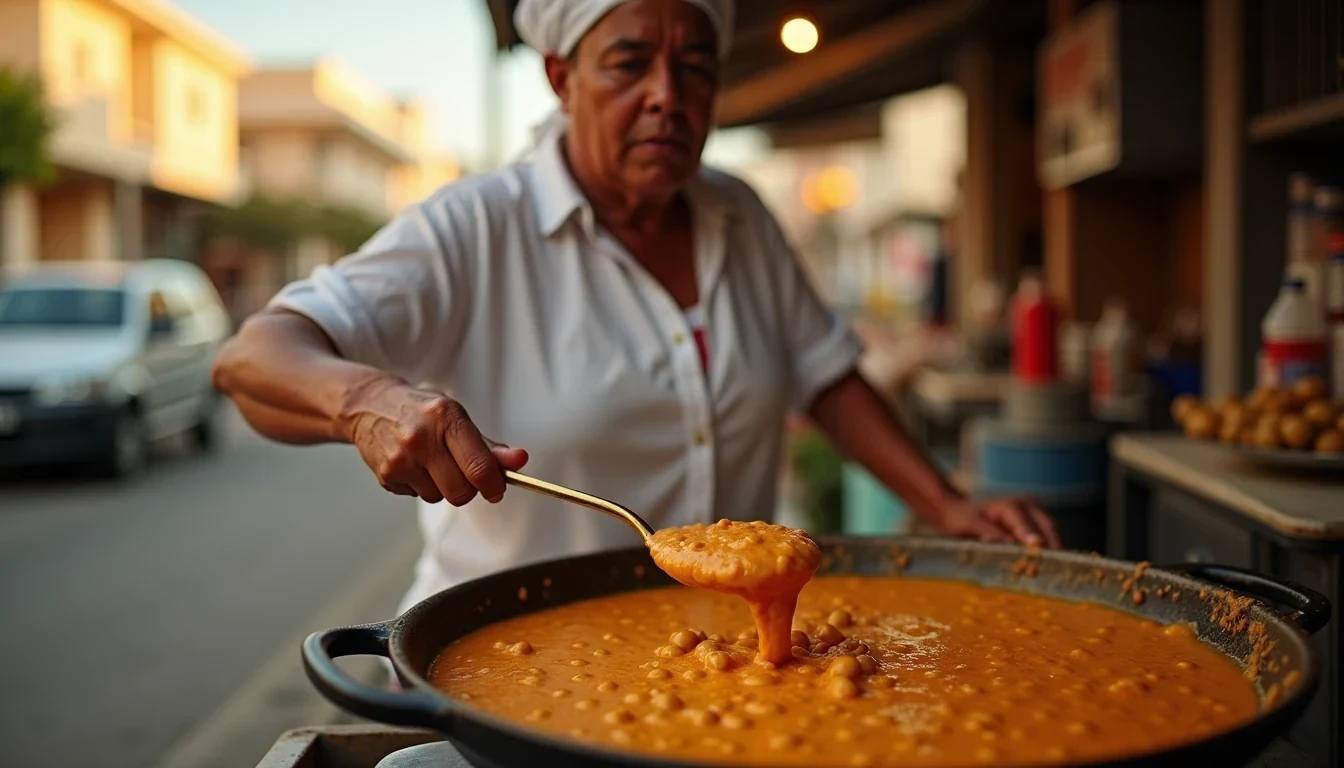
The dendê oil hits smoking point just before sunset in Rio Vermelho. At a corner tabuleiro on Rua Dois de Fevereiro, a woman in starched white ladles black-eyed pea batter into a cast pan. The fritters swell and bronze in seconds, sending up a nutty, slightly burnt smell that cuts through the salt air. This is not just a snack; it is a practice that crossed the Atlantic in the hold of a slave ship, survived the whip and the church, and still funds families today.
On 25 November 2026, Lei 12.206/2010 turns the calendar into a federal stage for these women. Dia Nacional da Baiana de Acarajé is not a tourism invention. It recognises that Black women have performed this exact work since colonial times, first as a legal loophole to buy their own freedom, later as the living spine of Salvador’s street economy. To understand the city, one must understand what happens at these stalls.
From Yoruba Akara to the Streets of Salvador
The dish began as akara, a fritter carried in memory and muscle by Yoruba women forced across the Atlantic from present-day Nigeria and Benin. In the terreiros of Candomblé, the golden crisp remains comida de santo, an offering placed before Iansã, the orixá who commands wind, lightning, and the gate of the cemetery. Devotees leave the fritter at her feet to ask for strength or to give thanks after a storm has passed. The name itself holds the journey: akara means bread or pastry, je means to eat. Eating akara became acarajé, and the sound of the word still carries Yoruba tonality through the streets of Pelourinho.
Long before IPHAN existed, these women used the sale of acarajé to carve out cash income in a colony that tried to erase their autonomy. The tabuleiro was a portable bank, a kitchen, and a shrine. Colonial law often blocked Black women from other trades, but street food moved through the cracks. The profits paid for manumission papers, baptisms, and the first stones of the terreiros that still stand in the Brotas neighbourhood and beyond.
What Goes on the Plate
A proper acarajé starts with dried black-eyed peas, soaked overnight, peeled by hand, and ground with onion and salt. The batter drops into dendê oil and emerges with a shell that shatters between the teeth. Dendê oil stains everything it touches, including the politics of the plate. The red palm fat came with the same ships that carried the Yoruba women, and its flavour is non-negotiable. Substituting soy or sunflower oil produces something, but it is not acarajé. ABAM inspectors and customers alike know the difference by smell alone.
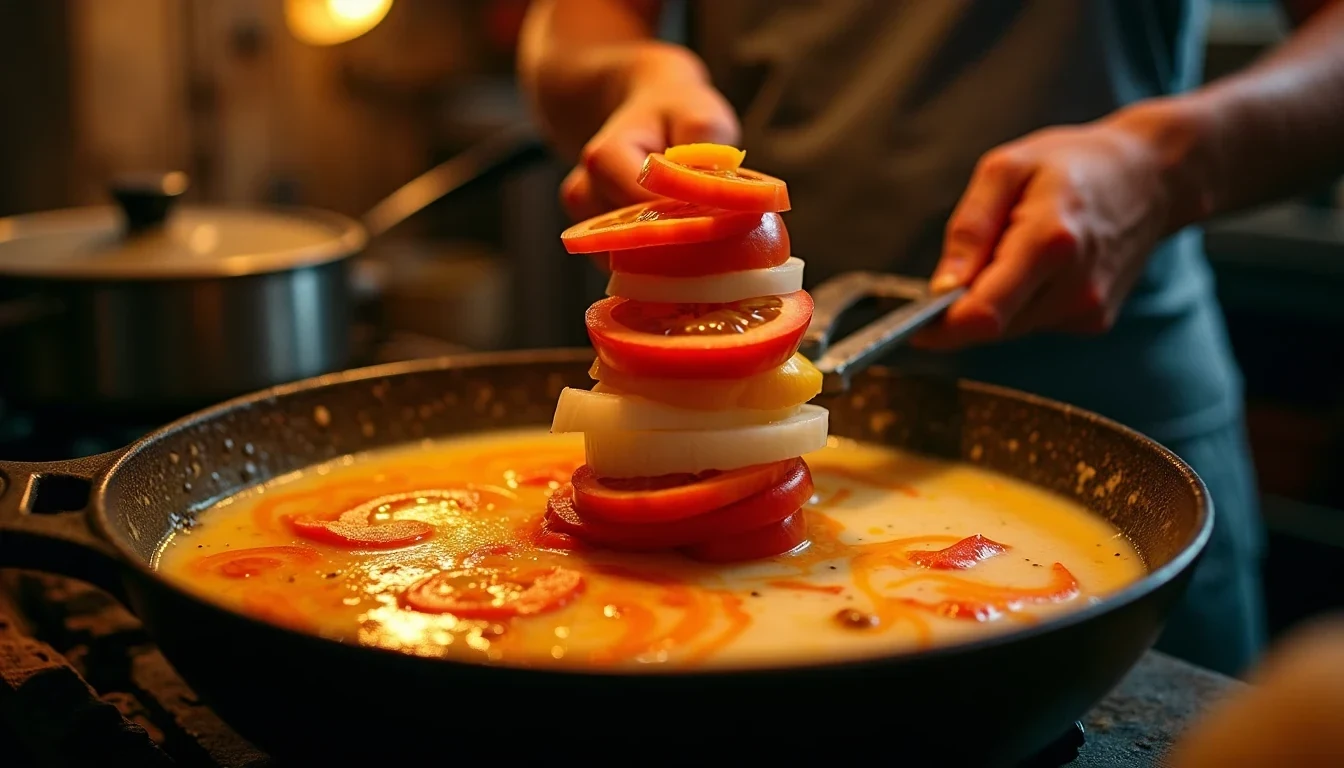
The vendor splits the fritter and packs it either quente or frio. Hot service means vatapá, the thick paste of stale bread, cashew, peanut, dried shrimp, coconut milk, and more dendê. It means caruru, the okra stew thickened with dried shrimp and nuts until it draws threads between the spoon and the pot. It means vinagrete, the sharp dice of tomato, onion, and green pepper bound in vinegar and cilantro. Whole dried shrimp and malagueta pepper sauce sit on top in layers you adjust yourself. Order it frio and the fillings stay cold, the contrast sharper, the oil less runny, making the whole thing more like a sandwich than a stew bowl.
Abará uses the exact same pea dough but skips the fry. The cook wraps the batter in fresh banana leaves and steams it until the texture turns soft and slightly sour. It is the quiet cousin to the noisy acarajé, often eaten beside it at the same tabuleiro but never confused with it. Acarajé is the drum, and abará is the voice.
Federal Protection and the Fight for the Craft
IPHAN inscribed the Ofício das Baianas de Acarajé into the Livro dos Saberes in December 2004, a decision people usually cite as 2005. The registration protects the recipe, the white dress, the Candomblé prayers said over the oil, and the tabuleiro itself as a unit of commerce and belief. Federal recognition is not a one-time stamp. The institute has revalidated the entry since, acknowledging that intangible heritage dies the moment people stop practising it. Salvador adds its own municipal legal shield, so a vendor working without the community’s sanction can face penalties that range from fines to removal.
The scope is deliberately broad because the craft does not separate cooking from spirituality or fashion from function. The white dress is not a costume; it is ceremonial cloth, linked to the orixás and to the brotherhoods of Our Lady of the Rosary. The recipe is not a suggestion; it is a liturgy performed with a wooden spoon. New apprentices still learn by watching, not by reading a manual. A younger baiana spends months beside an elder before she is allowed to handle the oil alone. The transfer happens in kitchens and on street corners, not in classrooms, which is why IPHAN classifies the work as intangible. You cannot box it; you can only inherit it.
The Associação das Baianas de Acarajé e Mingau, ABAM, exists to make sure the protection means something on the pavement. The association sets quality standards, represents sellers in disputes with the city, and pushes back against anyone who tries to strip the rite from the recipe. The most visible threat lately is the so-called bolinho de Jesus, a rebranded black-eyed pea fritter sold by evangelical vendors. ABAM calls it economic theft dressed in religious language. The sellers want the same dough and the same price without the Candomblé lineage, and that rerouting of history cuts into the income of women who built the tradition with their own hands.
Each year ABAM gathers its members at the historic Nossa Senhora do Rosário dos Pretos for Mass. The church in Pelourinho was built by and for enslaved Afro-Brazilian brotherhoods in the eighteenth century. Afterward, the women process through Pelourinho’s cobblestones in full white dress, the tabuleiros balanced on their heads, turning the neighbourhood into a moving altar. The gathering is open to anyone, though it functions less as spectacle and more as a statement of continuity.
Where to Find the Masters
Rio Vermelho owns the after-dark trade. Cira, Dinha, and Regina have held corners here for decades, their stalls lit by naked bulbs swinging in the sea breeze. As of early 2026, all three are still trading, though visitors should confirm current hours before making the trip because nothing in Salvador starts on time. Each has her own rhythm. Some pack heavier on the vatapá. Some hand you the pepper sauce in a separate cup rather than pouring it themselves. All three operate within a few blocks of each other near the Largo de Mariquita, close enough that you can compare styles in a single evening.
ABAM ran a pricing campaign in 2023 that floated R$ 10 as a fair reference for a single acarajé. Inflation and the fluctuating cost of dendê oil have shifted the floor since then. Expect to pay more in 2026, and carry small bills because change is never guaranteed. A cold can of Guaraná from the same stall should run a couple of reais extra.
The Etiquette of Eating and Looking
These women are tradition keepers, not background extras for your social feed. Ask before you raise your phone. A simple “posso tirar uma foto?” takes two seconds, and the answer will almost always be yes if you have treated the food and the person with respect first. Do not touch the tabuleiro. Do not lean over the oil. Stand where she tells you to stand.
Eat at the stall if you want the full performance. The vendor will ask quente ou frio. Say quente if you want the full waterfall of vatapá and the risk of it running down your wrist. Say frio if you prefer the fillings cold and the structure intact. If she offers you a taste of the pepper sauce on a sliver of cardboard before you commit, accept. The heat level varies by batch and by cook, and malagueta can range from bright to brutal. She is not being cautious; she is being generous, and she expects you to handle the truth.
Either way, eat it fast. Acarajé does not travel well, and Salvador’s humidity turns crisp shells into chew toys within minutes. The experience lasts five minutes. The memory stays for years.