Football
Mineirão Stadium Tour And The 7-1 Match History For Visitors
The Mineirão Stadium in Belo Horizonte, opened in 1965, has a storied past of record attendances and club tenancy, now exclusively housing Cruzeiro after.
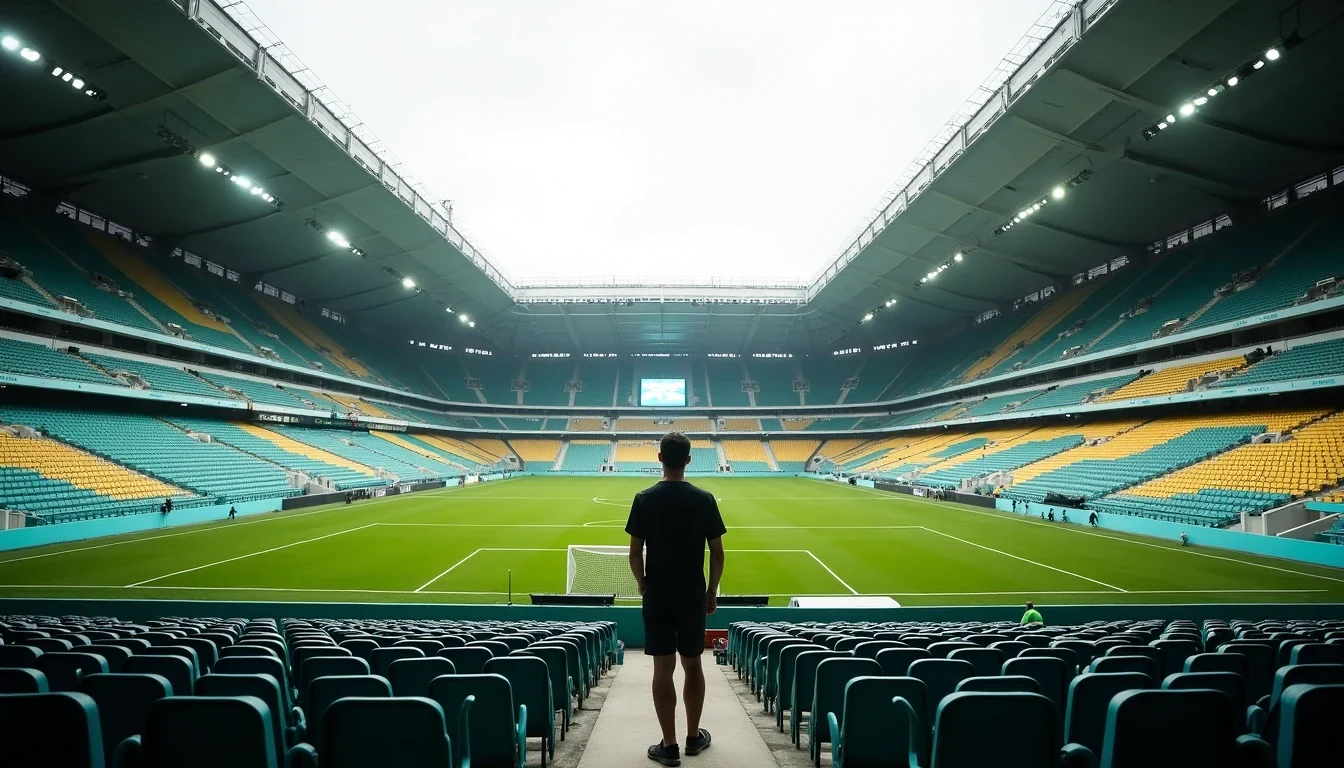
The Mineirão still stands where it always has, on land the Federal University of Minas Gerais gave up in the 1960s, in the Pampulha district of Belo Horizonte. Opened on 5 September 1965 as the Estádio Governador Magalhães Pinto, its first match drew 73,201 people to watch Minas Gerais’s state team beat River Plate 1-0. That crowd now looks modest. The stadium’s record attendance came 32 years later, when 132,834 packed in for the 1997 Campeonato Mineiro final between Cruzeiro and Villa Nova. Those numbers belong to a different era of Brazilian football, before all-seater requirements and modern safety codes trimmed the capacity to the current figure of 61,846.
Cruzeiro have played there since the beginning. Atlético Mineiro shared the ground for decades too, until March 2023, when they moved to their own Arena MRV, a 46,000-seat venue in the Califórnia neighbourhood. The Clássico Mineiro, one of Brazil’s most heated derbies, no longer splits its home between one stadium and two fanbases. For the first time in 58 years, the Mineirão houses only Cruzeiro among Belo Horizonte’s big clubs.
Before the World Cup renovation
The stadium earned its reputation long before FIFA arrived. It hosted Copa Libertadores finals, Campeonato Brasileiro deciders, and countless international fixtures for the Seleção. The original concrete bowl, designed by architects Eduardo Mendes Guimarães and Caspar Garreto, was typical of the era: steep terraces, close sightlines, and noise that compressed downward onto the pitch. That 1997 record crowd for Cruzeiro against Villa Nova remains the benchmark. No post-renovation configuration has come close, and none will.
By the late 2000s the Mineirão showed its age. Brazil’s successful bid to host the 2014 World Cup forced the issue. Renovation ran from 2011 to 2013, stripping the stadium back to its structural skeleton and rebuilding with a lower capacity, modern hospitality tiers, and a roof that finally covered most seats. The project cost roughly R$ 695 million, funded through a public-private partnership that later became a case study in Brazilian stadium finance, not always favourably. The Mineirão emerged as one of six 2014 venues with a FIFA-compliant face and a familiar name.
How the semi-final unfolded on 8 July 2014
Brazil arrived at the semi-final against Germany carrying two absences that would be discussed for years. Neymar had fractured a vertebra in the quarter-final against Colombia, carried off the field at the Castelão in Fortaleza. Captain Thiago Silva was suspended, having picked up his second yellow card of the knockout stage. Coach Luiz Felipe Scolari started Dante in defence and Bernard in attack. Germany’s lineup included Manuel Neuer, Philipp Lahm, Bastian Schweinsteiger, and a front three of Thomas Müller, Miroslav Klose, and Mesut Özil.
The match began at 17:00 local time. Germany scored in the 11th minute, Müller converting from a corner after Brazil’s marking collapsed at the near post. The score stood 1-0 for twelve minutes. Then the sequence that defined the night began.
At 23 minutes, Klose collected a rebound from Neuer’s save, shot, saw Júlio César block it, and scored on the second attempt. The goal made him the outright leading scorer in World Cup history with 16, passing Ronaldo’s 15. Klose had equalled the record in the previous match against Ghana. Now he owned it alone.
Seventy seconds later, Toni Kroos intercepted a Brazilian pass near the centre circle, exchanged with Khedira, and finished from the edge of the area. Two minutes after that, Kroos scored again, this time first-time from a Lahm cutback after more static Brazilian defending. The score was 4-0 with 26 minutes played.
In the 29th minute, Khedira completed the first-half demolition, walking through midfield unchallenged to side-foot Germany’s fifth. Five goals in six minutes. The half ended 5-0. Brazil had not managed a shot on target.
Scolari made two changes at the interval, bringing on Ramires and Paulinho for Fernandinho and Hulk. The pattern did not shift. André Schürrle, on as a substitute, scored in the 69th and 79th minutes, both finishes precise and both met with the same silence from the home crowd that had greeted the earlier goals. Oscar scored for Brazil in the 90th minute, running onto a through ball and beating Neuer low to the goalkeeper’s left. The final score read 7-1. It remains Brazil’s heaviest defeat in any senior international match.
What changed afterwards
The immediate aftermath filled Brazilian television with images of fans crying in the stands, of Scolari stating that the catastrophe was his responsibility, of president Dilma Rousseff facing renewed political pressure with an election three months away. The longer-term effects on the stadium itself were less dramatic. The Mineirão had already been selected as a 2016 Olympics football venue, and it fulfilled that role without incident, hosting six men’s matches and four women’s, including a semi-final.
The renovation’s financial structure proved more problematic than the football memories. The public-private partnership with Minas Arena, the operating consortium, accumulated debts that led to renegotiation and state government intervention. By 2022, the Minas Gerais government was discussing direct management or new concession terms. The stadium’s physical condition remained sound; its commercial model did not.
For Brazilian football, the 7-1 became a reference point that outlived its context. Every heavy defeat, every defensive collapse, every World Cup elimination since has been measured against it. The players involved have given varying accounts over the years. Dante, who played centre-back that night, described the experience as “a black hole” in interviews. Oscar, scorer of Brazil’s consolation, has called it the worst moment of his career. None of the German squad has played it for drama; several have described the second half as uncomfortable, even embarrassing, in its one-sidedness.
Visiting the stadium now
The Mineirão operates tours on non-match days, with tickets booked through the stadium’s official website. As of 2026, the basic tour costs R$ 40. The combined ticket, adding entry to the Museu Brasileiro do Futebol, runs R$ 50. The museum occupies space within the stadium complex, tracing Brazilian football history from its organised beginnings in the late 19th century through to contemporary exhibits that include, without sensationalism, material from the 2014 World Cup.
The standard tour route includes the changing rooms, the players’ tunnel, pitchside access, and the press conference area. Guides vary in their willingness to discuss the 7-1; some address it directly, others mention it only if asked. The museum’s 2014 section displays match programmes, photographs, and broadcast equipment from the night, presented as documentation rather than memorial.
Visitors should check availability before travelling. The stadium will suspend regular tours during FIFA’s operational period for the 2027 Women’s World Cup, when the Mineirão is scheduled to host matches. Exact dates for that pause have not been finalised as of early 2026.
Belo Horizonte football today
Cruzeiro remain the Mineirão’s sole club tenant, playing their Série A home fixtures there and drawing crowds that have recovered since the club’s 2019 relegation and subsequent financial restructuring. Their 2022 promotion back to the top flight, followed by steady mid-table consolidation, has restored regular attendance above 30,000 for significant matches.
Atlético Mineiro’s move to Arena MRV ended one of world football’s longest shared-stadium arrangements between major city rivals. The new ground, built with private funding at a reported cost exceeding R$ 600 million, opened in April 2023. It offers superior hospitality infrastructure and a more compact, louder atmosphere for league matches, though it has faced criticism for location and transport access. The Clássico Mineiro now splits its venues by home team, with the away side’s supporters travelling across Belo Horizonte rather than simply to the other end of the same stand.
For visitors timing a trip around football, the Mineirão offers the more accessible experience. Arena MRV tickets sell primarily through Atlético’s membership system, with limited general sale. Cruzeiro’s home matches at the Mineirão, particularly against non-rival opposition, are easier to attend with short-notice purchase. Both stadiums sit on the northern side of the city, roughly 8 kilometres apart, with the Mineirão better served by public transport via the Pampulha bus corridor.
The Museu Brasileiro do Futebol remains the Mineirão’s distinctive offering. No other major Brazilian stadium combines regular public tours with a permanent museum of comparable scope. For visitors from outside Brazil, it provides context that extends beyond any single match, however famous. For Brazilian fans, it offers a version of national football history that includes the 7-1 without being imprisoned by it.