Football
Northeast Brazil Football Clubs Rivalries and Stadiums
The Copa do Nordeste emerged as Northeast Brazil's answer to football's Rio-centric bias, forging intense local rivalries and a vibrant regional identity.
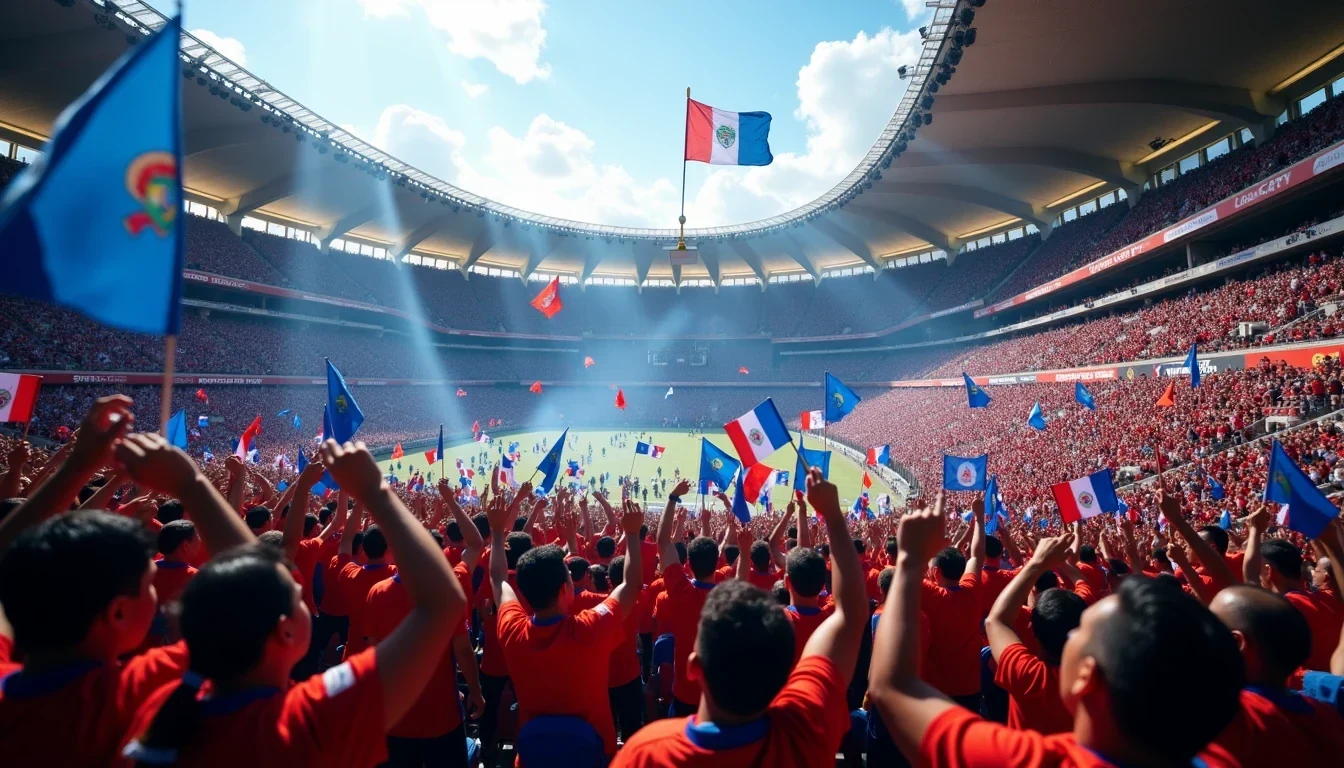
The Copa do Nordeste exists because the rest of Brazil acted like football stopped at the São Paulo border. In 1994, nine states from Maranhão to Bahia built their own stage. Sport Club do Recife lifted the first trophy that year, and the tournament became the region’s loudest reply to decades of Rio-centric neglect.
Why the Northeast Built Its Own Competition
Brazil’s national calendar always favored the southeast. Clubs from Rio and São Paulo grabbed more television money, better kickoff slots, and the narrative that they were Brazilian football. The Copa do Nordeste gave the region a compressed, high-stakes season where local rivalries carried real weight. Travel between Recife, Salvador, and Fortaleza is shorter than a bus ride from Porto Alegre to Curitiba. However, the cultural distance from the southeast’s media centers made the Northeast invisible until January or February, when these clubs started knocking out favorites in the Copa do Brasil.
The format has shifted over three decades, but the core stayed: group stages, knockout rounds, and a final that rotates host cities. As of 2026, five clubs dominate the honor roll. Bahia and Vitória sit level at five titles each. Fortaleza, Ceará, and Sport trail with three apiece. No club from outside these five has broken through, which shows how concentrated the region’s football power remains.
Salvador and the Ba-Vi Divide
No city in the Northeast splits itself in two like Salvador. Esporte Clube Bahia and Esporte Clube Vitória share a metropolitan area of nearly four million people, and for ninety minutes they turn it into a city of enemies. The Ba-Vi derby predates the Copa do Nordeste by decades, but the regional tournament gave both clubs fresh ammunition.
Bahia’s five Copa do Nordeste titles came in 2001, 2002, 2017, 2021, and 2025. The most recent was a demolition: 5-0 over Confiança, played in Salvador with Bahia’s blue, red, and white flags drowning out the away section. Vitória answered immediately. In 2026, they beat Fortaleza 2-1 at the Barradão, sealing a 4-2 aggregate victory and a fifth CBF-recognized title. The gap between Bahia’s 2025 triumph and Vitória’s 2026 response was eleven months. In Salvador, that counts as a direct conversation.
The national story runs deeper. Bahia’s 1959 Taça Brasil victory came against Pelé’s Santos, a result that still gets retold in bars with escalating details. Their second national title, the 1988 Campeonato Brasileiro, concluded in 1989 with a final against Internacional. These are not regional curiosities; they are the foundation Bahia built before most current fans were born.
Vitória has no national championship, but the 2026 Copa do Nordeste win proved they can match their rival’s regional count. The Barradão holds approximately 29,000, a tight enough space that the upper tier shakes when the home side scores. For visitors, it sits in the Boca do Rio neighborhood, reachable by bus from the city center or ride-hail from most Salvador hotels.
Bahia play at Arena Fonte Nova, capacity roughly 47,900. The stadium replaced the original Fonte Nova after structural failures; the current version opened in 2013 and hosted 2014 World Cup matches. For match days, take Line 1 of the Salvador metro to Campo da Pólvora. A tunnel links this station to Lapa, and operators extend hours when Bahia are home. Tickets run from R$ 40 to R$ 150 depending on opponent and stand, with 2025 pricing still current as of 2026. The stadium’s betting sponsorship is plastered across every available surface, but the concrete bowl underneath still carries the noise properly.
Recife, Sport and the Ilha do Retiro
Recife supports three historic clubs, but Sport Club do Recife owns the Copa do Nordeste’s origin story. Their 1994 title made them the tournament’s first champion. They added trophies in 2000 and 2014, and their three titles equal Fortaleza and Ceará despite far less financial muscle in recent seasons.
Sport’s national claim is more complicated. A prolonged legal dispute concluded with the club recognized as sole 1987 Campeonato Brasileiro champion, a title other clubs still dispute in conversation if not in court. The resolution took decades, and the paperwork outlasted several presidents of the CBF. For visitors, Sport fans treat the 1987 title as settled fact, and arguing otherwise inside the Ilha do Retiro is not recommended.
The stadium itself is a study in imprecision. Sources list capacity anywhere from 34,032 to 45,500, depending on whether temporary stands are deployed and which safety certificate is current. Opened in 1937 and renovated multiple times, it sits on the Ilha do Retiro island in Recife’s central river system. Buses run from Boa Viagem and the city center; the nearest metro stop is a fifteen-minute walk across a bridge that bottlenecks badly after final whistles. Arrive early, leave late, or prepare to stand still for forty minutes.
Fortaleza, the Clássico-Rei and Castelão
Fortaleza’s football rivalry lacks Salvador’s population density but matches it for venom. Fortaleza Esporte Clube and Ceará Sporting Club have split the city since the 1950s, and their Clássico-Rei determines bragging rights in Ceará’s capital for months at a stretch. Both clubs have ridden the Copa do Nordeste’s visibility to national relevance. Fortaleza won in 2019, 2022, and 2024. Ceará took 2015, 2020, and 2023. The alternating pattern suggests neither side tolerates the other holding an edge for long.
The Castelão is the region’s largest ground, opened 11 November 1973 at Avenida Alberto Craveiro 2901. Capacity figures range from approximately 57,900 to 63,900 by configuration, with the upper band usually reserved for concerts and the lower for football’s safety requirements. The stadium hosted 2014 World Cup matches and is confirmed as a 2027 Women’s World Cup venue alongside Salvador’s Fonte Nova and Arena de Pernambuco in São Lourenço da Mata.
Getting there requires planning. Fortaleza’s metro line terminates at Parangaba, still short of the stadium. From Parangaba, connect via bus lines 003, 077, or 102, or use ride-hail apps that surge predictably on derby days. The journey from Iracema beach hotels runs thirty to fifty minutes depending on traffic. Tickets for Clássico-Rei fixtures start around R$ 60 and sell out within hours of release; for routine Copa do Nordeste group games, walk-up purchases remain possible as of 2026.
National Titles from the Northeast
Two clubs have carried the region to Brazilian championships. Bahia’s 1959 and 1988 titles are verified by CBF records. Sport’s 1987 title carries the same official status despite the surrounding litigation. No other Northeastern club has broken through at that level, though Fortaleza’s recent Copa do Nordeste dominance and consistent Copa Libertadores qualification suggest the gap is narrowing.
The 2027 Women’s World Cup will test that progress directly. Three Northeastern stadiums are confirmed, more than any region outside the southeast. FIFA’s selection criteria weighted capacity, transport links, and hotel infrastructure. The Northeast passed where richer regions with older grounds failed.
Stadium Guide
| Stadium | Club | City | Capacity | How to Reach |
|---|---|---|---|---|
| Arena Fonte Nova | Bahia | Salvador, BA | ~47,900 | Metro Line 1 to Campo da Pólvora; tunnel link to Lapa; extended hours on match days |
| Barradão | Vitória | Salvador, BA | ~29,000 | Bus from city center or ride-hail to Boca do Rio |
| Ilha do Retiro | Sport | Recife, PE | 34,032 to 45,500 | Bus from Boa Viagem/center; nearest metro requires 15-min walk across bridge |
| Castelão | Fortaleza, Ceará | Fortaleza, CE | ~57,900 to 63,900 | Metro to Parangaba, then bus (003/077/102) or ride-hail; no direct rail link |