Football
São Paulo Football Museum Tickets, Free Tuesdays, and Exhibits
São Paulo's Museu do Futebol is uniquely located inside the Pacaembu Stadium, built into its stands and honoring Charles Miller, who brought football to Brazil.
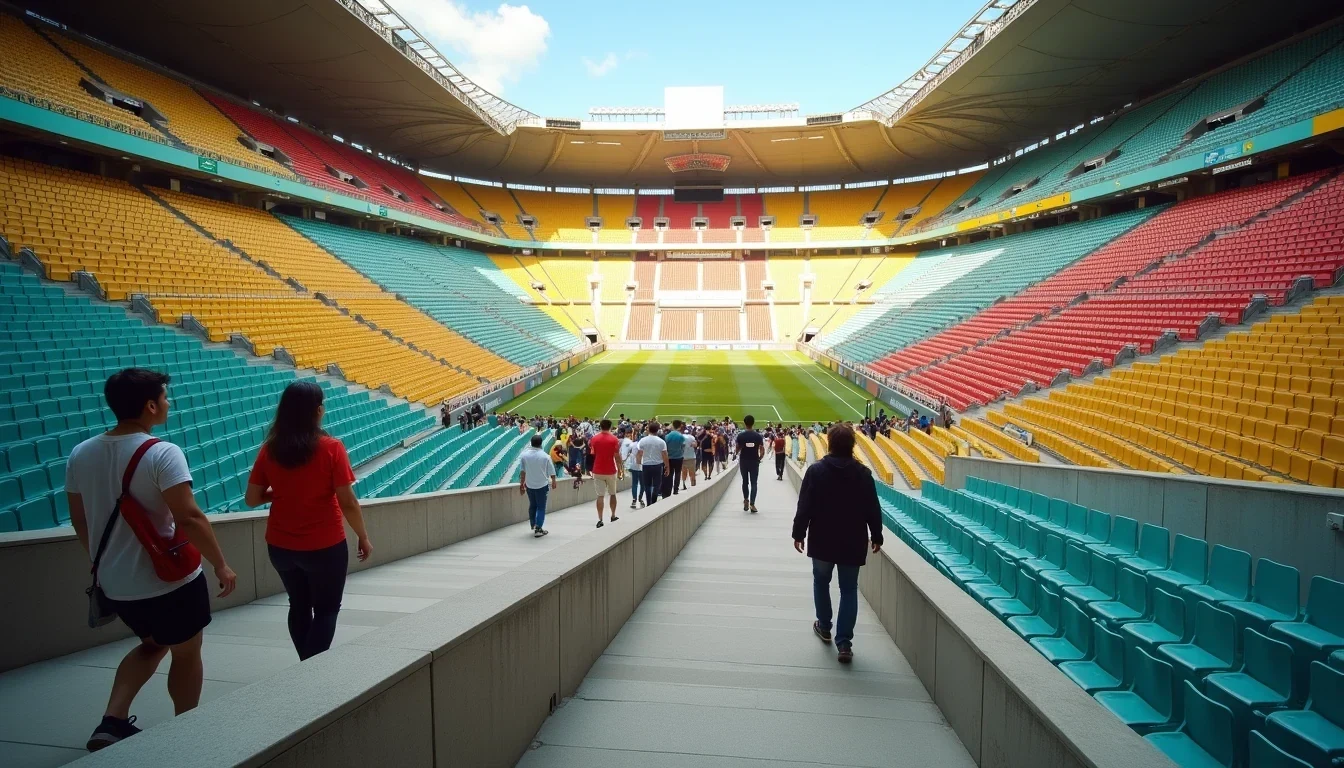
The Museu do Futebol lives inside a stadium, not next to one. Since September 2008, the galleries have occupied a section of the Estádio Paulo Machado de Carvalho, the Pacaembu, at Praça Charles Miller in São Paulo. The architects fitted the exhibition into the existing concrete stands rather than erecting a separate wing. Visitors climb the same ramps that football crowds have used since the stadium opened in 1940.
Charles Miller, the son of a British railway worker, is credited with bringing the organized game to São Paulo in 1894. He lends his name to the square outside. The museum sits at the geographic and symbolic origin of Brazilian football.
After closing in November 2023 for an overhaul, the museum opened again on July 12, 2024, with R$ 15.8 million in funding from the São Paulo state culture department. Curators Leonel Kaz, Marcelo Duarte, and Marília Bonas rebuilt the narrative flow. Daniela Thomas and Felipe Tassara directed the visual design. The finished project licenses more than 1,500 photographs and commissions over 60 new films. Before the closure, the space had already pulled in over 675,000 visitors during 2022 and 2023. Brazilians treat football as public heritage, not only weekend entertainment.
Tickets and hours as of 2026
As of 2026, the museum opens Tuesday through Sunday from 9h to 18h. Staff stop admitting visitors at 17h. On the opening Tuesday of every month, the building stays lit until 21h, giving working locals a late window to visit. A standard adult ticket costs R$ 24, with a half-price slot at R$ 12 for students, seniors, and other groups recognized under Brazilian law. Families with children under seven pay nothing for those kids.
Admission drops to zero for everyone on Tuesdays. The museum still requires a timed reservation booked through its official website. Walk-ins without a slot risk being turned away at the door, especially on free days when demand spikes. Check the site before you travel, because the museum only releases tickets in dated batches and the evening slots on first Tuesdays disappear fast. If you are visiting São Paulo during a holiday week or a school break, reserve at least a week ahead.
Walking the rooms in order
The exhibition forces a single path. The first gallery is Sala das Origens. This room covers football’s journey from its British codification in the nineteenth century through its Brazilian adoption and growth up to the 1930s. Against that timeline, the curators hung the earliest surviving photographs of women playing the game in Brazil, with dates from 1920.
Sala das Copas comes next. It covers each edition of the men’s tournament and every women’s championship since China hosted the first one in 1991. The display includes Brazil’s own campaigns, reproductions of trophies, and the shifts in global format, including the expansion to thirty-two teams and the coming forty-eight-team edition. From there you move through Raízes, which explores how the sport grafted itself onto Brazilian culture, and Dança do Futebol, a room that treats the pitch as a stage for body movement. Almanaque da Bola piles up records, statistics, and oddities. O Brasil no Mundo traces the export of Brazilian players and playing styles to Europe and Asia. Before the physical section ends, Jogo de Corpo lets visitors test balance, reflexes, and ball control through interactive panels.
Sala Pelé and the 1970 shirt
The circuit saves its most charged artifact for late in the route. Sala Pelé centers on the jersey the forward wore against Italy at the Azteca in 1970. The shirt hangs under controlled light, surrounded by match footage and personal objects that move the narrative beyond scorelines. The curators treat the player as a national monument without stripping away the context of the era he dominated. The room’s pacing lets you stand in front of the garment long enough to register the weight of three World Cup titles on one man’s shoulders.
The women erased by decree
The photographs from 1920 in Sala das Origens prove that women were already organizing matches within two decades of the sport’s arrival in Brazil. The exhibition then sharpens the contrast by displaying the 1941 decree from Getúlio Vargas that formally prohibited women from taking part in football and from other activities judged incompatible with female nature. The prohibition lasted roughly forty years. It forced the women’s game into informal spaces or into silence while the men’s sector drew state support and stadium crowds.
Sala das Copas addresses the aftermath. It includes every Women’s World Cup since 1991, showing the slow reconstruction of the national team and the professional structures that only began to appear after the ban lifted. The museum presents the forty-year gap as a structural failure that shaped who got to play, who got remembered, and whose trophies sit in the cabinet.
Time, pacing, and the neighborhood
A complete run through the galleries demands two to three hours. Readers who want to absorb every video, pause at the 1920 photographs, and spend time in the Jogo de Corpo stations should plan for the upper end of that range. The museum rewards slow movement; the walls are dense with text, and the films run on loops that reward standing still. Even visitors with only a passing interest in football tend to linger in Sala das Origens once the scale of the archival material becomes clear.
After exiting, you are already in the Pacaembu complex. Walk the oval of the stadium to see the Art Deco facade from the outside. Then cut across Praça Charles Miller, the open square that separates the museum entrance from the street. The Pacaembu neighborhood carries a quieter residential rhythm than downtown. Its edges touch Higienópolis and Consolação, where restaurants and bars fill the gaps between residential buildings. You can eat a proper lunch on rua da Consolação or grab coffee near the Santa Cecília metro before doubling back. The stadium itself no longer anchors a major club full-time, yet it still hosts occasional professional matches and cup fixtures. Pairing a museum visit with an evening game requires luck and a calendar check, but the same tram ride or metro walk gets you home either way.