Formula 1
Gabriel Bortoleto's Rapid Rise To Formula 1 With Audi
Gabriel Bortoleto, the first Brazilian F1 driver since 2017, began karting at six and progressed through junior titles before a strong debut in Italian F4.
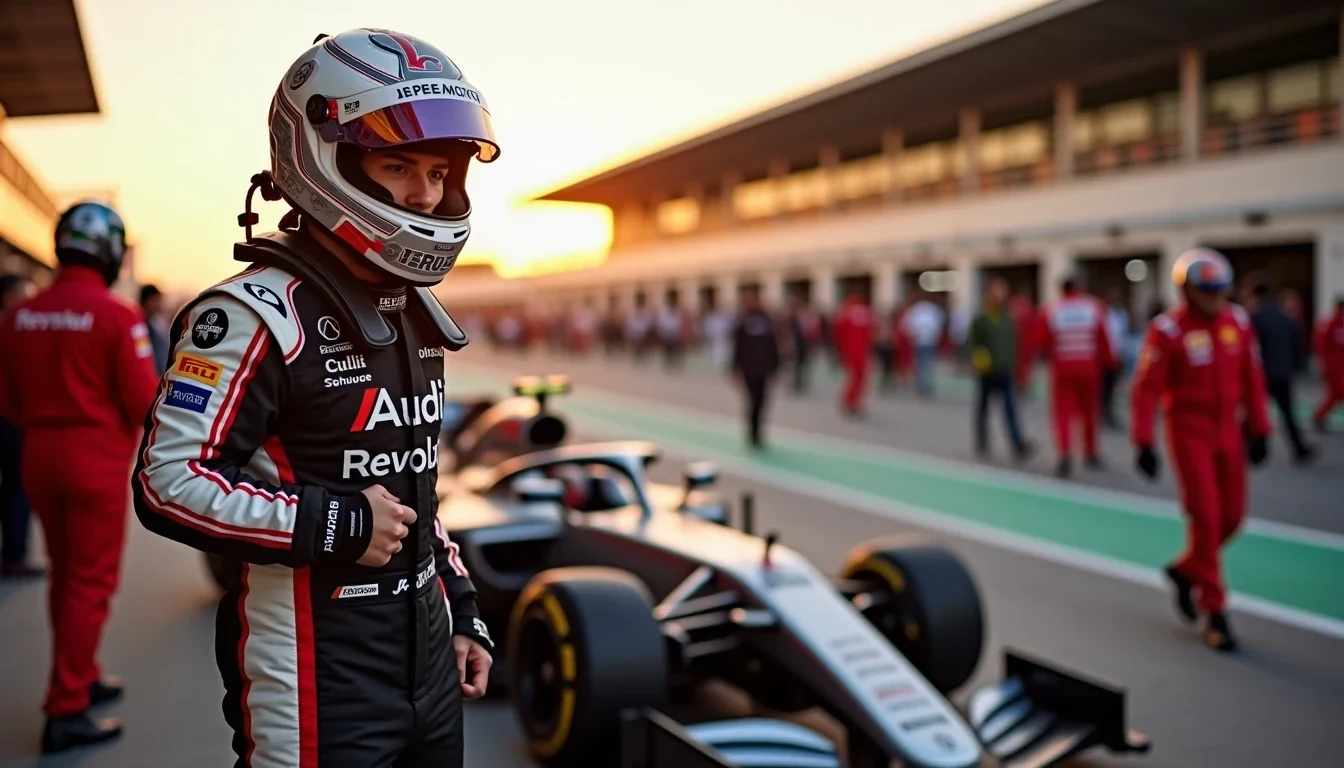
Gabriel Bortoleto, born on 14 October 2004 in São Paulo, carries car number 5. At twenty years old, he became the first Brazilian to hold a full-time Formula 1 seat since Felipe Massa retired in 2017. This ended an eight-year absence that had left the grid without a permanent voice from the country that produced Ayrton Senna, Nelson Piquet, and Emerson Fittipaldi.
The karting years and the move to Europe
Bortoleto started karting at six. By 2012, he had already won junior kart titles in Brazil. This early success typically signals either burnout or genuine trajectory. He chose the latter. At fifteen, he crossed the Atlantic for Italian Formula 4, finishing fourth in his 2020 debut season with Prema Racing. The result was solid, not spectacular, but it kept him on the European ladder when many South Americans return home.
He spent 2021 and 2022 in Formula Regional European Championship by Alpine (FRECA), accumulating experience in a category where budgets often outpace talent. The statistics from those two seasons do not jump off the page. He persisted, staying in Europe, adapting to circuits he had never seen as a child, and waiting for machinery that matched his improvement.
Back-to-back championships in F3 and F2
The breakthrough arrived in 2023. Bortoleto joined Trident for the FIA Formula 3 Championship and won the title as a rookie. Only two drivers had achieved this in the series’ modern era. He repeated the feat in 2024 with Invicta Racing in FIA Formula 2, becoming the first driver in history to win both F3 and F2 championships in consecutive rookie seasons. The FIA named him 2024 Rookie of the Year.
These were not dominant campaigns like Charles Leclerc’s 2017 F2 season, where the gap to second place suggested inevitable stardom. Bortoleto’s strength was consistency across variable conditions and the ability to avoid collisions and mechanical failures that derail tight championship fights. In F2’s 2024 sprint races, he scored points in fourteen of twenty-two events. This approach lacks romance, but it builds careers.
From McLaren to Sauber to Audi
Bortoleto entered 2024 as part of McLaren’s driver development programme. By November that year, he was released. This initially read as rejection. The context clarified quickly: Sauber, preparing for its 2026 transformation into the Audi Revolut F1 Team, needed a driver for 2025 and had identified Bortoleto as its long-term bet. Audi’s press release on 6 November 2024 confirmed him as a “future Audi F1 driver” alongside the immediate Sauber announcement.
The McLaren exit was a lateral move with upward intent. McLaren’s 2025 line-up of Lando Norris and Oscar Piastri left no seat. Sauber offered a race seat in a year of transition, with the security of manufacturer backing once Audi’s full factory entry arrived. Bortoleto accepted. The alternative was another year in F2 or a reserve role at a front-running team.
The 2025 rookie season
His F1 debut came at the 2025 Australian Grand Prix in Melbourne. Wet conditions on race day caught him out: he crashed, recording a DNF before completing a racing lap. The incident drew predictable commentary about rookie nerves, though several experienced drivers also found the walls that afternoon.
Recovery took until the ninth round. At the 2025 Austrian Grand Prix, held at the Red Bull Ring in Spielberg, Bortoleto finished eighth and scored his first championship points. He added points in five further races across the season, accumulating nineteen by the final round in Abu Dhabi. The tally placed him nineteenth in the drivers’ championship, ahead of his Sauber teammate Valtteri Bottas in the team’s final year before rebranding.
The Sauber C44 was not a points-scoring car by design. It scored points by circumstance in races where attrition thinned the field. Bortoleto’s task was to maximise these opportunities without the errors that erase goodwill in a rookie season. He largely succeeded.
The 2026 season with Audi
For 2026, the team became the Audi Revolut F1 Team, with Bortoleto retained alongside Nico Hülkenberg. The German, aged thirty-eight at the season’s start, brought twelve seasons of F1 experience to a lineup designed to combine immediate consistency with long-term development. Audi’s full factory commitment meant new power unit regulations, new technical staff recruited from rival teams, and expectations that the project would reach competitiveness by 2027 or 2028 rather than immediately.
As of the 2026 São Paulo Grand Prix in November 2026, Formula1.com lists Bortoleto with forty-three career starts, thirty-three points, and a best finish of sixth place. These numbers place him in the lower midfield statistically, which is precisely where a developing Audi team would expect to operate in its sophomore season.
Brazil’s place on the grid
Bortoleto’s arrival in 2025 restored a Brazilian presence that had been missing since Massa’s final season with Williams eight years prior. The gap was not for lack of candidates: Pietro Fittipaldi had contested two races as a substitute in 2020, and Felipe Drugovich won the 2022 F2 championship without securing an F1 seat. Structural barriers for Brazilian drivers have tightened as European academies dominate recruitment and national sponsorship pools shrink.
His presence reopens a connection that benefits viewership, ticket sales at Interlagos, and the pipeline of young karters who can now point to a contemporary reference. Whether he joins the lineage of champions or merely that of competent midfielders remains open. The minimum achievement, already secured, is permanence: a full-time seat in a sport where most nationalities go unrepresented for decades at a time.
What to watch and where
Brazilian fans can follow Bortoleto’s 2026 season through BandSports, which holds F1 broadcast rights in Brazil, or via F1 TV Pro subscription (annual cost approximately R$ 439 as of 2025). The 2026 São Paulo Grand Prix at Autódromo José Carlos Pace in Interlagos runs 13-15 November, with general admission tickets historically ranging from R$ 350 to R$ 800 depending on grandstand and purchase timing. The circuit is accessible via Line 17-Gold of the São Paulo Metro, though race-day crowds typically require arriving before 08:00 for afternoon sessions.
For visitors combining the race with travel, the Interlagos neighbourhood sits in the southern zone of São Paulo, approximately 45 minutes from Congonhas Airport by taxi or rideshare. Accommodation in Moema or Brooklin offers proximity without the premium of hotels adjacent to the circuit, which command rates 200-300% above standard during race weekend.