Formula 1
Drive the Interlagos Circuit With Your Own Car or a Hot Lap
Ordinary drivers can access São Paulo's famous Interlagos circuit through five distinct methods, including private track days, driving schools, and passenger.
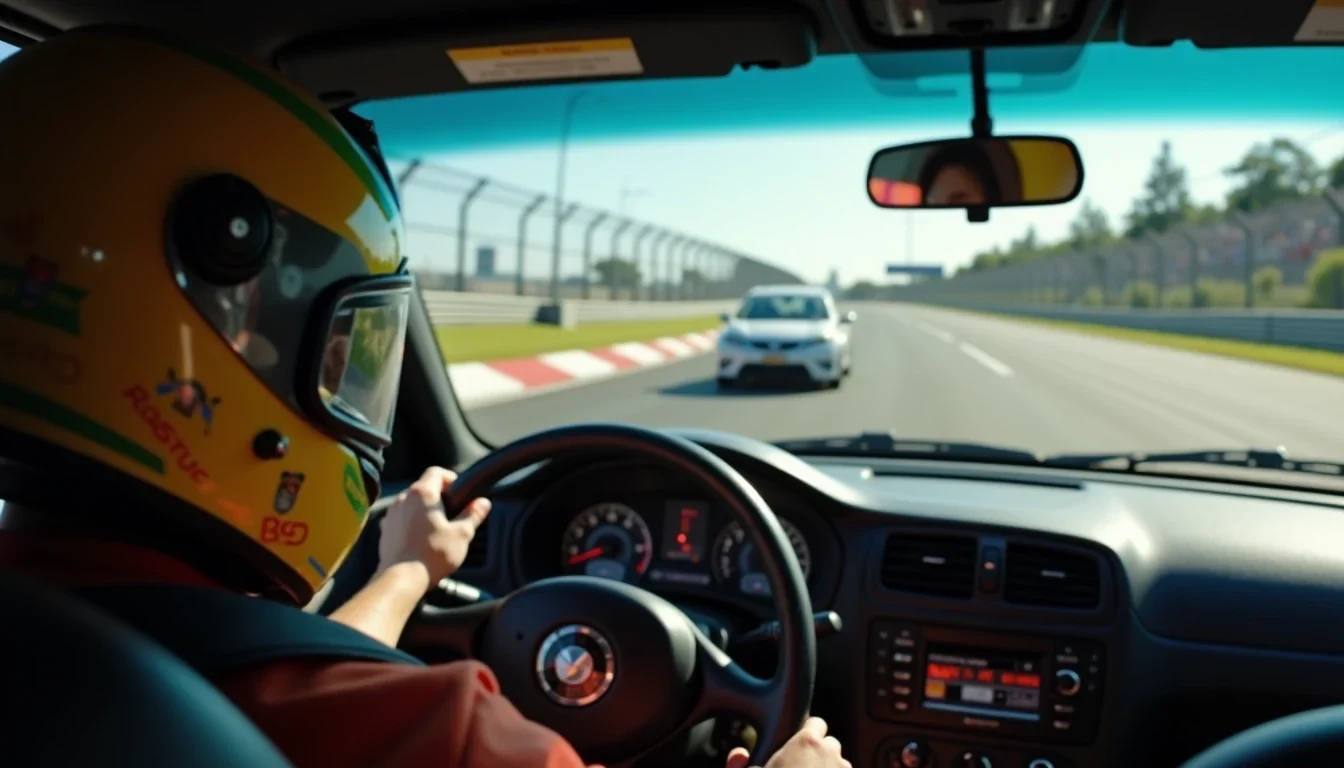
The Autódromo José Carlos Pace, known locally as Interlagos, sits at Av. Senador Teotônio Vilela, 261, deep in São Paulo’s Zona Sul. Its lap measures exactly 4,309 metres, weaves through 11 corners, and climbs or drops roughly 56 metres from its lowest point to its highest. Ayrton Senna won his first Brazilian Grand Prix here in 1991, and Max Verstappen sealed his 2024 world title here. You do not need a Formula 1 contract or a garage full of engineers to trace that same tarmac. Ordinary drivers with ordinary licences have several legitimate ways onto the circuit, each governed by its own schedule, safety code, and price.
Five distinct routes exist. Private organisers run amateur track days for owners who want to push their own cars in controlled sessions. Specialist schools book the asphalt for advanced driving and defensive-driving courses, often placing students in dual-control vehicles with race instructors beside them. Companies such as Carona Radical sell passenger hot laps with professional drivers who handle the braking and turn-in points. The Festival Interlagos, held at the venue in selected years, sometimes opens the track for supervised public drives. Finally, a 3.5-kilometre perimeter loop outside the main fencing is free for pedestrians, runners, and cyclists, entered through Gate 7 or Gate 9 at Av. Jacinto Júlio, 1,311. Each path demands different preparation; none of them involve street racing or fantasy promises of Grand Prix speeds.
Track Days in Your Own Car
Track days are amateur, non-competitive gatherings staged by private organisers who rent the circuit by the day. Drivers buy a slot, attend a mandatory safety briefing, and circulate in timed sessions separated by horsepower or experience. Overtaking is restricted to designated straights and only after the car ahead signals. The rules are strict because the asphalt offers no runoff in several sections. Every vehicle must pass a pre-event scrutiny: functional seat belts and intact seats, a helmet certified for motorsport use, and functioning brake lights. Organisers also check for fluid leaks and loose bodywork. A standard Brazilian driver’s licence category B is sufficient, though organisers set their own minimum age, generally 18 or 21, depending on the insurance policy. Novices start in the slower group, advancing only after an instructor signs off on their lines and mirror checks.
Preparing a street car for Interlagos need not involve a full race build, but it requires attention. A 2025 survey of local garages and motorsport shops priced basic track-day preparation for an entry-level car at R$ 4,000 to R$ 5,000. That covers high-temperature brake fluid, performance brake pads, an oil change with synthetic lubricant rated for sustained high revs, and a technical inspection of suspension bushings and wheel bearings. Drivers who plan to attend regularly should budget another R$ 14,000 to R$ 16,000 for a welded roll cage and fixed bucket seats with multi-point harnesses. Those modifications are not compulsory for a first outing, but they alter the car’s behaviour under threshold braking and high lateral loads. Road-biased tyres overheat after a handful of hard laps, so factor in a fresh set of track-day rubber or accept shorter sessions to preserve the car.
Driving Courses on the Circuit
The city of São Paulo officially lists Interlagos as a training ground for specialist driving schools that run advanced and defensive-driving courses on the circuit itself. Instructors are drawn from licensed race drivers and former competitors who teach car control through the same corners that appear on television every November. A typical curriculum covers threshold braking into Mergulho, heel-toe downshifting through the S do Senna, skid recovery on the painted kerbs of Curva do Lago, and emergency lane changes at speed down the Retão straight. Classes split time between a briefing room beside the paddock and the track itself, with students driving school-owned dual-control cars or their own vehicles under radio supervision. The defensive-driving module focuses on wet-weather reactions, evasive steering, and the physics of traction loss on off-camber surfaces. Graduates leave with a certificate and muscle memory formed on 4,309 metres of world-class asphalt rather than a suburban parking lot. Courses run on weekdays when the circuit is not booked for races, and prices shift according to the hours of track time included.
Passenger Hot Laps
You do not need to own a car, hold a racing licence, or even know how to heel-toe downshift to feel the circuit’s elevation changes at speed. Organisers such as Carona Radical sell passenger experiences in which a professional driver pilots a prepared vehicle around the full lap. Guests strap into fixed bucket seats, listen to a two-minute safety briefing, and hold on as the driver brakes for Mergulho or threads the S do Senna flat where the grip allows. These packages suit international visitors who want the Interlagos story without importing a vehicle, as well as Brazilians who want to scout the track before entering their own car on a future track day. Prices vary by organiser and by the car used, from tuned street coupes to purpose-built radial racers. A typical session lasts three to five laps, enough to understand why drivers speak about the 56-metre elevation drop in hushed tones.
The Festival Interlagos, a periodic automotive fair staged at the venue, has also opened the circuit for supervised public drives and passenger experiences. Access depends on the specific edition and ticket tier. When available, these sessions run on a truncated layout or the full course under yellow-flag conditions, meaning no timed competition and strict passing prohibitions. Arrive early; queues form quickly and the organisers cut the line once the session timer expires. Check the festival’s social channels or the circuit’s official communications for the exact schedule, since on-track experiences appear in some years and vanish in others.
The Free Perimeter Track
Not every encounter with the circuit requires an engine. A 3.5-kilometre perimeter path rings the facility outside the main catch fencing, open to pedestrians, runners, and cyclists at no charge. Entry points are Gate 7 and Gate 9, the latter located at Av. Jacinto Júlio, 1,311. Reported hours run from 6h to 17h daily, though the city closes the route entirely when the Autódromo hosts races, concerts, or private tests. Call (11) 5666-8822 or check the official schedule before making the trip, especially on November weekends when Formula 1 occupies the grounds. The surface is asphalt, the gradient mirrors the main track’s hills, and the view through the fences catches brake discs glowing at sunset during endurance events. Cyclists should bring their own locks; there are no rental stations inside the gates. The path offers one of the few places in São Paulo where a pedestrian can watch a GT3 car at full noise without buying a ticket. Dogs on leashes are permitted.
Pit Lane and Event-Day Access
On selected weekends, tied to editions of the Festival Interlagos or national touring-car rounds, ticket holders can access the pit lane and paddock. These are not open-house parties. Visitors must wear closed shoes, remain behind the white lines, and surrender bags for inspection. Mechanics work metres away, and the teams carry liability insurance that demands strict crowd control. Hospitality tickets and media accreditation guarantee pit entry; general-admission buyers should study the event’s ticket map to see whether their tier includes a timed walk-through before the first practice session. Photography is allowed from behind the barriers, though flash and selfie sticks are banned near working fuel rigs. If you want to stand where Red Bull Racing rebuilt a front wing in 2024, buy the tier that explicitly lists paddock or pit entry. The circuit’s main telephone line, (11) 5666-8822, cannot sell tickets, but the reception staff will direct you to the official event promoter handling access for a specific date.
The Corners Waiting for You
Whether you arrive with your own car, a school instructor, or a hot-lap professional, the lap unfolds across 4,309 metres and 11 numbered turns. The sequence begins with the S do Senna, a rapid left-right combination that demands instant direction changes. Curva do Sol follows, a long, cambered right-hander where drivers hold the throttle steady and trust the banking. Curva do Lago tightens unexpectedly and punishes late braking. Bico do Pato, shaped like a duck’s bill, funnels cars onto a short straight before the track plunges downhill through Mergulho, one of the steepest descents on the Formula 1 calendar. The total elevation change across the lap is roughly 56 metres, enough to make your stomach float under heavy braking and drain blood from a novice’s knuckles.
After Mergulho, the circuit climbs back toward the start-finish straight, passing the Retão drag strip, 500 metres in length, inaugurated in 2015. Retão runs parallel to the back straight and gives acceleration events a dedicated home without interfering with road-course sessions. The start-finish line itself sits on one of the shortest straights, meaning a lap of Interlagos never truly settles into cruise mode. Each corner has a name rooted in local geography or history, and each one serves as a reference point for the timing screens on race day. Learn them in order before your first session; an instructor shouting “brake for Bico do Pato” lands far better if you already know which duck-shaped apex he means.