Volleyball
Brazil's Four Olympic Beach Volleyball Gold Medal Pairs
Brazil boasts four Olympic beach volleyball gold medal pairs, unique for winning both men's and women's titles twice, achieved through skill and a rigorous.

Only four Brazilian pairs have climbed to the top of an Olympic beach volleyball podium. The first did it on the afternoon the sport entered the Olympic program in Atlanta. The latest did it within sight of the Eiffel Tower in Paris. Between them lie 28 years, four host cities, and finals that turned on a single point or a single set.
No other nation has won gold in both the men’s and women’s tournaments twice. Brazil’s four medals came through relentless block timing, defensive range, and a domestic calendar that forces young pairs to travel, sleep in cheap pousadas, and adapt to different wind and sand textures. The list below is short enough to memorize and detailed enough to settle any bar argument.
| Year | Games | Brazilian Pair | Final Opponents | Result |
|---|---|---|---|---|
| 1996 | Atlanta | Jackie Silva / Sandra Pires | Adriana Samuel / Mônica Rodrigues | Straight sets |
| 2004 | Athens | Ricardo Santos / Emanuel Rego | Javier Bosma / Pablo Herrera (Spain) | 21-16, 21-15 |
| 2016 | Rio de Janeiro | Bruno Schmidt / Alison Cerutti | Daniele Lupo / Paolo Nicolai (Italy) | 21-19, 21-17 |
| 2024 | Paris | Ana Patrícia Ramos / Eduarda “Duda” Santos Lisboa | Brandie Wilkerson / Melissa Humana-Paredes (Canada) | 26-24, 12-21, 15-10 |
Each final had its own pressure system. Atlanta was history being written in real time. Athens was a man erasing a previous second place. Rio was a home crowd expecting gold on familiar sand. Paris was a comeback from deep inside a first-set hole. The scores, opponents, and venues are the facts. The noise, heat, and cost of the flights home are the texture.
The Olympic Debut in Atlanta
Beach volleyball became an Olympic discipline on 27 July 1996. That same afternoon, the women’s final guaranteed Brazil both gold and silver. The final pitted Sandra Pires and Jackie Silva against fellow Brazilians Adriana Samuel and Mônica Rodrigues. Silva and Pires took the match in straight sets, making them the first women from Brazil to stand atop an Olympic beach volleyball podium. The host United States took bronze, while Brazil swept the top two steps of the podium.
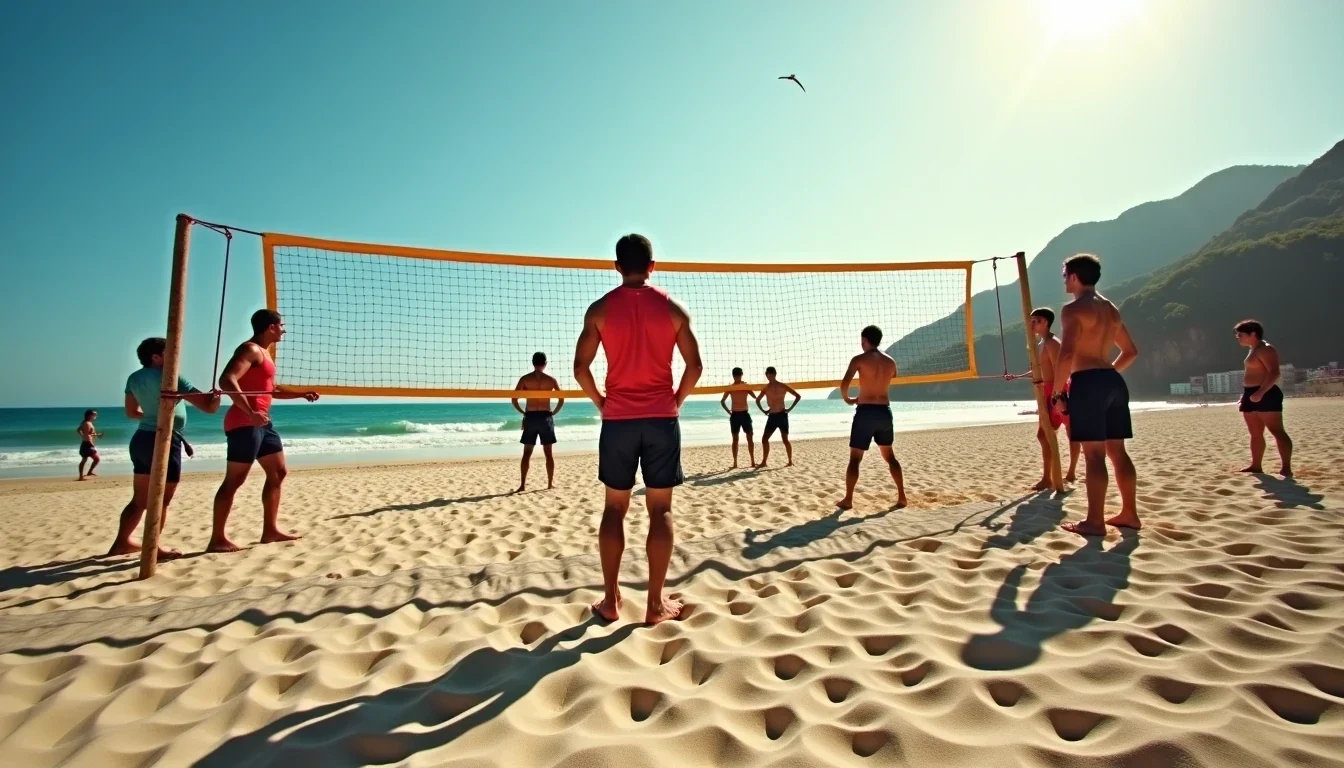
The final also announced Brazil as the center of gravity in a sport invented on Californian beaches. Silva’s court vision and Pires’s power set a template that domestic coaches still teach. Fans who want to trace that lineage can visit the permanent nets at Rio de Janeiro’s Copacabana postos, especially near Posto 6, where weekend games draw former Olympians and barefoot beginners to the same sand.
Athens 2004 and the Men’s First Title
Ricardo Santos arrived in Athens carrying a silver medal from Sydney 2000. He left with gold. Partnering with Emanuel Rego, he helped dismantle the Spanish duo in the men’s final. Javier Bosma and Pablo Herrera had no answer that afternoon. The Brazilians closed it out 21-16, 21-15. That victory gave the country its first Olympic title in the men’s tournament, and it confirmed what the domestic circuit already knew: Brazilian block defense was becoming the global benchmark.
Santos had lost the Sydney final after a hard-fought run, so the Athens win carried the weight of redemption. The pair played seven matches in ten days under heavy sun and heavier expectations. You can still watch that defensive style up close. The CBV streams select Circuito Banco do Brasil matches on its digital channels; the season runs through beach towns from January to late autumn.
Gold on Home Sand in 2016
In 2016, the competition moved to a temporary arena on Copacabana. Bruno Schmidt and Alison Cerutti were the top seeds entering the men’s final, and they carried a home crowd of thousands against Daniele Lupo and Paolo Nicolai of Italy. Cerutti and Schmidt won 21-19, 21-17 in roughly 44 minutes, claiming the nation’s first beach volleyball gold in 12 years. The same Games also delivered a women’s silver medal to Ágatha and Bárbara.
The noise inside that stadium was so loud that players later said they communicated through hand signals. The Copacabana arena came down after the closing ceremony, but the stretch of sand remains the sport’s public cathedral in Brazil. On any Saturday morning, walk the shoreline from Posto 2 to Posto 6 and you will find ranked players warming up beside informal doubles matches. No ticket is required for the public nets, though the feriado crowds peak by 10 a.m. and the best games fill fast.
Paris 2024 and the Tie-Break Comeback
On 9 August 2024, the temporary stadium beside the Eiffel Tower hosted the women’s final. Ana Patrícia Ramos partnered with Eduarda Santos Lisboa, who competes as Duda. They met Brandie Wilkerson and Melissa Humana-Paredes of Canada. After dropping the second set, the Brazilians took the match 26-24, 12-21, 15-10. They had trailed 5-11 in the opening set before turning it around. The win ended a 28-year wait for another Brazilian women’s title in the event, dating back to Atlanta.
Ramos is 1.94 m and Lisboa brings a back-court game built on rapid lateral movement. Together they cover the net the way earlier generations covered the back line. Matches at that level are now broadcast live by Globo and Sportv. The CBV’s social channels carry English-language highlights for international viewers. If you are in Brazil during a major tour stop, expect weekend finals to air across free-to-air networks and to draw watch-party crowds to botecos in beach neighborhoods.
The Domestic Circuit That Feeds the National Team
New pairs do not reach the Olympics by accident. The Confederação Brasileira de Voleibol organizes the domestic beach calendar around the Circuito Banco do Brasil de Vôlei de Praia, a national tour that stops in coastal capitals and interior cities with artificial sand courts. Alongside the regular season, the federation stages the Rei da Praia for men and the Rainha da Praia for women, standalone competitions that crown individual champions over a single intense weekend.
That structure has supplied every Brazilian Olympic medalist in the discipline. The tour forces teenagers to face veterans in quarterfinals on Monday mornings with no crowd, building the mental resilience that shows up in Olympic tie-breaks. In recent seasons the tour has added stops in the Northeast, where afternoon rain delays test a pair’s patience as much as their side-out percentage. These conditions mean Brazilian teams arrive in Europe or Asia already used to playing through shifting weather.
For spectators, the circuit offers a direct line to tomorrow’s Olympians long before they book plane tickets to Los Angeles 2028. Check the CBV website for the current-season schedule, host cities, and ticket prices. In the 2024 season, early rounds in smaller venues often ran well under R$ 50, while finals in major beach cities reached R$ 150.