Volleyball
Brazil Women's Volleyball Team Saved Six Match Points For Gold
Discover how Brazil's women's volleyball team transformed from consistent bronze medalists to Olympic gold champions under coach José Roberto Guimarães'.
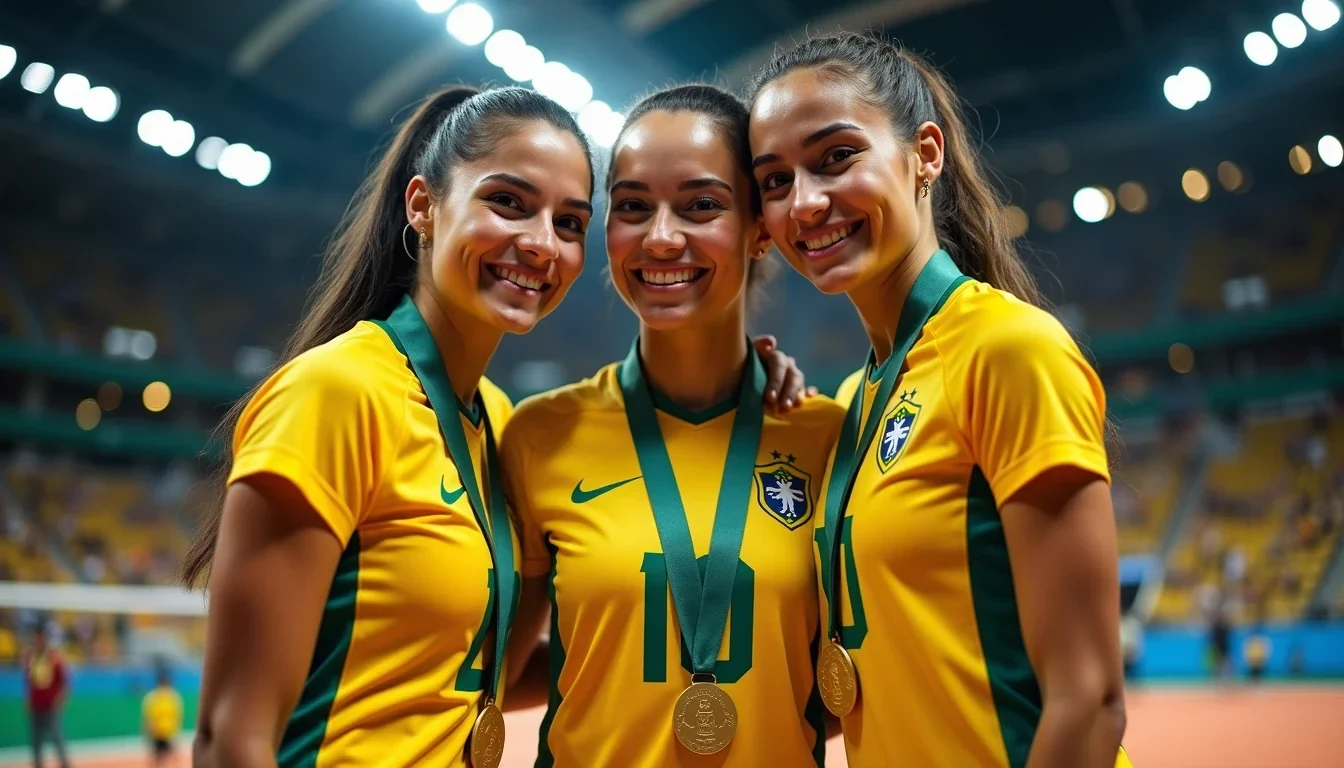
Brazil’s women’s volleyball team spent eight years collecting bronze before they learned how to win. The 1996 Atlanta Olympics delivered the first, a third-place finish that announced the squad as a rising force. Four years later in Sydney, they repeated the color. Two bronzes in two Games sounds respectable until you measure it against the country’s expectations for a sport it already treated as national property. The metal had to turn gold.
That change arrived in 2003, when José Roberto Guimarães took over as head coach. Under his direction, the team that had stalled at third place began assembling the pieces for a different kind of campaign. By 2008, the roster had settled into a core that would define an era: Sheilla Castro at opposite hitter, Fofão (Hélia Souza) setting, Paula Pequeno and Mari Steinbrecher on the outside, Fabiana Claudino in the middle, and Fabi (Fabiana Alvim) guarding the back line. They were talented and built to last.
How Brazil Lost One Set in Eight Matches at Beijing 2008
The 2008 tournament in Beijing was as close to perfection as Olympic volleyball allows. Brazil entered all eight of its matches and won every one. Across those eight victories, the team dropped a single set. The final tally read 24 sets won, 1 lost, a ratio that still looks like a misprint. They swept through pool play, handled the knockout rounds, and arrived at the Capital Indoor Stadium on 23 August 2008 ready for the United States.
13,000 spectators filled the venue. Brazil took the final 3-1, securing the country’s first Olympic gold in women’s volleyball. The scoreline showed a team that had spent a generation finishing third had finally learned to close. The bronze years were over.
The Core That Defended It
Four years later, that same core returned to the Olympics with their title on the line. Fabiana Claudino now captained the squad. Jaqueline Carvalho and Thaisa Menezes had strengthened their roles, with Thaisa forming a blocking partnership with Fabiana that punished anyone attacking the middle. Fernanda Garay had emerged as a critical piece; her defensive range and serving gave Brazil options they had not possessed in Beijing. Fabi remained the libero, still cleaning up attacks that should have scored.
The London 2012 squad was deeper than its predecessor in some respects, but the tournament did not cooperate. The group stage brought two defeats, forcing a harder path through the bracket and raising questions about whether the Beijing magic had expired.
The Quarter-Final That Refused to End
On 7 August 2012, at Earl Court in London, Brazil met Russia in a quarter-final that would become the single most discussed match in the country’s volleyball history. The stakes were simple: lose, and the defending champions flew home without a medal. Win, and they kept the chance at back-to-back golds alive.
Russia took the first set 26-24. Brazil leveled at 25-22. Russia responded 25-19. Brazil dragged it back to 25-22. The fifth set began with both teams exhausted and neither willing to yield ground.
Russia reached match point first. Then again. The exact count varies by report, some saying five, others six, but the minimum is clear: Brazil faced at least five separate moments where one more point would have ended their tournament. They saved every one. At 19-20, Fernanda Garay stepped to the service line and delivered an ace, the ball clipping the tape and dying on Russia’s side to make it 20-19. The shift was immediate. Fabiana Claudino closed the set with a block, the scoreboard freezing at 21-19, and Brazil had somehow survived.
The full line reads 24-26, 25-22, 19-25, 25-22, 21-19. No single set was dominant. The match simply refused to release either team until Brazil proved they wanted it more.
Beating the Unbeaten Americans Again
The final brought a familiar opponent. The United States had rolled through London without losing a match; their only defeat came in this last game. Brazil, still carrying the exhaustion of the Russia match, lost the first set 11-25. The score was so lopsided that it looked like the quarter-final had finally taken its toll.
Then Brazil won the second 25-17, the third 25-20, and the fourth 25-17. Three consecutive sets against a team that had not dropped any all tournament. The United States had arrived in London as the favorite and left with silver, beaten by the same opponent on the same stage for the second Olympics running. Brazil became only the third women’s team to defend an Olympic volleyball title, joining the former Soviet Union and Cuba in a club that remains exclusive.
What Followed the Golden Years
The medals did not stop when the core eventually aged out. At Tokyo 2020, played in 2021, Brazil took silver. At Paris 2024, they added bronze. José Roberto Guimarães remained in charge throughout; his tenure now covers more than two decades and every Olympic medal the women’s team has won since 2004. The consistency is almost as remarkable as the peak.
Outside the Olympics, Brazil holds 12 World Grand Prix titles, more than any other national team. That record shows what the 2008 and 2012 golds meant: they were not outliers in an otherwise modest history, but the summit of a program that had already established itself as the sport’s most reliable producer of victories.
For anyone wanting to trace this history in person, the Brazilian Volleyball Confederation (CBV) maintains records and occasional exhibitions at its Rio de Janeiro headquarters. The Maracanãzinho arena, which hosted domestic and international matches during the golden era, still holds competitions and remains accessible by metro from central Rio. Tickets for Superliga matches typically run R$ 30-80 as of 2024, with national team fixtures priced higher when they return to Brazilian soil.
The 2008 Beijing final and the 2012 London quarter-final are both available in full through Olympic archival footage. The CBV’s official channels periodically release extended highlights of the Russia match for newer fans who have only heard the story secondhand. Watching the fifth set with the score at 19-20, knowing what comes next, still produces the same tension that gripped Earls Court that afternoon. Some sports moments survive retelling because the numbers are dramatic. This one survives because the numbers barely capture it.