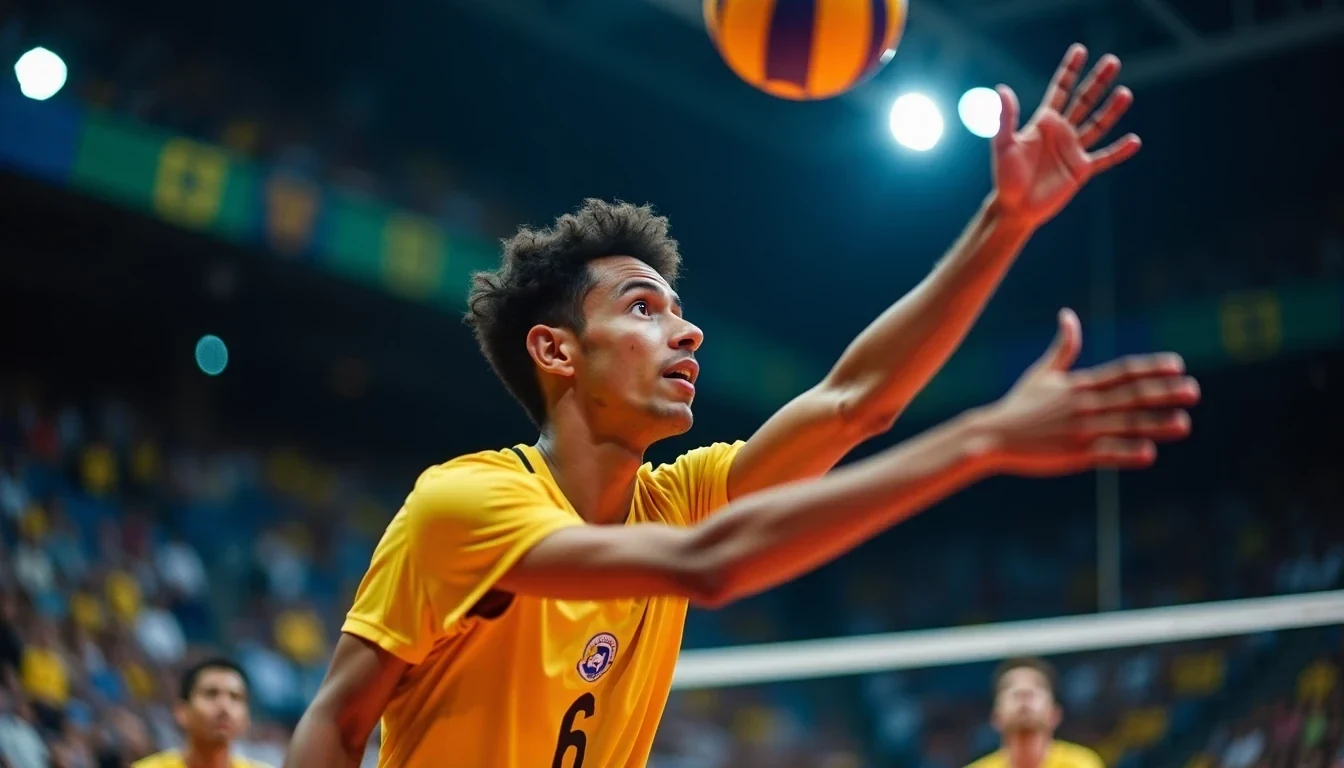
Volleyball
What Is Footvolley Rio's Beach Sport And How To Play
Footvolley, Rio's beach sport, began in 1965 as a workaround to football bans, played on volleyball courts with no hands.
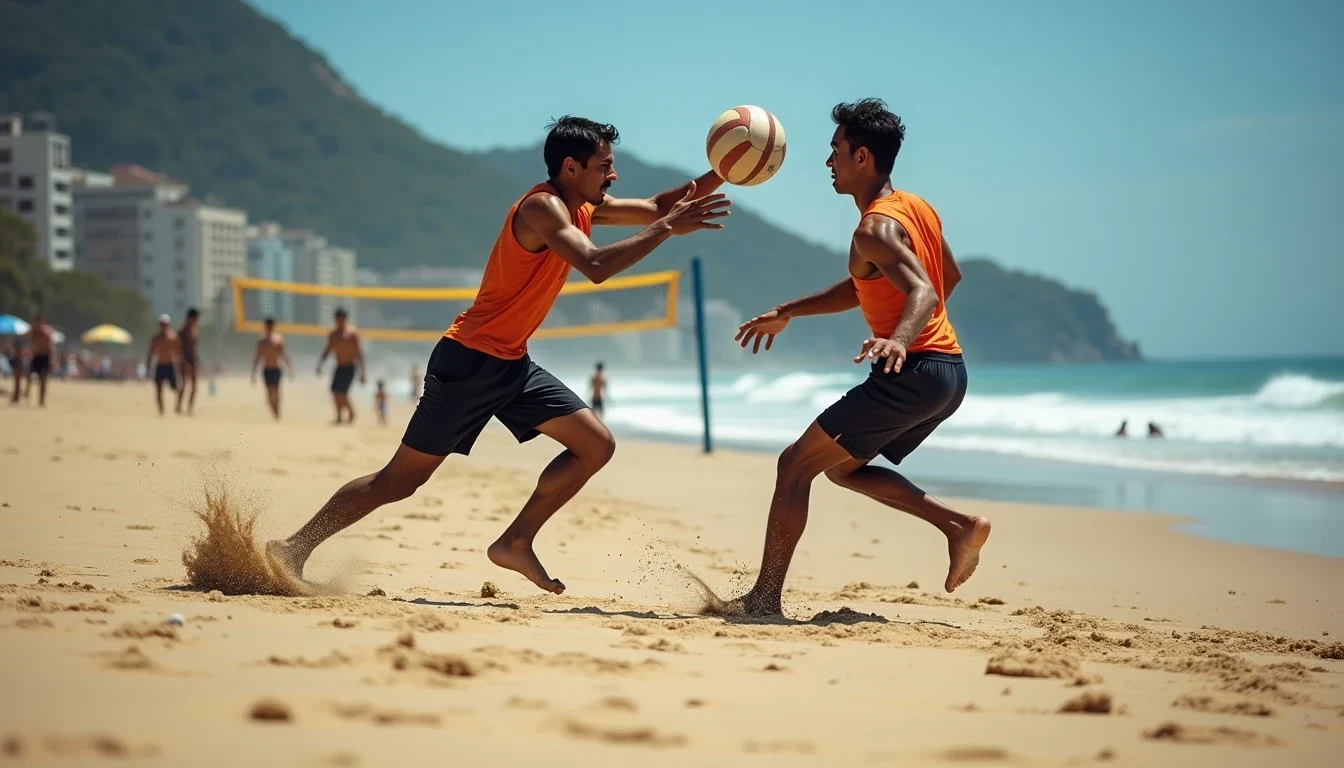
Copacabana outlawed football in 1965. A local named Octavio de Moraes, who went by Tatá, walked onto the volleyball strip by Rua Bolívar in Rio de Janeiro with a size-five ball and four friends. The game they started, first called pévolei, used five players per side before tightening into the two-against-two format that now defines futevôlei. Rio has repeated this genesis since the 1960s. One Rio Times chronicle labels the tale legend, not fact. The sand courts do not care. Futevôlei still runs on the same workaround: a football, a net, and no hands.
Tatá faced a simple prohibition. Municipal rules banned kicking a football on the beach promenade, but the volleyball lines and net posts were already permitted. He simply moved the ball onto the volleyball rectangle and kept the kick-ups going. Within a few summers the configuration shrank from five-a-side chaos to the tight geometry of pairs, where every touch is accountable and one lazy clearance ends the point. Sixty years later the same logic applies. You do not need a pitch. You need a net, a ball, and enough self-discipline to keep your hands in your pockets.
How the match runs
A standard match puts two pairs against each other on a sand court split by a net. The ball is a regulation football. Touching it with hands or arms is illegal. Players keep it alive using chest, head, shoulders, and feet. Under international regulation, the net hangs at 2.2 metres for men’s competition and 2.0 metres for women’s. Every serve produces a point. Most games run as a single set to 18, or as a best-of-three race to 15, with a tiebreaker to 11 if the sides are locked at one set apiece.
The dimensions are important. A volleyball net sits at 2.43 metres for men. Dropping that tape to 2.2 metres means a footballer cannot simply loft a clearance. He must generate lift with backspin from the instep or bend his body under the ball to head it upward. The rally scoring removes the safety of a wasted serve. Every contact is live ammunition. A set to 18 sounds short until you consider that a single rally on sand can last twenty touches, with players diving forward to chest the ball up before it settles into the grain.
Why professionals took to the sand
Professional footballers adopted futevôlei because the sand punishes poor control and rewards the exact first touch and aerial vision they already owned. Romário, Ronaldo, and Ronaldinho Gaúcho used the courts regularly, as did Edmundo, Júnior, and Renato Gaúcho. Seeing a striker flick a descending ball over the tape with his instep, then set his partner with his shoulder, explains why the sport never needed marketing. The players themselves were the advertisement.
The surface is the secret. Sand slows every step, so a player cannot rely on pace. He must read the trajectory early, cushion the ball with thigh or chest, and place the next touch precisely where his teammate can attack. For a generation of Brazilian forwards who grew up playing on uneven praça courts, that translation came naturally. A Saturday session on Copacabana became a sharper workout than a flat pitch because the ground itself demands constant micro-adjustments. The veterans did not treat it as a holiday. They treated it as a laboratory where timing could be refined without the bruising contact of an eleven-a-side match.
How the sport left Rio
By the 1970s, the game had already reached cities including Recife, Salvador, and Brasília, then Goiânia, Santos, and Florianópolis. It moved along the coast and inland through players changing cities rather than through any central plan. That structure arrived later. The Confederação Brasileira de Futevôlei formed in 1995, giving rankings and a national calendar to what had been largely pickup culture. The first tournament outside the country happened in 2003 on Miami Beach. Brazil exported the rules, the net height, and the scoring exactly as they had developed on the sand between Arpoador and Leme.
The spread followed Brazilian migration patterns. A player from Santos who transferred to a club in Salvador carried the local court customs with him. Beach kiosks in Recife copied the Copacabana setup because tourists expected it. By the time the CBFv printed official statutes, the sport already had organic roots in a dozen states. Miami was merely the first foreign beach to formalise what diaspora players had already started on weekend mornings.
Taking your first lesson
Visitors can book an introductory session on the Copacabana sand. In 2026, advertised prices opened near R$200 for one participant, but verify before you reserve. Pack a t-shirt and athletic shorts, or just swimwear. Footwear stays off. Barefoot is the norm. An opening lesson runs through the rules, then drills for controlling the ball with your chest, head, and feet. Passing, receiving, and serving each get time. Most sessions end with a short game so the techniques settle into actual play.
A good instructor will not let you hide. Because the court is narrow and the team is only two, you will touch the ball within seconds of the first rally. Beginners usually discover that heading a football over a 2.2-metre net requires far more neck snap than they expected, and that a volley off the instep on sand behaves like a completely different object than it does on grass. The first hour is humbling. It is also the fastest way to understand why the sport still exists without a single stadium to its name.
Where to watch
The best free spectacle in Rio requires no ticket. On Saturdays and Sundays, locals set up matches along Copacabana around Postos 3 to 5, and on Ipanema between Posto 8 and Posto 9. Morning and late afternoon light bring the heaviest action. For organised tournaments with measured nets and official scorekeeping, check the Confederação Brasileira de Futevôlei schedules or local event listings. The casual games are often more revealing. You will see ageing centre-backs directing play with their eyebrows and teenagers trying to replicate bicycle kicks they saw on YouTube. Both fail and succeed on the same sand.
Arrive before 08:00 if you want a front-row seat on the Copacabana wall. By 10:00 the heat becomes serious and the best players have often moved to the shade of the kiosks. In Ipanema, the stretch between Posto 8 and Posto 9 tends to attract younger crowds and louder sound systems. Bring water, sit on the low concrete border, and remember that asking questions between sets is normal. The players are usually happy to explain a call, provided you do not call it volleyball.