Volleyball
Sitting Volleyball Brazil Paralympics Rules and Medals
Learn the core rules of sitting volleyball, a Paralympic sport where athletes use rotational power and maintain floor contact to execute fast-paced.
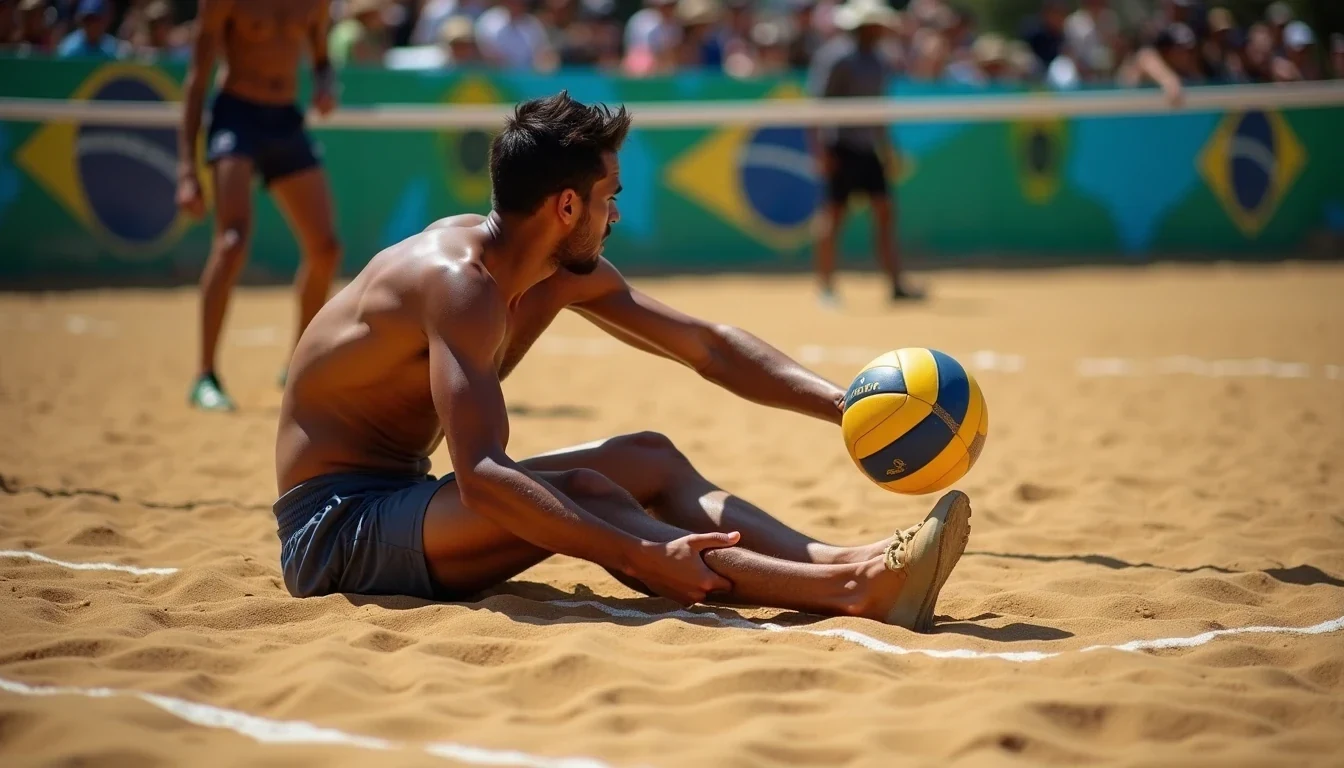
The playing surface is a rectangle 10 metres long and 6 metres wide, with a net set at 1.15 metres for the men’s tournament and 1.05 metres for the women’s. One rule governs every action: the ball cannot be touched unless one buttock stays in contact with the floor. This constraint compresses the action into a tight space where core strength and shoulder speed matter more than height. The attack line sits a mere two metres away from the net, close enough that spikes arrive before defenders can reset their weight. Players may block the serve, so rallies launch at full intensity. Dives and rolls are common, but even during a full extension the torso must maintain floor contact or the referee whistles a fault.
Sitting volleyball strips away the vertical leap and replaces it with rotational power. Athletes pivot on their hips, generate force through the abs and obliques, and hit angles that standing blockers rarely face. The game looks familiar to any volleyball follower but moves at a different rhythm, with faster transitions from defence to attack.
The 10-centimetre gap between the men’s and women’s nets sounds small, but at seated height it changes the geometry of every attack. Hitters must flatten their trajectories, and setters adjust their release to account for the lower target. The playing area itself is far smaller than a standard indoor volleyball court, which leaves no defensive dead space and punishes slow reactions.
Rules and player classification
- Court: 10 m by 6 m, with a 2 m attack line defining the front zone.
- Net: 1.15 m for men, 1.05 m for women.
- Floor contact: at least one buttock must stay on the floor during any ball contact, including dives and rolls.
- Serve blocking: legal from the moment the ball crosses the net.
- Scoring: rally point system, best of five sets, with each set played to 25 points and a two-point margin required to win. A fifth set goes to 15 points, again with a two-point margin.
- Player classes: VS1 covers athletes with more severe impairments; VS2 covers those with less severe impairments. A team may have no more than two VS2 players on court simultaneously.
- International federation: World ParaVolley, which took over the global calendar in 2014.
The two-VS2 limit exists because the classification gap is large enough to tilt a match. Coaches must balance court time between athletes with different functional ranges, and officials verify roster composition before play begins.
How the sport reached the Paralympics
Dutch doctors developed sitting volleyball in 1956 as rehabilitation for injured soldiers returning from service. The game spread through European clinics and veteran gyms for two decades before stepping onto the Paralympic stage. It appeared as a demonstration sport at Toronto 1976, interesting enough to earn a place on the programme but not yet a medal event. Men gained full medal status at Arnhem 1980, while the women’s tournament had to wait until Athens 2004. The twenty-four-year gap between the men’s and women’s medal debuts reflects the broader pattern of Paralympic gender expansion during that era. World ParaVolley has governed the international calendar since 2014, standardising classification and qualifying pathways across national federations. Today the sport has outgrown its clinical origins entirely; it is no longer prescribed as therapy but pursued as high-performance athletics, with national teams treating the court like any other Paralympic battleground.
What Brazil has won
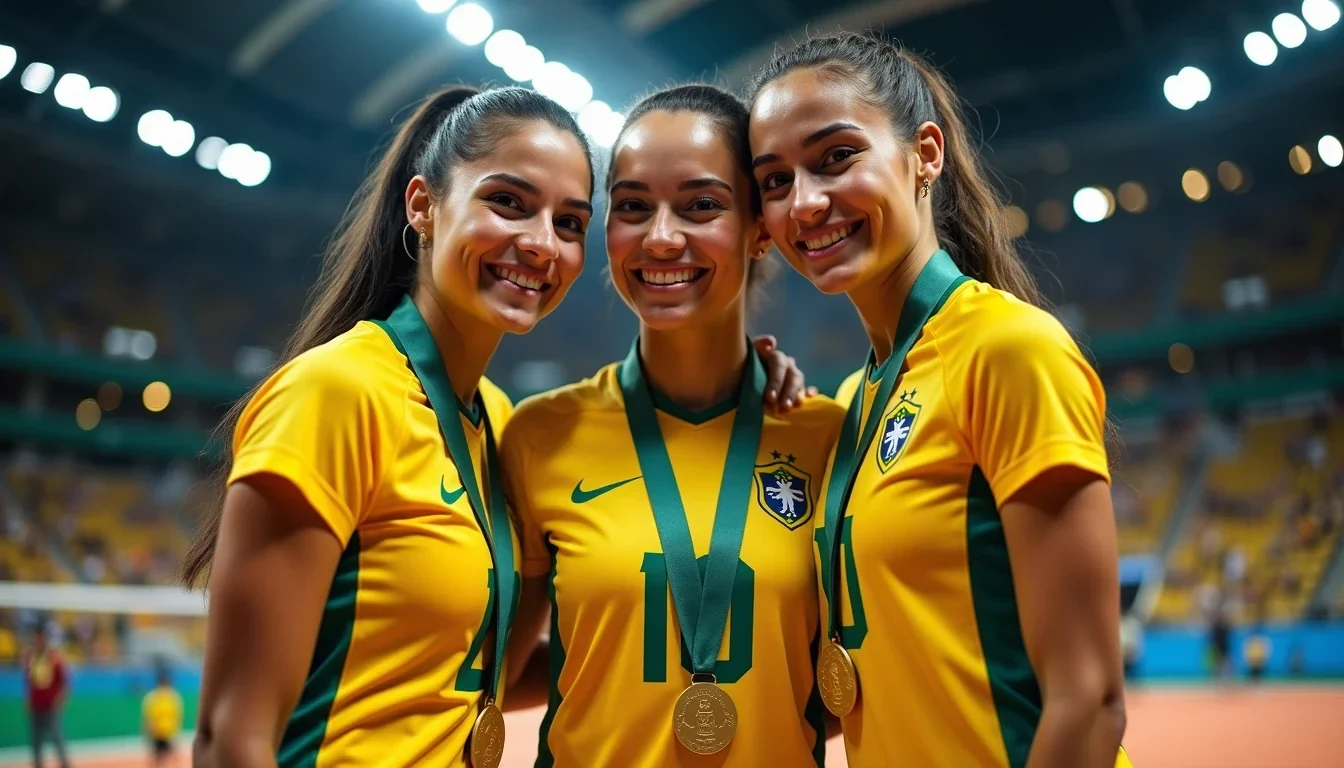
The Brazilian women turned home soil into bronze at Rio 2016, confirming the team belonged among the sport’s elite while competing in front of a home crowd. They repeated the feat five years later inside the Makuhari Messe hall outside Tokyo, surviving the same pandemic-delayed schedule and travel restrictions that shaped the 2020 tournament. That second bronze proved the Rio result was not a one-off driven by crowd noise; the squad could travel, adapt to foreign courts, and win again under neutral conditions.
The men earned their place at Tokyo 2020 through the Parapan American Games in 2019, a breakthrough that showed the depth of the domestic programme even though the squad has not yet landed on a Paralympic podium. Both Brazilian squads travelled to Paris in 2024 and left without medals, clarifying how tight the qualification window has become. The women finished outside the podium for the first time since their streak began, while the men continued their search for a first Paralympic medal. The gap between competing and medalling is now the defining challenge for the national programme.
The world order
Iran controls the men’s division, having won gold in Tokyo and again in Paris. The United States women run a parallel dynasty, topping the podium in both of those Games. The Paris 2024 women’s medals went to the United States, China and Canada. On the men’s side in Paris, the medallists were Iran, Bosnia and Herzegovina, and Egypt. The Iranian men’s back-to-back titles and the American women’s repeat victories suggest both programmes have systems that outlast individual roster changes. Brazil’s bronze medals in 2016 and 2020 prove the programme can reach the podium, but the step from occasional bronze to consistent gold will require breaking the grip of those two front-runners.
Where to play
Begin with the Comitê Paralímpico Brasileiro. The CPB maintains the national pathway into the sport and can point athletes toward the state federations and clubs that run regular training sessions. Newcomers will need to go through classification before competing in official tournaments, a process the CPB coordinates with medical and technical staff. If you are already classified in another country, bring your card and ask whether Brazil recognises the evaluation, because international reciprocity varies by impairment type and requires advance paperwork. Programmes and schedules change, so confirm current training times, venue addresses and any classification appointment requirements directly with the club or federation before showing up. Visitors from abroad should ask whether local clubs offer drop-in sessions or require prior registration, since policies vary by municipality and season. If you do not speak Portuguese, email in advance; many national sports bodies in Brazil reply to written English even when their websites are only in Portuguese. Bring indoor court shoes and knee pads, since training surfaces vary and floor burns arrive faster when you cannot stand to dodge.