Formula 1
Your Guide To Brazil's Stock Car Pro Series And Interlagos Races
Brazil's Stock Car Pro Series, founded in 1979, offers thrilling domestic V8 racing across 12 rounds, surviving economic challenges with accessible events and.
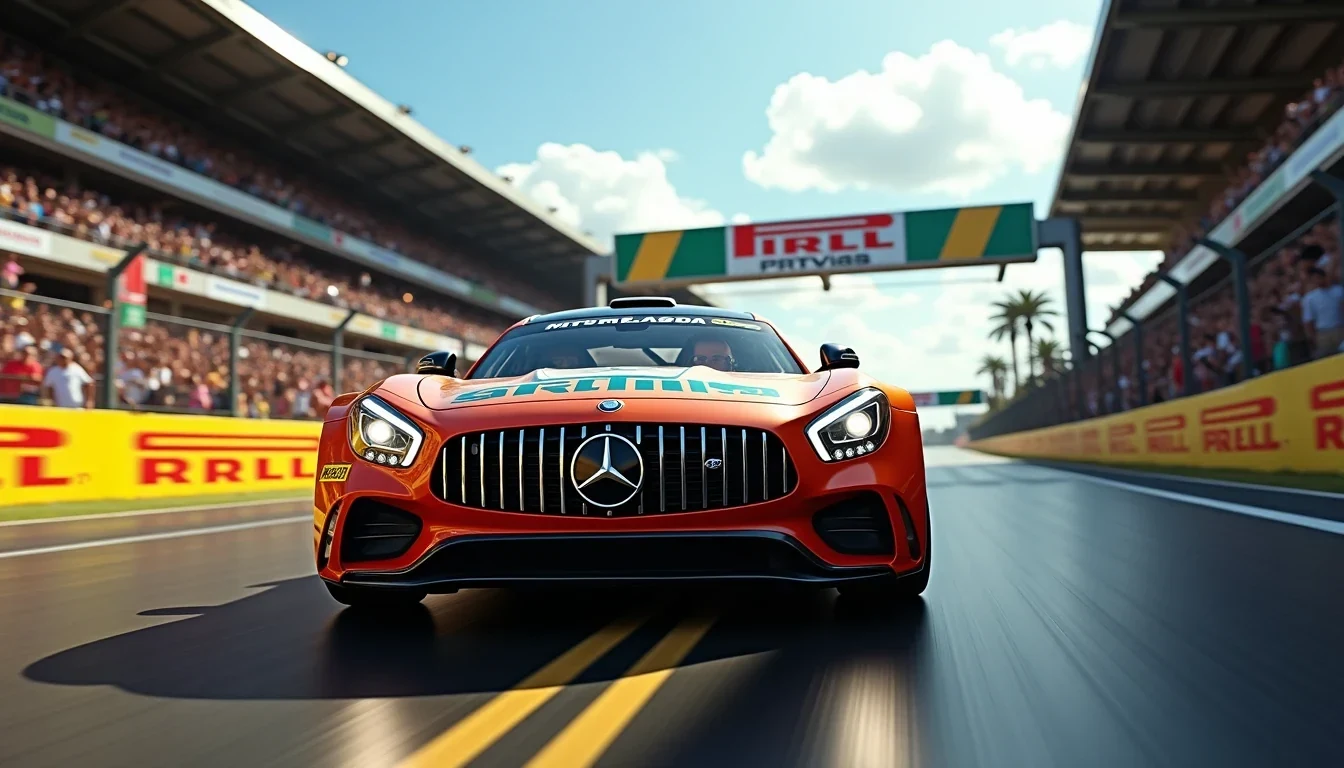
Felipe Fraga crossed the line at Interlagos in mid-December 2025 to seal his second Stock Car Pro Series title, seven months after the same São Paulo circuit hosted the season opener on 4 May. Between those two dates, the championship covered 12 rounds with grids full of SUV-bodied machines that replaced the old sedan shapes. Vicar Promoções runs the series now, but the championship traces back to 1979, when General Motors founded the Campeonato Brasileiro de Stock Cars as a cheaper domestic alternative to Division 1. The name changed several times before settling on Stock Car Pro Series in 2022, making 2025 the fourth season under that banner and the 47th overall.
Brazil hosts only one Formula 1 race per year, so a national calendar with a dozen professional V8 events fills a gap imported championships cannot touch. Those 12 rounds mean a fan in São Paulo can see top-level domestic racing twice at Interlagos alone, plus follow the championship to the south and central west without leaving the country. The series has outlasted multiple economic crises, rule overhauls and manufacturer withdrawals by sticking to a simple formula: identical mechanical packages, regional circuits that fans can actually reach, and ticket prices that do not require foreign-currency savings.
The championship and its roots
Vicar Promoções organizes Brazil’s top domestic motorsport category, a championship that sits between local club racing and the single annual Formula 1 Grand Prix. Vicar Promoções has managed the commercial side since the modern era, keeping the calendar consistent even when factory budgets shrank. General Motors created the series in 1979 under the name Campeonato Brasileiro de Stock Cars, aiming to offer a national alternative to Division 1 that relied on the Chevrolet Opala and controlled budgets. The first races ran on improvised layouts and regional tracks, drawing crowds who wanted to see showroom-based cars battle door to door. The category survived name changes and rule evolutions for 47 seasons, adopting the Stock Car Pro Series identity in 2022. Today it serves as both a proving ground for Brazilian talent and a travel-worthy event in its own right, with races spread from the deep south to the central west.
The SUV generation
A new era began in 2025 when the championship shelved its sedan silhouettes in favor of SUV body shells. The grid now carries panels shaped like the Toyota Corolla Cross, the Chevrolet Tracker and the Mitsubishi Eclipse Cross, all mounted over a common tubular chassis. Every car uses the same Chevrolet-derived V8, producing roughly 450 to 500 horsepower, with standardized brakes, tires and transmissions to keep costs level. The bodies look like showroom crossovers, but the mechanical package underneath is pure racing hardware: a rear-wheel-drive tube frame with no pretense of all-wheel drive or hybrid assistance. Drivers still wrestle heavy machinery with minimal electronic help, which explains why the on-track action often features contact and damaged bodywork. The shift to SUV shapes was controversial among traditionalists, but the manufacturers involved argued it better reflected the cars Brazilians actually buy.
Calendar and race format
The 2025 calendar ran 12 rounds from early May to mid-December, starting and finishing at Autódromo José Carlos Pace in São Paulo’s Interlagos district. The championship visited Cascavel in Paraná, Velopark in Nova Santa Rita, Rio Grande do Sul, Cuiabá in Mato Grosso, and Brasília in the Federal District. Most events feature a double-header, with two races per weekend. Organizers add reverse-grid rules for the second race and mandate pit stops that force teams to gamble on tire strategy. Points from both heats count toward the annual total, so a driver can salvage a bad Saturday with a strong Sunday. The schedule avoids the height of the Brazilian summer, running mostly through autumn, winter and spring, which helps both tire wear and spectator comfort. Races typically last between 30 and 45 minutes per heat. This is short enough to avoid boredom but long enough to reward patience and setup adjustments.
Champions and records
Ingo Hoffmann remains the benchmark. He collected 12 titles across multiple decades, a record no one has come close to matching. His dominance spanned the 1980s and early 2000s, establishing the championship as a serious career destination rather than a temporary stop. As of 2025, the most recent champion is Felipe Fraga, who drove the Eurofarma RC Mitsubishi to his second crown, adding to his 2016 success. His 2025 campaign included three wins and nine podiums, enough to hold off the field through the Interlagos finale. Fraga’s consistency defined the year. While other drivers grabbed headlines with individual victories, his points accumulation across both races per weekend proved decisive. Check the series site for confirmation of the 2026 standings before planning any trip around a title celebration.
Getting to Interlagos
Tickets for Stock Car weekends cost far less than Formula 1, though prices shift each year, so the official series website is the only source to trust for current rates. The easiest route to the circuit is the CPTM Line 9 Esmeralda train to Autódromo station, which leaves you within walking distance of the gates. Driving is possible but painful. Traffic clogs the access roads through the Interlagos neighborhood and parking is scarce. If you prefer grandstands, the S do Senna complex offers a clear view of heavy braking and overtaking attempts, while the main straight puts you near the start-finish line. General admission areas also exist and usually carry a looser, louder crowd. Bring sunscreen, a hat and ear protection, especially for children, because the V8 noise echoes off the surrounding hills. Food vendors operate inside the track, so you do not need to pack a full meal. Arrive before 08:00 to catch the first practice and photograph the cars in the morning light. Gates typically open early enough to let you walk the pit lane during autograph sessions, a level of access rare at international events. Weekend schedules usually cram practice, qualifying and both races into two days, making it a dense trip that justifies the train ride from downtown São Paulo.
The Formula 1 connection
The series has become a landing spot for Brazilians who raced abroad at the highest level. Nelson Piquet Jr., who started 28 Formula 1 Grands Prix, now competes in Stock Car and has won rounds, including a victory at Brasília. His presence raises the competitive standard and gives local fans a direct link to the international paddock without the international ticket markup. Other former single-seater drivers have passed through the grid over the years, treating the championship as a homecoming rather than a retirement lap. The cars are slower than a Formula 1 machine, but the racing is often closer, with lead changes happening under braking rather than through strategic pit windows alone. For visitors who want high-speed action on Brazilian asphalt, with schedules that allow multiple events per year and tickets priced for repeat attendance, the Stock Car Pro Series offers a grounded, local alternative to the global circus.