Formula 1
Why The Brazilian Grand Prix Is Now The São Paulo Grand Prix
The Brazilian Grand Prix's name and location evolved significantly since 1972, culminating in its São Paulo contract, shaped by decades of political.
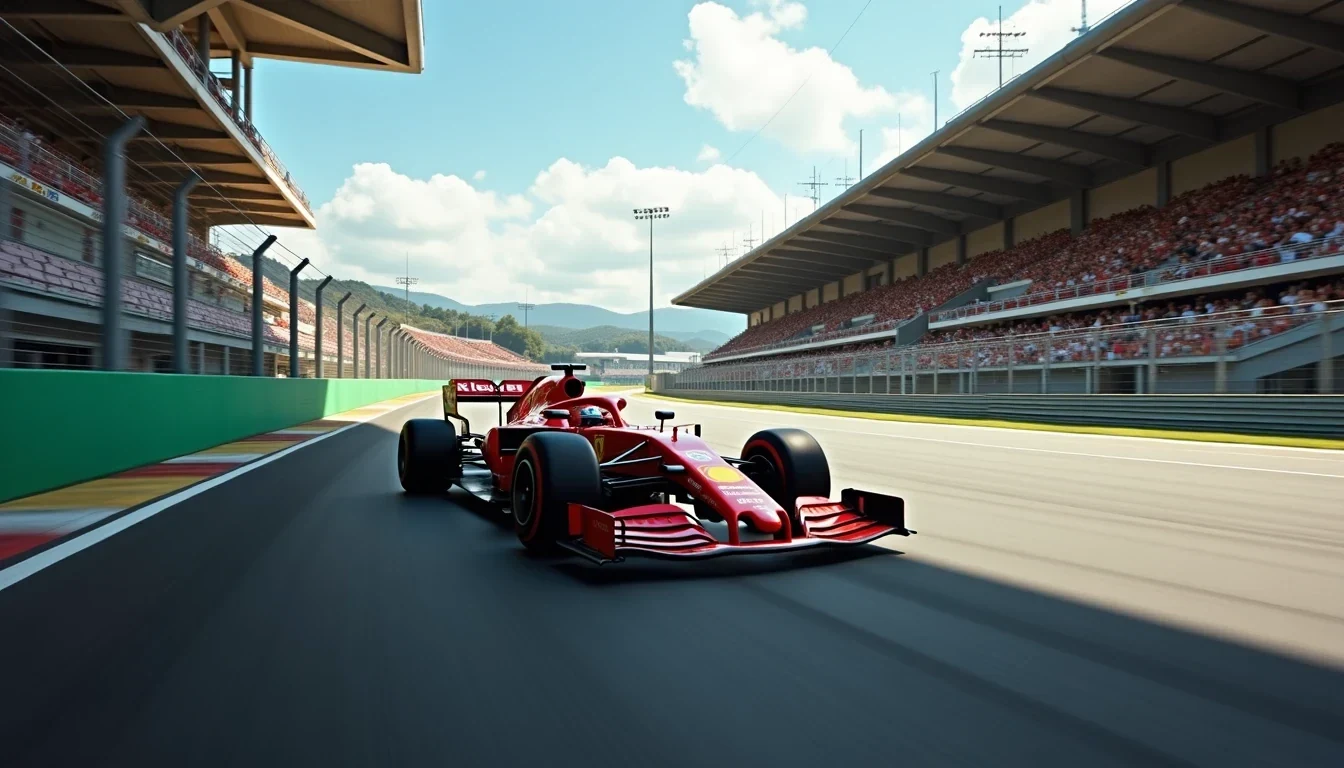
The Brazilian Grand Prix has changed cities, circuits, names, and lengths between 1972 and 2021. The current arrangement, a contract running to 2030 at the Autódromo José Carlos Pace, resulted from five decades of political negotiation, driver triumph, and one complete demolition in Rio de Janeiro.
The First Races at Interlagos
Formula 1 arrived in Brazil in 1972 with a non-championship race at the Autódromo de Interlagos, a winding circuit laid into a natural bowl between two artificial lakes in the southern suburbs of São Paulo. The following year, 1973, the Brazilian Grand Prix entered the official World Championship calendar. Emerson Fittipaldi, driving a Lotus-Ford, won that inaugural championship race. He repeated the victory in 1974, giving Brazil a home hero before the sport had fully established itself in the country.
The original Interlagos layout measured nearly 8 km. It was fast, undulating, and physically punishing. In 1975, Carlos Pace secured his only Formula 1 victory there, winning for Brabham in front of a delirious home crowd. Pace died in a light aircraft accident in 1977. The circuit was renamed Autódromo José Carlos Pace in 1985, a rare living memorial that predated the usual bureaucratic delays.
The Rio Decade at Jacarepaguá
By 1978, the race had moved. Safety concerns and infrastructure limitations at the São Paulo circuit opened the door for Rio de Janeiro. The Autódromo de Jacarepaguá hosted its first Brazilian Grand Prix that year. Carlos Reutemann won for Ferrari. The race returned to Interlagos for 1979 and 1980, but from 1981 onward, Jacarepaguá held a monopoly. Ten consecutive Brazilian Grands Prix ran there, through 1989.
The Rio circuit rewarded precision over bravery. Alain Prost won five of those ten races, a dominance that reflected his consistency and the track’s demands on tyre management in punishing heat. Nelson Piquet, the local favourite, won at home in 1983 and again in 1986. The circuit was later renamed Autódromo Internacional Nelson Piquet, an honour that outlasted the track itself.
Rebuilding Interlagos and the 1990 Return
Jacarepaguá’s facilities deteriorated through the 1980s. The surface became bumpy, and driver complaints accumulated. São Paulo saw its opportunity. The city invested heavily in reconstructing Interlagos, cutting the circuit from its original nearly 8 km to a modernised 4,309 metres. The new layout met contemporary Formula 1 safety standards and produced closer racing. Formula 1 returned in 1990, and the Brazilian Grand Prix has stayed in São Paulo ever since.
The shortened track sacrificed the old circuit’s high-speed sweep through the Aranha and Pinheirinho valleys for a tighter, more overtaking-friendly configuration. The city of São Paulo lists the current length at 4,309 metres, a figure that has remained constant through multiple resurfacings and minor curve adjustments.
From National to City Title
In 2021, the race was officially renamed the São Paulo Grand Prix. The change accompanied a new contract with the city and state of São Paulo, formalising a relationship that had been implicit since 1990. The renaming also aligned Brazil with a broader Formula 1 pattern: the Mexican Grand Prix became the Mexico City Grand Prix, the United States Grand Prix fragmented into Miami, Austin, and Las Vegas, and national titles increasingly gave way to municipal branding.
On 3 November 2023, Mayor Ricardo Nunes announced that the contract had been extended to 2030. The announcement was made at the circuit itself, with the 2023 race weekend approaching. Formula 1 has not confirmed any further extension since that date.
What Remains in Rio
The Jacarepaguá circuit was demolished in 2012. The land was cleared for the Barra Olympic Park, the main cluster of venues for the 2016 Summer Olympic Games. The Olympic Park now occupies the site where Piquet and Prost raced, where ten Brazilian Grands Prix were decided between 1978 and 1989. No trace of the racing surface remains accessible to the public.
For visitors, the contrast is stark. In São Paulo, the Autódromo José Carlos Pace operates year-round with karting, track days, and public access on scheduled dates. General admission for the São Paulo Grand Prix in 2023 ranged from approximately R$ 1,200 to R$ 3,500 depending on grandstand and day, with cheaper options for Friday practice sessions. The circuit is served by bus from the Jabaquara metro station on Line 1-Blue, though race weekend traffic demands patience. In Rio, the only remnant is the name Nelson Piquet attached to a neighbourhood that no longer contains any motorsport infrastructure.
The Brazilian Grand Prix began as a São Paulo event, spent a decade in Rio, and has now been anchored to its original city for more than three decades under a contract that runs to 2030. The name change to São Paulo Grand Prix, made in 2021, simply made official what the geography had already decided.